QUESTION IMAGE
Question
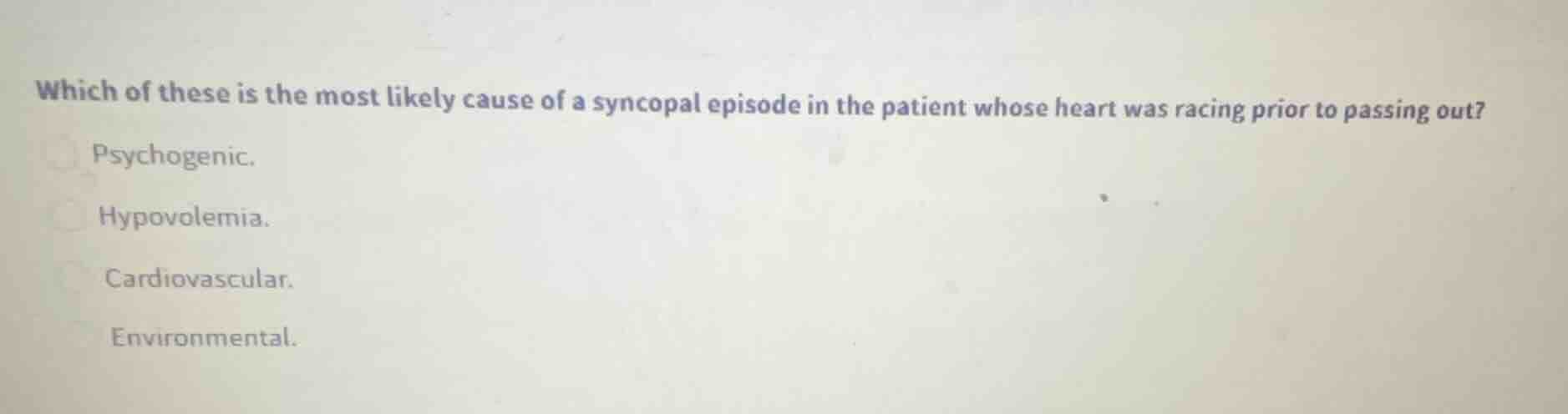
which of these is the most likely cause of a syncopal episode in the patient whose heart was racing prior to passing out?
psychogenic.
hypovolemia.
cardiovascular.
environmental.
Analyze the clinical presentation
The question asks for the most likely cause of a syncopal episode (fainting) in a patient whose heart was "racing" prior to passing out. A "racing heart" indicates palpitations, which are commonly associated with cardiac dysrhythmias (tachycardia).
Evaluate the options based on pathophysiology
- Psychogenic: While anxiety can cause hyperventilation and a rapid heart rate, psychogenic syncope (or pseudosyncope) is not typically characterized by a true physiological "racing heart" leading directly to cerebral hypoperfusion in this classic presentation.
- Hypovolemia: Dehydration or blood loss leads to compensatory tachycardia, but the primary sensation of a suddenly "racing heart" immediately preceding sudden syncope is most strongly indicative of a primary cardiac event.
- Cardiovascular: A rapid heart rate (such as ventricular tachycardia, supraventricular tachycardia, or rapid atrial fibrillation) drastically reduces diastolic filling time. This leads to a sudden drop in cardiac output and transient cerebral hypoperfusion, causing immediate syncope. Palpitations ("racing heart") preceding syncope is a classic warning sign of a cardiovascular etiology.
- Environmental: Environmental causes (like heat exhaustion) can cause compensatory tachycardia, but do not typically present with a sudden, distinct prodrome of a racing heart immediately followed by syncope in the same direct manner as a primary cardiac dysrhythmia.
Formulate the conclusion
The presence of palpitations ("racing heart") immediately prior to syncope is a key clinical indicator pointing toward a cardiovascular origin, specifically a cardiac dysrhythmia.

Snap & solve any problem in the app
Get step-by-step solutions on Sovi AI
Photo-based solutions with guided steps
Explore more problems and detailed explanations
- Psychogenic.
- Hypovolemia.
- Cardiovascular. (Correct answer)
- Environmental.