QUESTION IMAGE
Question
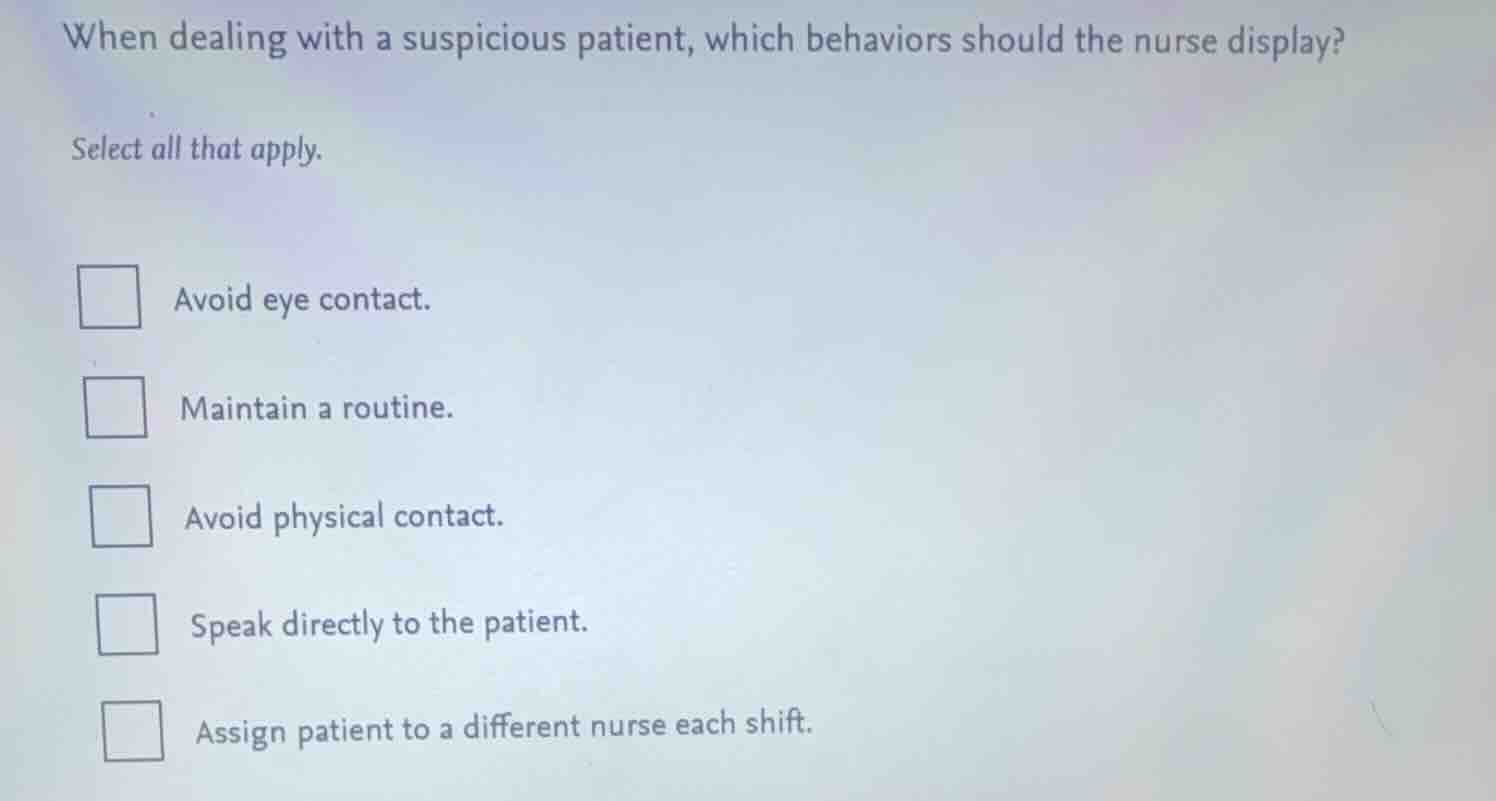
when dealing with a suspicious patient, which behaviors should the nurse display?
select all that apply.
avoid eye contact.
maintain a routine.
avoid physical contact.
speak directly to the patient.
assign patient to a different nurse each shift.
Analyze therapeutic interventions for a suspicious/paranoid patient
- Avoid eye contact: Incorrect. While intense staring can be perceived as threatening, completely avoiding eye contact communicates rejection, fear, or dishonesty, which increases suspicion.
- Maintain a routine: Correct. Predictability, consistency, and a structured routine help build trust and reduce anxiety or suspicion in paranoid patients.
- Avoid physical contact: Correct. Suspicious patients often misinterpret touch as a threat, physical aggression, or an attempt to harm them. Keeping physical distance and avoiding touch is therapeutic.
- Speak directly to the patient: Correct. Clear, direct, and honest communication prevents the patient from misinterpreting whispers, side conversations, or ambiguous statements.
- Assign patient to a different nurse each shift: Incorrect. Frequent changes in staff prevent the establishment of a trusting relationship and increase anxiety and suspicion. Consistency in staff assignments is preferred.

Snap & solve any problem in the app
Get step-by-step solutions on Sovi AI
Photo-based solutions with guided steps
Explore more problems and detailed explanations
- Avoid eye contact.
- Maintain a routine. (Correct answer)
- Avoid physical contact. (Correct answer)
- Speak directly to the patient. (Correct answer)
- Assign patient to a different nurse each shift.