QUESTION IMAGE
Question
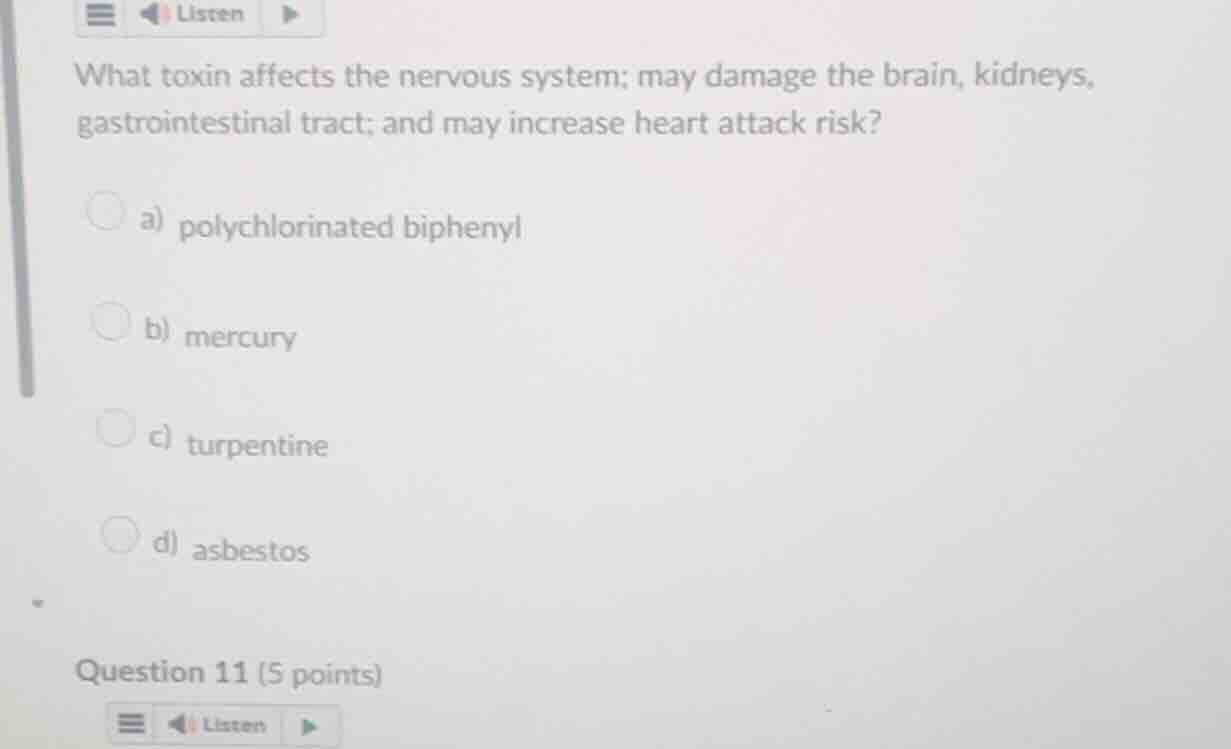
what toxin affects the nervous system; may damage the brain, kidneys, gastrointestinal tract; and may increase heart attack risk?
a) polychlorinated biphenyl
b) mercury
c) turpentine
d) asbestos
🆕 New Concept Discovered: Environmental Toxicology
How harmful substances affect living organisms and ecosystems.
Step 1: Analyze the symptoms and target organs
The question asks for a toxin that:
- Affects the nervous system (neurotoxin)
- Damages the brain, kidneys, and gastrointestinal tract
- Increases the risk of heart attacks (cardiovascular effects)
Step 2: Evaluate the options
- a) Polychlorinated biphenyl (PCB): Primarily known for bioaccumulating in fat tissues, causing skin conditions (chloracne), liver damage, and acting as a carcinogen.
- b) Mercury: A potent neurotoxin that easily crosses the blood-brain barrier, damaging the central nervous system and brain. It accumulates in and damages the kidneys, causes gastrointestinal toxicity upon ingestion, and clinical studies have strongly linked chronic mercury exposure to increased risks of cardiovascular disease and myocardial infarction (heart attacks).
- c) Turpentine: An organic solvent. While toxic if ingested or inhaled, its primary acute risks are respiratory irritation, chemical pneumonitis, and central nervous system depression, rather than this specific profile of chronic multi-organ damage.
- d) Asbestos: A fibrous mineral whose primary health risks are respiratory, specifically causing asbestosis, lung cancer, and mesothelioma when inhaled.
Step 3: Identify the correct match
Mercury perfectly matches all the specified toxicological effects, particularly its well-documented damage to the brain, kidneys, GI tract, and its association with elevated cardiovascular risks.

Snap & solve any problem in the app
Get step-by-step solutions on Sovi AI
Photo-based solutions with guided steps
Explore more problems and detailed explanations
b) mercury