QUESTION IMAGE
Question
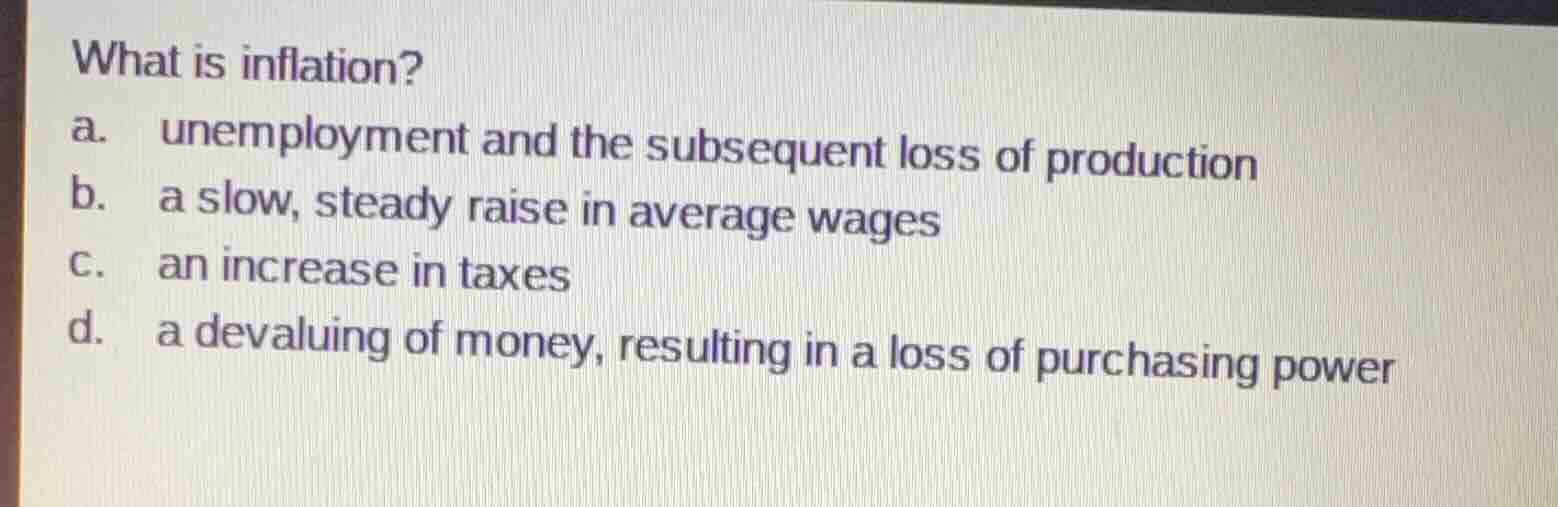
what is inflation?
a. unemployment and the subsequent loss of production
b. a slow, steady raise in average wages
c. an increase in taxes
d. a devaluing of money, resulting in a loss of purchasing power
Define inflation
Inflation is a general increase in prices and fall in the purchasing value of money. This means that as prices rise, every unit of currency buys a smaller percentage of a good or service.
Analyze the options
- a. unemployment and the subsequent loss of production: This describes economic recession or contraction, not inflation.
- b. a slow, steady raise in average wages: This is wage growth, which can be related to inflation but is not its definition.
- c. an increase in taxes: This is fiscal policy, not inflation.
- d. a devaluing of money, resulting in a loss of purchasing power: This directly aligns with the definition of inflation, where money loses value and purchasing power decreases.

Snap & solve any problem in the app
Get step-by-step solutions on Sovi AI
Photo-based solutions with guided steps
Explore more problems and detailed explanations
- a. unemployment and the subsequent loss of production
- b. a slow, steady raise in average wages
- c. an increase in taxes
- d. a devaluing of money, resulting in a loss of purchasing power (Correct answer)