QUESTION IMAGE
Question
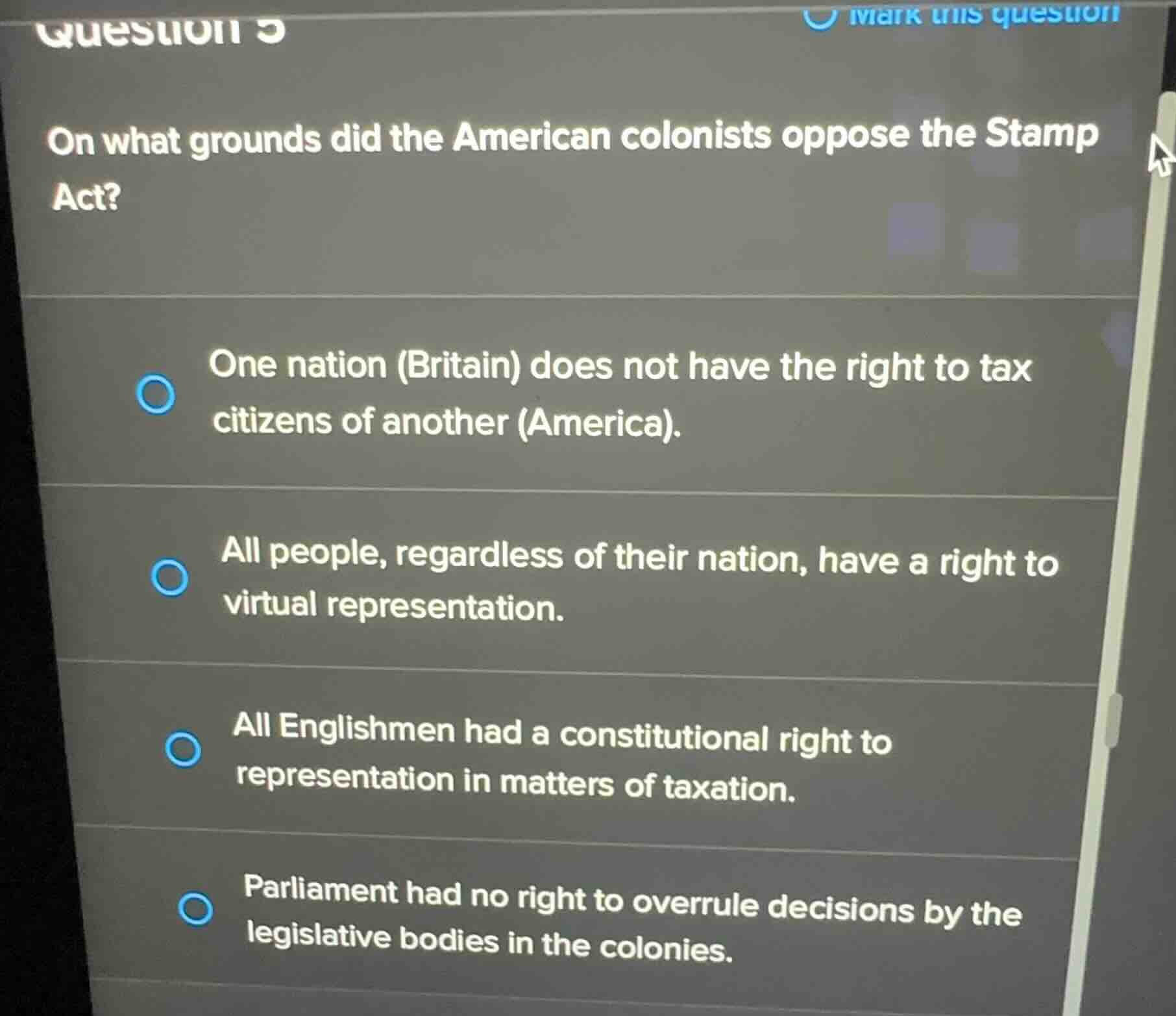
on what grounds did the american colonists oppose the stamp act?
- one nation (britain) does not have the right to tax citizens of another (america).
- all people, regardless of their nation, have a right to virtual representation.
- all englishmen had a constitutional right to representation in matters of taxation.
- parliament had no right to overrule decisions by the legislative bodies in the colonies.
Analyze the colonial argument against the Stamp Act
The Stamp Act of 1765 was the first direct internal tax levied on the American colonists by the British Parliament. The colonists did not argue that they were a separate nation; rather, they viewed themselves as British subjects. Under the British Constitution, a fundamental right of all Englishmen was that they could only be taxed by their own elected representatives.
Evaluate the concept of representation
Using the Virtual Representation knowledge point, we know Parliament argued colonists were "virtually represented" because members of Parliament represented the interests of the entire empire. The colonists rejected this, asserting that virtual representation was invalid and that they possessed a constitutional right to actual, direct representation in any legislative body that taxed them.
Assess the incorrect options
- Option 1: Incorrect because colonists still considered themselves British subjects, not citizens of a separate nation.
- Option 2: Incorrect because colonists rejected the concept of virtual representation rather than claiming a right to it.
- Option 4: Incorrect because while they valued local assemblies, the core constitutional argument against the Stamp Act focused directly on the right of representation regarding taxation.

Snap & solve any problem in the app
Get step-by-step solutions on Sovi AI
Photo-based solutions with guided steps
Explore more problems and detailed explanations
- (A) One nation (Britain) does not have the right to tax citizens of another (America).
- (B) All people, regardless of their nation, have a right to virtual representation.
- (C) All Englishmen had a constitutional right to representation in matters of taxation. (Correct answer)
- (D) Parliament had no right to overrule decisions by the legislative bodies in the colonies.