QUESTION IMAGE
Question
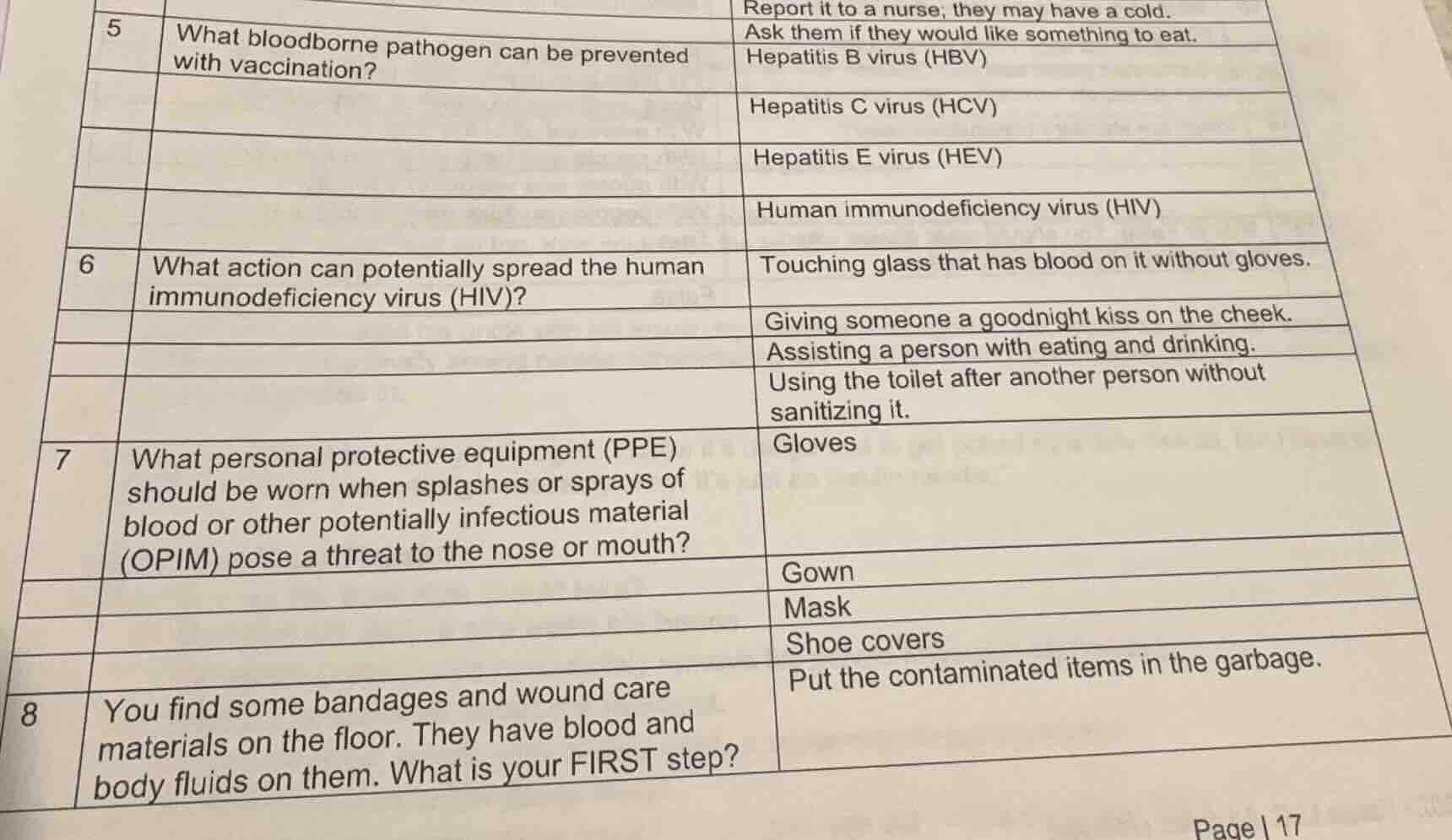
- what bloodborne pathogen can be prevented with vaccination?
- hepatitis b virus (hbv)
- hepatitis c virus (hcv)
- hepatitis e virus (hev)
- human immunodeficiency virus (hiv)
- what action can potentially spread the human immunodeficiency virus (hiv)?
- touching glass that has blood on it without gloves.
- giving someone a goodnight kiss on the cheek.
- assisting a person with eating and drinking.
- using the toilet after another person without sanitizing it.
- what personal protective equipment (ppe) should be worn when splashes or sprays of blood or other potentially infectious material (opim) pose a threat to the nose or mouth?
- gloves
- gown
- mask
- shoe covers
- you find some bandages and wound care materials on the floor. they have blood and body fluids on them. what is your first step?
- put the contaminated items in the garbage.
Identify vaccine-preventable bloodborne pathogen
Hepatitis B virus (HBV) is the only bloodborne pathogen listed for which a highly effective vaccine is widely available and routinely recommended for healthcare workers.
Determine HIV transmission risk action
HIV is transmitted through direct contact with infected blood or body fluids. Touching blood-contaminated glass without gloves allows direct contact with infectious material through potential micro-cuts or compromised skin barriers.
Select PPE for nose and mouth protection
A mask is designed specifically to protect the nose and mouth from splashes, sprays, or droplets of blood and other potentially infectious materials (OPIM).
Determine first step for handling contaminated waste
The image is cropped at the bottom, but standard safety protocols dictate that the first step when encountering blood or body fluids on the floor is to secure the area, put on appropriate PPE (gloves), or report/contain the spill before disposal.

Snap & solve any problem in the app
Get step-by-step solutions on Sovi AI
Photo-based solutions with guided steps
Explore more problems and detailed explanations
Question 5
- Hepatitis B virus (HBV) (Correct answer)
- Hepatitis C virus (HCV)
- Hepatitis E virus (HEV)
- Human immunodeficiency virus (HIV)
Question 6
- Touching glass that has blood on it without gloves. (Correct answer)
- Giving someone a goodnight kiss on the cheek.
- Assisting a person with eating and drinking.
- Using the toilet after another person without sanitizing it.
Question 7
- Gloves
- Gown
- Mask (Correct answer)
- Shoe covers