QUESTION IMAGE
Question
university of phoenix
soc/100 v9
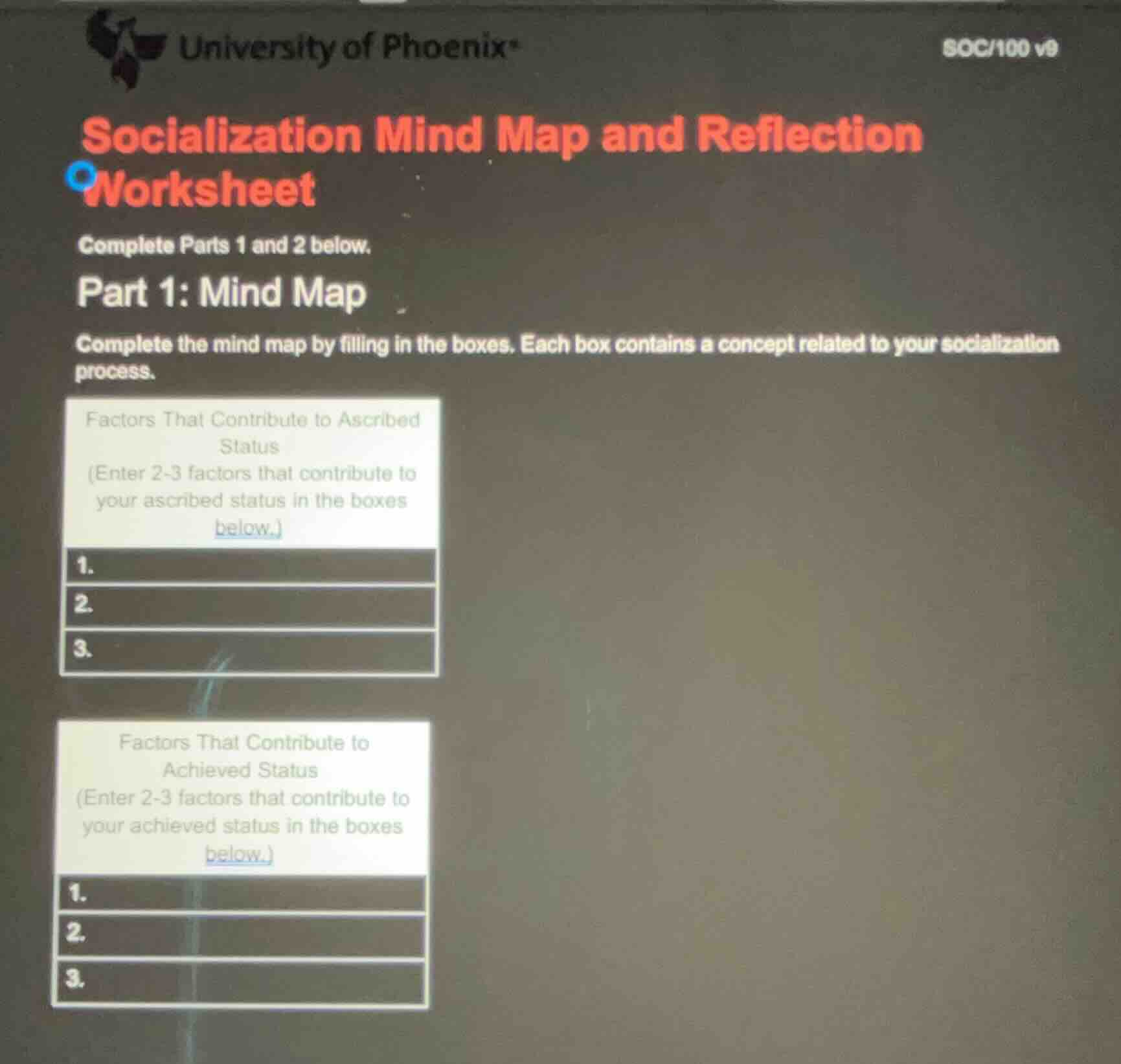
socialization mind map and reflection worksheet
complete parts 1 and 2 below.
part 1: mind map
complete the mind map by filling in the boxes. each box contains a concept related to your socialization process.
factors that contribute to ascribed status
(enter 2-3 factors that contribute to your ascribed status in the boxes below.)
1.
2.
3.
factors that contribute to achieved status
(enter 2-3 factors that contribute to your achieved status in the boxes below.)
1.
2.
3.
Define status types in socialization
In the study of the Socialization Process, status refers to a recognized social position that an individual occupies. Sociologists distinguish between two primary types of social status: ascribed status and achieved status.
Analyze factors of ascribed status
An ascribed status is a social position a person receives at birth or takes on involuntarily later in life. It is based on biological or inherited factors that the individual has little to no control over. Key factors contributing to ascribed status include:
- Race or ethnicity
- Biological sex / gender assigned at birth
- Family socioeconomic background or lineage
- Age
Analyze factors of achieved status
An achieved status is a social position a person takes on voluntarily that reflects personal ability, effort, and choice. It is earned or chosen during an individual's lifetime. Key factors contributing to achieved status include:
- Level of education (e.g., college graduate)
- Occupation or career choice (e.g., manager, teacher)
- Personal accomplishments or skills (e.g., athlete, musician)
- Marital status or parental status (by choice)

Snap & solve any problem in the app
Get step-by-step solutions on Sovi AI
Photo-based solutions with guided steps
Explore more problems and detailed explanations
Factors That Contribute to Ascribed Status
- Race/Ethnicity
- Biological Sex
- Family Socioeconomic Background
Factors That Contribute to Achieved Status
- Educational Attainment
- Occupational/Career Choice
- Personal Skills and Talents