Sovi.AI - AI Math Tutor

Scan to solve math questions

QUESTION IMAGE

trauma is the reaction our brain and body go through during ___________…

Question

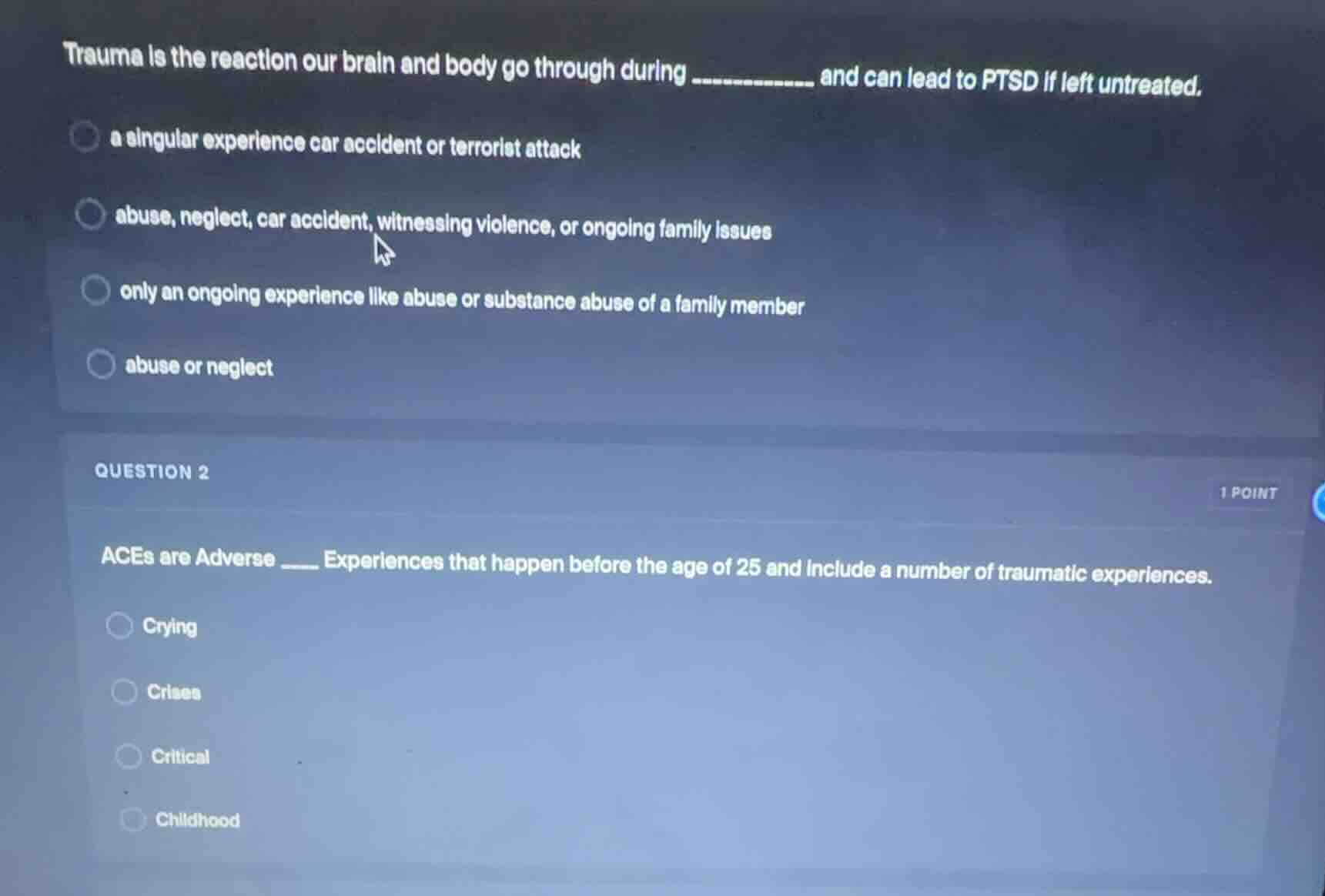
trauma is the reaction our brain and body go through during ___________ and can lead to ptsd if left untreated.

a singular experience car accident or terrorist attack
abuse, neglect, car accident, witnessing violence, or ongoing family issues
only an ongoing experience like abuse or substance abuse of a family member
abuse or neglect

question 2
1 point
aces are adverse ____ experiences that happen before the age of 25 and include a number of traumatic experiences.

crying
crises
critical
childhood

Explanation:

Response

<pre_analysis>
{
"quality": "clear",
"question_count": 2,
"skills_matched": [
"direct_cot",
"multiple_choice_formatter",
"explain_then_answer",
"quick"
],
"needs_drawing": false,
"concepts_used": [],
"new_concepts": [
"Trauma Definition",
"Adverse Childhood Experiences"
],
"current_concepts": [
"Trauma Definition",
"Adverse Childhood Experiences"
]
}
</pre_analysis>

<reasoning>

Analyze the definition of trauma

Trauma can result from both singular acute events (like a car accident) and chronic, ongoing situations (like abuse, neglect, or family dysfunction). Therefore, the second option is the most comprehensive and accurate definition.

Define the acronym ACEs

In public health and psychology, ACEs stands for Adverse Childhood Experiences, which refers to potentially traumatic events that occur during childhood (0-17 years).
</reasoning>

<answer>

Question 1

<mcq-option>(A) a singular experience car accident or terrorist attack</mcq-option>
<mcq-correct>(B) abuse, neglect, car accident, witnessing violence, or ongoing family issues</mcq-correct>
<mcq-option>(C) only an ongoing experience like abuse or substance abuse of a family member</mcq-option>
<mcq-option>(D) abuse or neglect</mcq-option>

Question 2

<mcq-option>(A) Crying</mcq-option>
<mcq-option>(B) Crises</mcq-option>
<mcq-option>(C) Critical</mcq-option>
<mcq-correct>(D) Childhood</mcq-correct>
</answer>

<post_analysis>
{
"subject": "Natural Science",
"question_type": "Multiple Choice",
"knowledge_point": [
"Natural Science",
"Others",
"Mental Health and Trauma"
]
}
</post_analysis>

Answer:

<pre_analysis>
{
"quality": "clear",
"question_count": 2,
"skills_matched": [
"direct_cot",
"multiple_choice_formatter",
"explain_then_answer",
"quick"
],
"needs_drawing": false,
"concepts_used": [],
"new_concepts": [
"Trauma Definition",
"Adverse Childhood Experiences"
],
"current_concepts": [
"Trauma Definition",
"Adverse Childhood Experiences"
]
}
</pre_analysis>

<reasoning>

Analyze the definition of trauma

Trauma can result from both singular acute events (like a car accident) and chronic, ongoing situations (like abuse, neglect, or family dysfunction). Therefore, the second option is the most comprehensive and accurate definition.

Define the acronym ACEs

In public health and psychology, ACEs stands for Adverse Childhood Experiences, which refers to potentially traumatic events that occur during childhood (0-17 years).
</reasoning>

<answer>

Question 1

<mcq-option>(A) a singular experience car accident or terrorist attack</mcq-option>
<mcq-correct>(B) abuse, neglect, car accident, witnessing violence, or ongoing family issues</mcq-correct>
<mcq-option>(C) only an ongoing experience like abuse or substance abuse of a family member</mcq-option>
<mcq-option>(D) abuse or neglect</mcq-option>

Question 2

<mcq-option>(A) Crying</mcq-option>
<mcq-option>(B) Crises</mcq-option>
<mcq-option>(C) Critical</mcq-option>
<mcq-correct>(D) Childhood</mcq-correct>
</answer>

<post_analysis>
{
"subject": "Natural Science",
"question_type": "Multiple Choice",
"knowledge_point": [
"Natural Science",
"Others",
"Mental Health and Trauma"
]
}
</post_analysis>