QUESTION IMAGE
Question
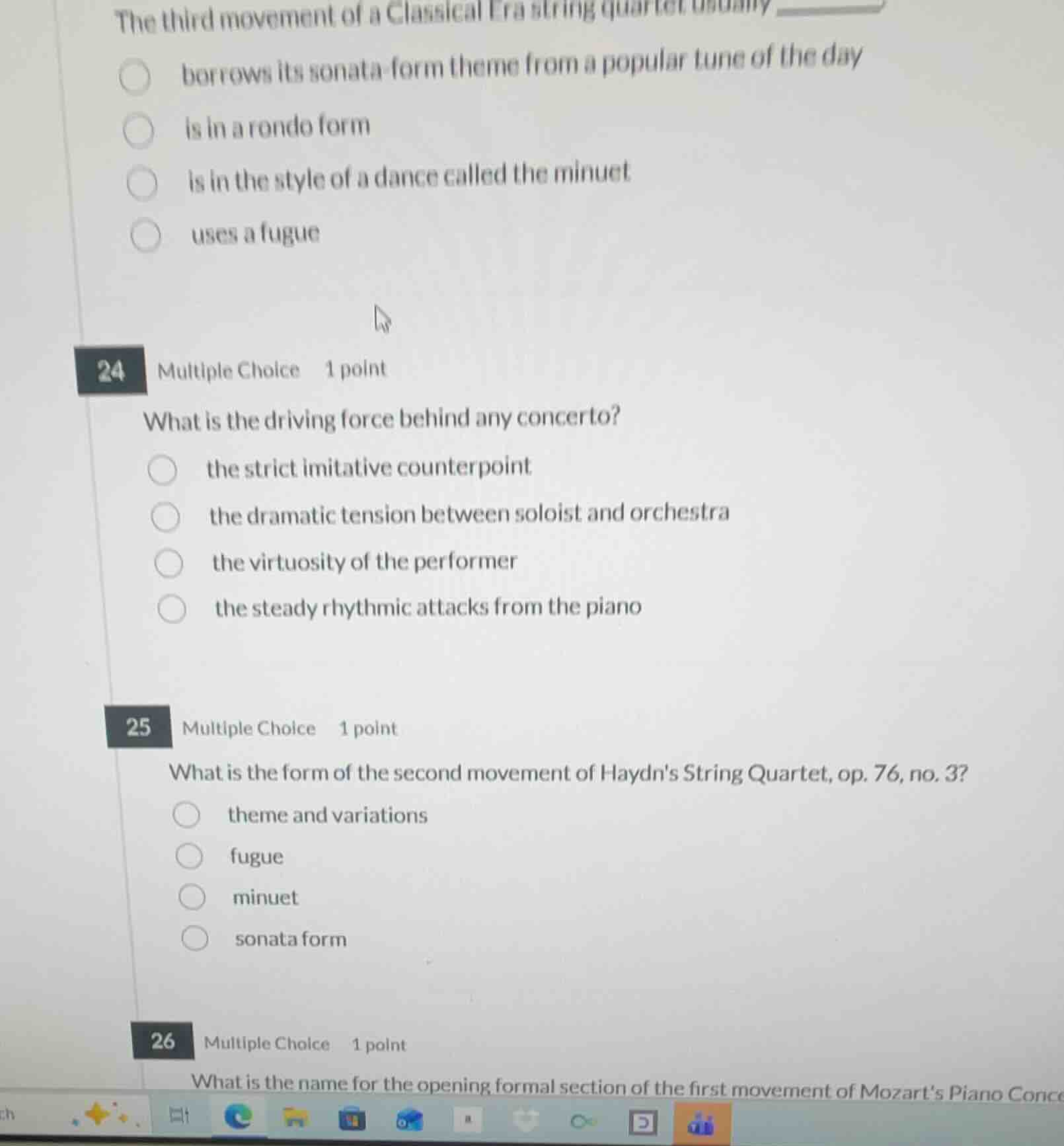
the third movement of a classical era string quartet usually
- borrows its sonata-form theme from a popular tune of the day
- is in a rondo form
- is in the style of a dance called the minuet
- uses a fugue
24 multiple choice 1 point
what is the driving force behind any concerto?
- the strict imitative counterpoint
- the dramatic tension between soloist and orchestra
- the virtuosity of the performer
- the steady rhythmic attacks from the piano
25 multiple choice 1 point
what is the form of the second movement of haydns string quartet, op. 76, no. 3?
- theme and variations
- fugue
- minuet
- sonata form
26 multiple choice 1 point
what is the name for the opening formal section of the first movement of mozarts piano concerto
Analyze the third movement of a Classical string quartet
Using the Classical String Quartet Structure knowledge point
The standard four-movement structure of a Classical era string quartet consists of:
- A fast opening movement in sonata form.
- A slow, lyrical second movement.
- A moderate or fast dance-like third movement, which is almost always a minuet and trio (or later, a scherzo).
- A fast, lively finale (often in rondo or sonata-rondo form).
Therefore, the third movement is in the style of a dance called the minuet.
Identify the driving force behind a concerto
Using the Concero Definition knowledge point
A concerto is fundamentally characterized by the contrast, dialogue, and dramatic tension between a solo instrument (or group of soloists) and the full orchestra. While virtuosity is a key component, the structural and expressive driving force of the genre is this dramatic interaction and competition between the individual and the ensemble.
Determine the form of Haydn's Op. 76, No. 3, second movement
Using the Haydn String Quartet knowledge point
Haydn's String Quartet in C major, Op. 76, No. 3 is nicknamed the "Emperor" quartet. The second movement (Poco adagio; cantabile) is a famous set of theme and variations based on the "Kaiserhymne" (Emperor's Hymn) which Haydn composed for Emperor Francis II.
Identify the opening section of Mozart's Piano Concerto first movement
The first movement of a Classical concerto (such as those by Mozart) typically uses a variant of sonata form known as "double-exposition" or "first-movement concerto form". The very first formal section is the orchestral exposition (or first exposition), where the orchestra introduces the main themes before the soloist enters.

Snap & solve any problem in the app
Get step-by-step solutions on Sovi AI
Photo-based solutions with guided steps
Explore more problems and detailed explanations
Question 1
- (A) borrows its sonata-form theme from a popular tune of the day
- (B) is in a rondo form
- (C) is in the style of a dance called the minuet (Correct answer)
- (D) uses a fugue
Question 2
- (A) the strict imitative counterpoint
- (B) the dramatic tension between soloist and orchestra (Correct answer)
- (C) the virtuosity of the performer
- (D) the steady rhythmic attacks from the piano
Question 3
- (A) theme and variations (Correct answer)
- (B) fugue
- (C) minuet
- (D) sonata form
Question 4
- (A) orchestral exposition (Correct answer)
- (B) solo exposition
- (C) development
- (D) cadenza