QUESTION IMAGE
Question
text answer
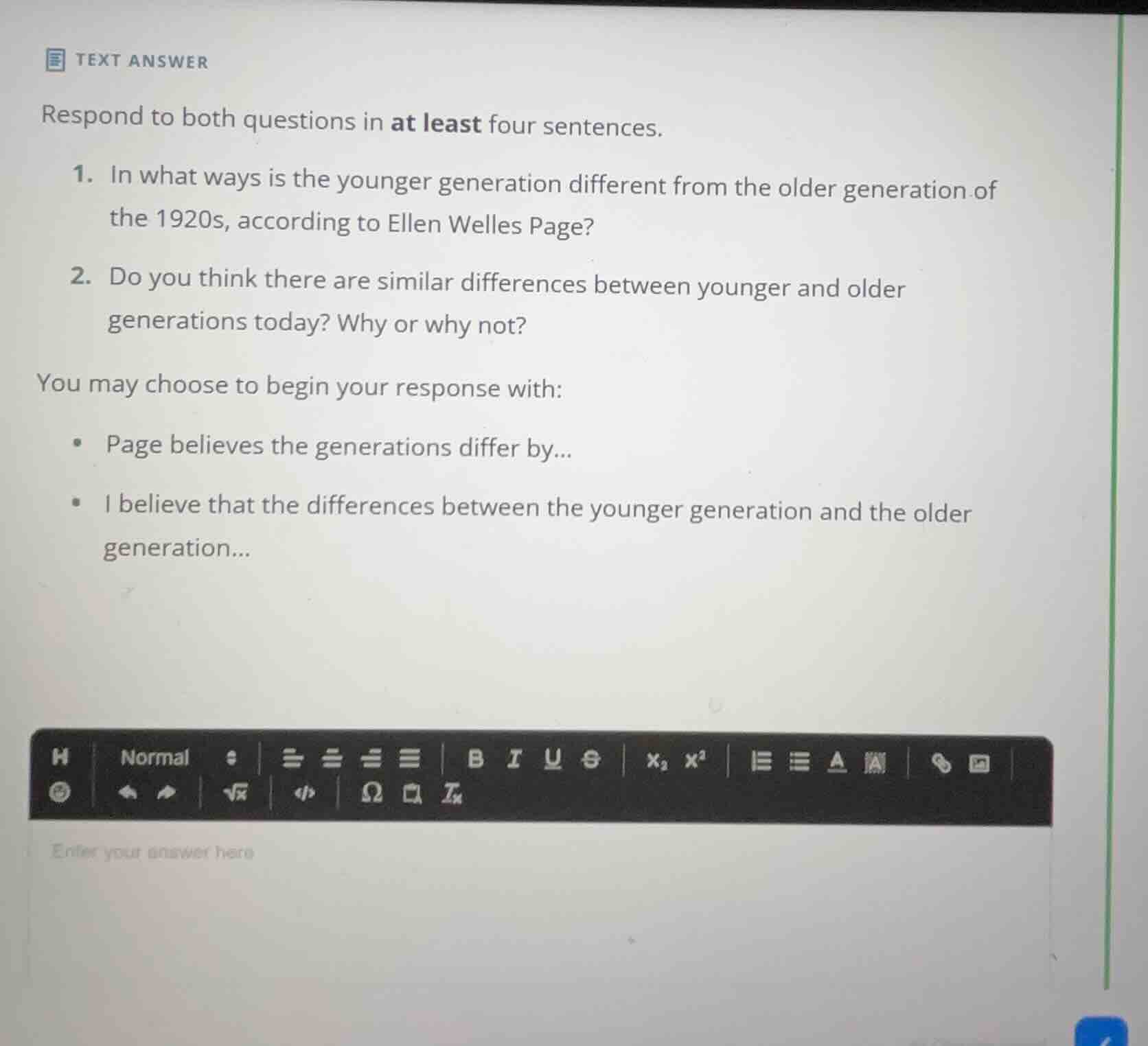
respond to both questions in at least four sentences.
- in what ways is the younger generation different from the older generation of
the 1920s, according to ellen welles page?
- do you think there are similar differences between younger and older
generations today? why or why not?
you may choose to begin your response with:
- page believes the generations differ by...
- i believe that the differences between the younger generation and the older
generation...
Page believes the generations differ by their attitudes toward work, social norms, and self-expression. In her writing about the 1920s, she notes that the younger generation rejected the rigid, work-obsessed mindset of their elders, who had lived through more conservative, post-war recovery eras; instead, the 1920s youth prioritized leisure, experimentation, and breaking social taboos, such as challenging traditional gender roles and embracing new forms of entertainment like jazz and flapper culture. They also had a more skeptical view of authority and traditional values, seeking personal fulfillment over the strict adherence to duty that defined the older generation.
I believe that the differences between the younger generation and the older generation today share core similarities with those Page identified. Modern younger generations often push back against the traditional career paths and workaholic norms upheld by older generations, prioritizing work-life balance, remote work flexibility, and purpose-driven careers over stable, long-term corporate roles. Like the 1920s youth, today's young people also challenge established social norms, advocating for greater equity in gender, race, and LGBTQ+ rights, just as their 1920s counterparts challenged Victorian-era social strictures. Additionally, both eras see a generational gap in attitudes toward technology: 1920s youth embraced new innovations like automobiles and radio that reshaped daily life, while today's younger generations are native to digital technology, leading to differences in communication styles and information consumption with older, less tech-savvy generations. These parallels exist because generational shifts often stem from young people adapting to new cultural, economic, and technological landscapes that their elders did not grow up with, leading to clashes in values and lifestyles.

Snap & solve any problem in the app
Get step-by-step solutions on Sovi AI
Photo-based solutions with guided steps
Explore more problems and detailed explanations
- According to Ellen Welles Page, the 1920s younger generation differed from the older generation in their rejection of rigid work-centric values, embrace of leisure and social experimentation, challenge of traditional gender and social taboos, and skepticism toward traditional authority and duty-based lifestyles.
- Yes, there are similar differences between younger and older generations today. Modern youth prioritize work-life balance over traditional stable careers, push for updated social equity norms, and are digitally native, creating gaps in communication and values with older generations—these parallels arise because young people adapt to new cultural, economic, and technological shifts that their elders did not experience, just as in the 1920s.