QUESTION IMAGE
Question
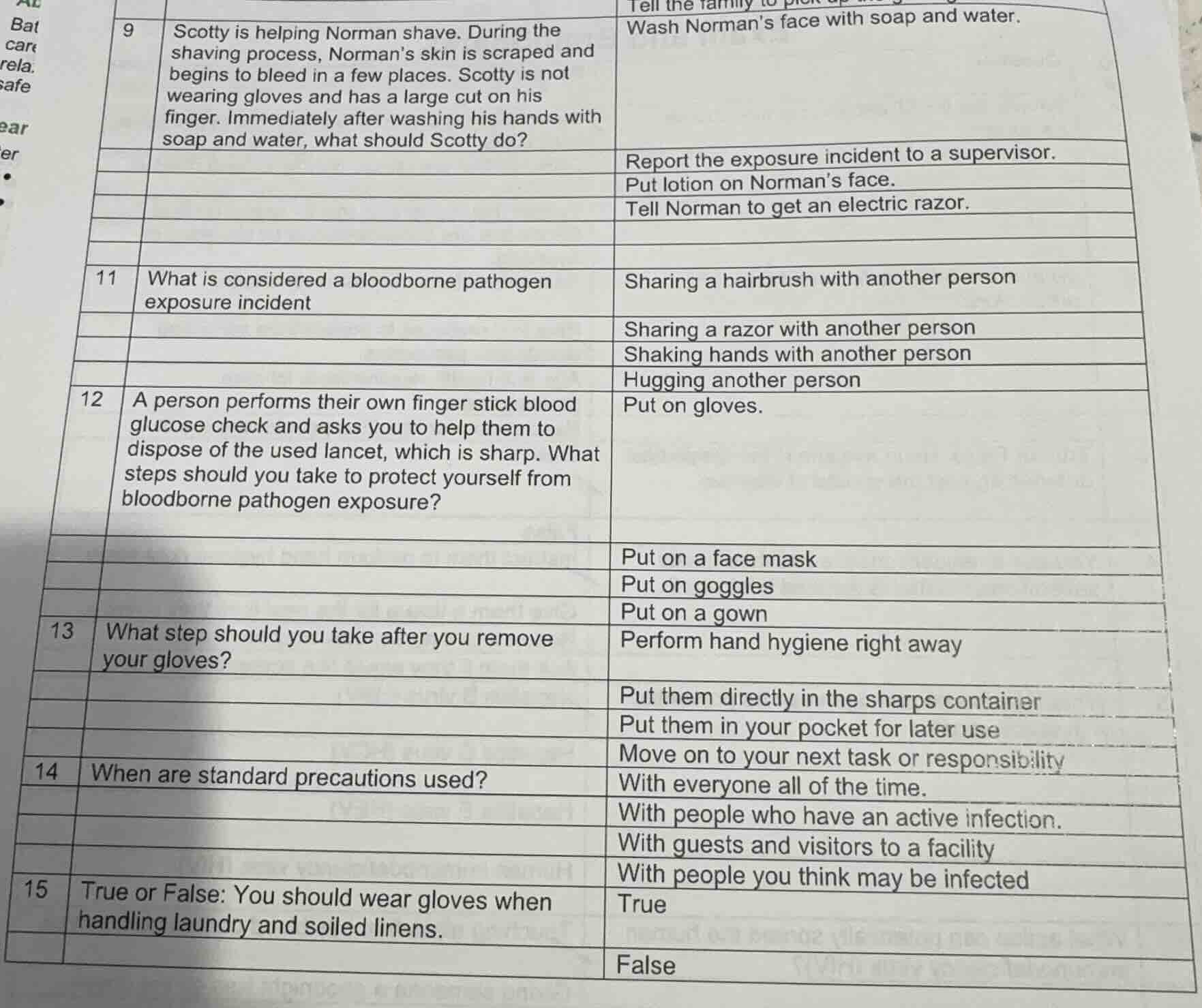
- scotty is helping norman shave. during the shaving process, normans skin is scraped and begins to bleed in a few places. scotty is not wearing gloves and has a large cut on his finger. immediately after washing his hands with soap and water, what should scotty do?
- wash normans face with soap and water.
- report the exposure incident to a supervisor.
- put lotion on normans face.
- tell norman to get an electric razor.
- what is considered a bloodborne pathogen exposure incident
- sharing a hairbrush with another person
- sharing a razor with another person
- shaking hands with another person
- hugging another person
- a person performs their own finger stick blood glucose check and asks you to help them to dispose of the used lancet, which is sharp. what steps should you take to protect yourself from bloodborne pathogen exposure?
- put on gloves.
- put on a face mask
- put on goggles
- put on a gown
- what step should you take after you remove your gloves?
- perform hand hygiene right away
- put them directly in the sharps container
- put them in your pocket for later use
- move on to your next task or responsibility
- when are standard precautions used?
- with everyone all of the time.
- with people who have an active infection.
- with guests and visitors to a facility
- with people you think may be infected
- true or false: you should wear gloves when handling laundry and soiled linens.
- true
- false
Analyze Question 9
The scenario describes an exposure incident where Norman's blood comes into contact with a cut on Scotty's finger. After immediate first aid (washing hands with soap and water), the next protocol step is to report the exposure incident to a supervisor.
Analyze Question 11
A bloodborne pathogen exposure incident involves contact with blood or other potentially infectious materials. Sharing a razor with another person is a direct route of exposure due to potential micro-cuts and blood transfer.
Analyze Question 12
To protect yourself from bloodborne pathogen exposure when handling a used, sharp lancet, the primary barrier precaution is to put on gloves.
Analyze Question 13
Standard infection control protocols dictate that hand hygiene must be performed immediately after removing gloves to eliminate any pathogens that may have penetrated or contaminated the hands during removal.
Analyze Question 14
Standard precautions are infection prevention practices that apply to all patients/individuals, regardless of suspected or confirmed infection status, in any healthcare setting. Therefore, they are used with everyone all of the time.
Analyze Question 15
Gloves must be worn when handling soiled linens or laundry to prevent contact with blood, body fluids, secretions, and excretions.

Snap & solve any problem in the app
Get step-by-step solutions on Sovi AI
Photo-based solutions with guided steps
Explore more problems and detailed explanations
Question 9
- Wash Norman's face with soap and water.
- Report the exposure incident to a supervisor. (Correct answer)
- Put lotion on Norman's face.
- Tell Norman to get an electric razor.
Question 11
- Sharing a hairbrush with another person
- Sharing a razor with another person (Correct answer)
- Shaking hands with another person
- Hugging another person
Question 12
- Put on gloves. (Correct answer)
- Put on a face mask
- Put on goggles
- Put on a gown
Question 13
- Perform hand hygiene right away (Correct answer)
- Put them directly in the sharps container
- Put them in your pocket for later use
- Move on to your next task or responsibility
Question 14
- With everyone all of the time. (Correct answer)
- With people who have an active infection.
- With guests and visitors to a facility
- With people you think may be infected
Question 15
- True (Correct answer)
- False