QUESTION IMAGE
Question
quiz
this weld defect is an example of:
excessive spatter
porosity
burn-through
lack of penetration
Analyze the visual evidence
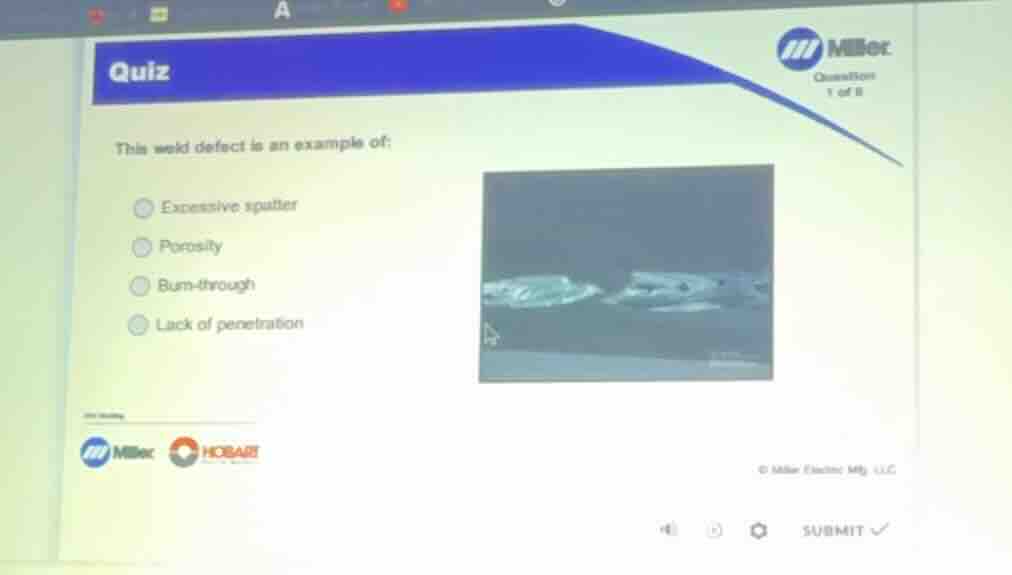
The image shows a weld bead with visible small holes, cavities, or pockets on its surface. These pocket-like cavities resemble tiny bubbles frozen in the metal.
Evaluate the options
- Excessive spatter: This refers to droplets of molten metal expelled during welding that fuse to the base metal surface around the weld. The image does not show scattered droplets on the surrounding plate.
- Porosity: This is a defect characterized by gas pockets, cavities, or holes trapped in the solidifying weld metal. The visible holes in the weld bead are classic examples of surface porosity.
- Burn-through: This occurs when the weld puddle melts completely through the base metal, leaving an open hole. The image shows a continuous joint with surface cavities, not a hole melted through the plate.
- Lack of penetration: This is a failure of the weld metal to fuse properly at the root of the joint. It is typically viewed from the root side or in a cross-section, not as surface cavities on the face of the weld.
Connect to welding concepts
Using the Welding Contamination knowledge point, we know that atmospheric contamination (such as moisture, oil, rust, or loss of shielding gas coverage) introduces gases into the molten weld pool. When these trapped gases cannot escape before the metal solidifies, they form cavities known as Porosity.

Snap & solve any problem in the app
Get step-by-step solutions on Sovi AI
Photo-based solutions with guided steps
Explore more problems and detailed explanations
- Excessive spatter
- Porosity (Correct answer)
- Burn-through
- Lack of penetration