Sovi.AI - AI Math Tutor

Scan to solve math questions

QUESTION IMAGE

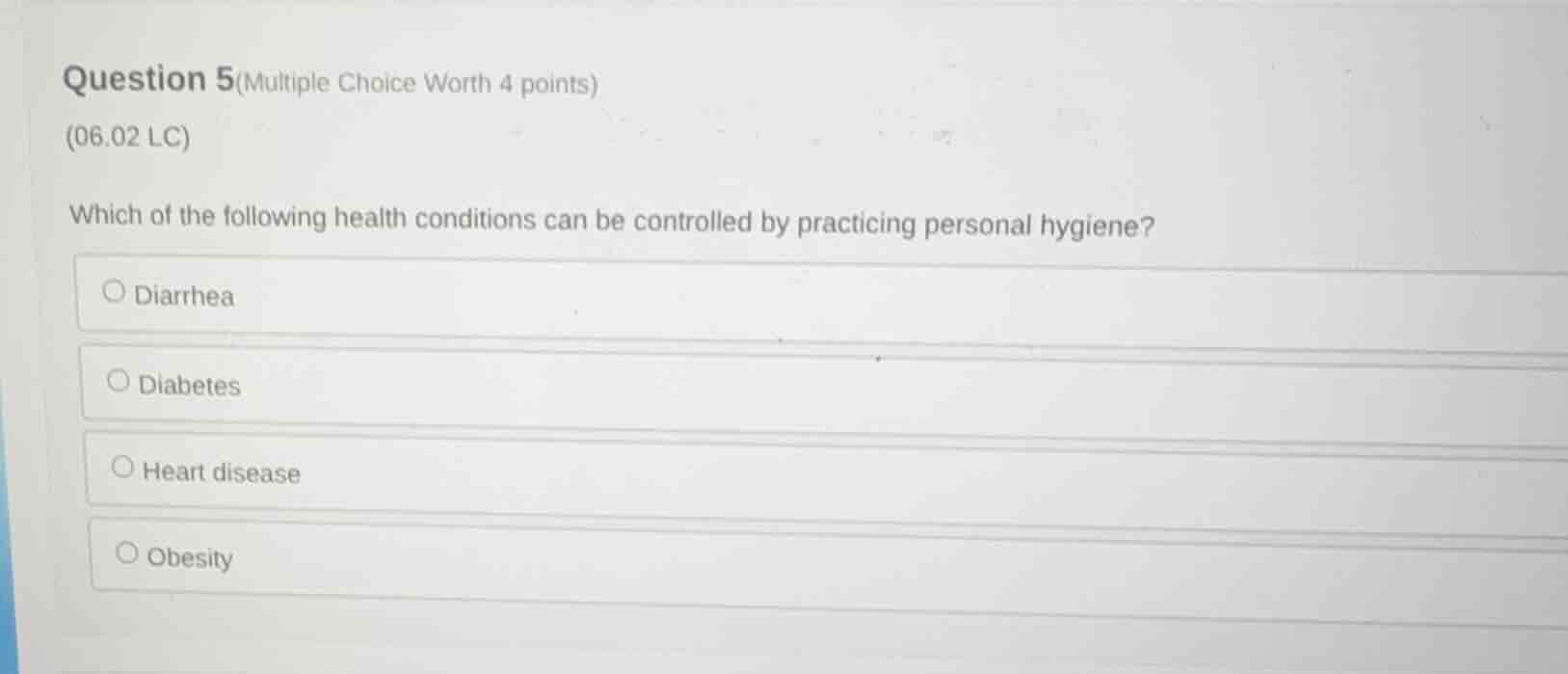
question 5(multiple choice worth 4 points) (06.02 lc) which of the foll…

Question

question 5(multiple choice worth 4 points)
(06.02 lc)

which of the following health conditions can be controlled by practicing personal hygiene?

  • diarrhea
  • diabetes
  • heart disease
  • obesity

Explanation:

Response

<pre_analysis>
{
"quality": "clear",
"question_count": 1,
"skills_matched": [
"direct_cot",
"multiple_choice_formatter",
"explain_then_answer",
"quick"
],
"needs_drawing": false,
"concepts_used": [],
"new_concepts": [
"Personal Hygiene",
"Infectious Disease Prevention"
],
"current_concepts": [
"Personal Hygiene",
"Infectious Disease Prevention",
"Chronic Diseases"
]
}
</pre_analysis>

<reasoning>

Analyze the relationship between personal hygiene and the listed health conditions

Personal hygiene practices, such as washing hands with soap and water, directly prevent the transmission of infectious pathogens (bacteria, viruses, and parasites) that cause communicable diseases.

Evaluate each option

  • Diarrhea: Often caused by foodborne or waterborne pathogens, or fecal-oral transmission. Handwashing and proper personal hygiene significantly reduce the spread of these pathogens, thereby controlling and preventing diarrhea.
  • Diabetes: A chronic metabolic disorder primarily influenced by genetics, diet, and physical activity, not by personal hygiene.
  • Heart disease: A cardiovascular condition influenced by genetics, diet, exercise, and smoking, not by personal hygiene.
  • Obesity: A complex health issue related to energy imbalance, diet, genetics, and physical activity, not by personal hygiene.

Identify the correct choice

Diarrhea is the only condition listed that is infectious and directly preventable through proper personal hygiene practices.
</reasoning>

<answer>
<mcq-correct>Diarrhea</mcq-correct>
<mcq-option>Diabetes</mcq-option>
<mcq-option>Heart disease</mcq-option>
<mcq-option>Obesity</mcq-option>
</answer>

<post_analysis>
{
"subject": "Natural Science",
"question_type": "Multiple Choice",
"knowledge_point": [
"Natural Science",
"Health Science",
"Personal Hygiene"
]
}
</post_analysis>

Answer:

<pre_analysis>
{
"quality": "clear",
"question_count": 1,
"skills_matched": [
"direct_cot",
"multiple_choice_formatter",
"explain_then_answer",
"quick"
],
"needs_drawing": false,
"concepts_used": [],
"new_concepts": [
"Personal Hygiene",
"Infectious Disease Prevention"
],
"current_concepts": [
"Personal Hygiene",
"Infectious Disease Prevention",
"Chronic Diseases"
]
}
</pre_analysis>

<reasoning>

Analyze the relationship between personal hygiene and the listed health conditions

Personal hygiene practices, such as washing hands with soap and water, directly prevent the transmission of infectious pathogens (bacteria, viruses, and parasites) that cause communicable diseases.

Evaluate each option

  • Diarrhea: Often caused by foodborne or waterborne pathogens, or fecal-oral transmission. Handwashing and proper personal hygiene significantly reduce the spread of these pathogens, thereby controlling and preventing diarrhea.
  • Diabetes: A chronic metabolic disorder primarily influenced by genetics, diet, and physical activity, not by personal hygiene.
  • Heart disease: A cardiovascular condition influenced by genetics, diet, exercise, and smoking, not by personal hygiene.
  • Obesity: A complex health issue related to energy imbalance, diet, genetics, and physical activity, not by personal hygiene.

Identify the correct choice

Diarrhea is the only condition listed that is infectious and directly preventable through proper personal hygiene practices.
</reasoning>

<answer>
<mcq-correct>Diarrhea</mcq-correct>
<mcq-option>Diabetes</mcq-option>
<mcq-option>Heart disease</mcq-option>
<mcq-option>Obesity</mcq-option>
</answer>

<post_analysis>
{
"subject": "Natural Science",
"question_type": "Multiple Choice",
"knowledge_point": [
"Natural Science",
"Health Science",
"Personal Hygiene"
]
}
</post_analysis>