QUESTION IMAGE
Question
question 37
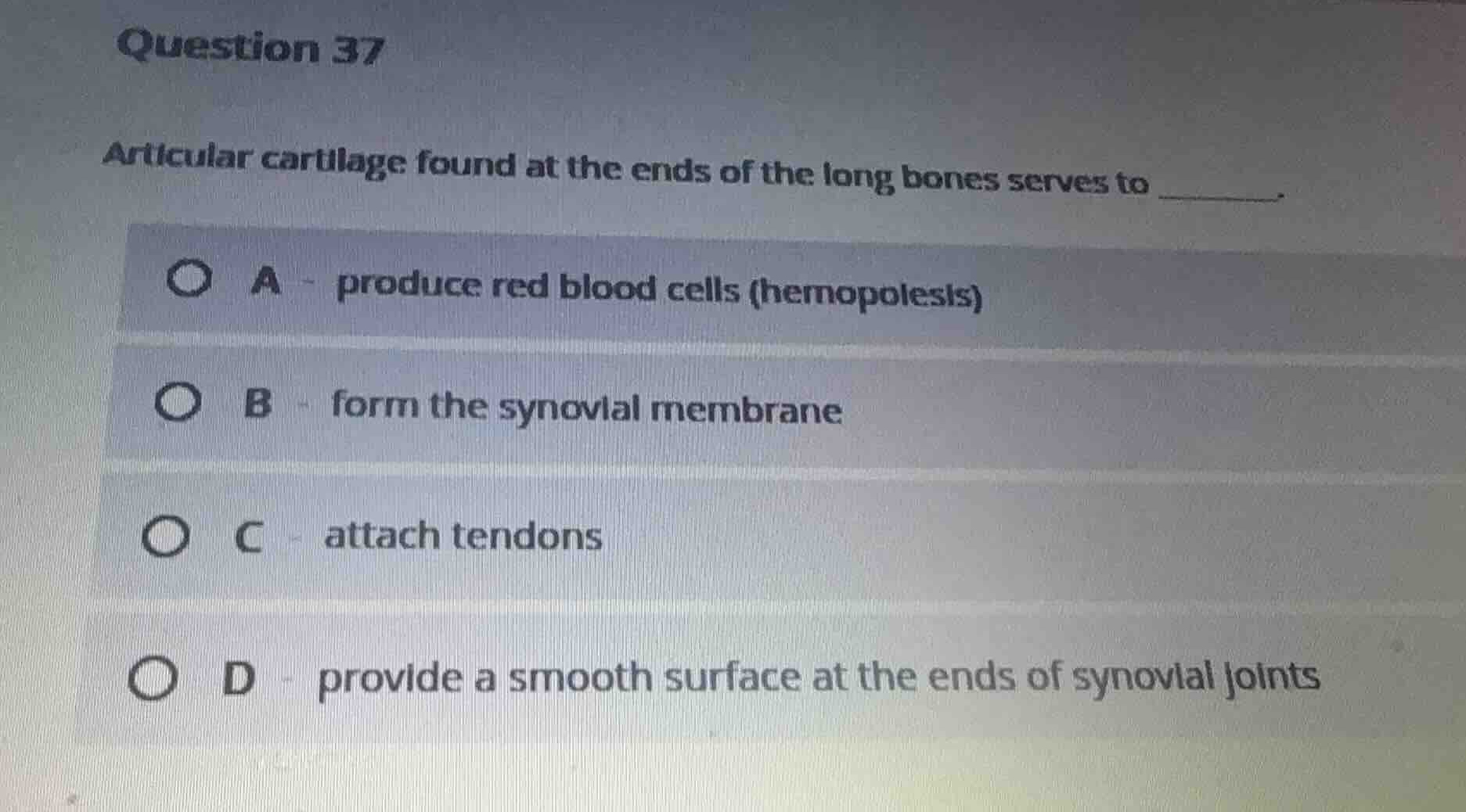
articular cartilage found at the ends of the long bones serves to ______.
a - produce red blood cells (hemopoiesis)
b - form the synovial membrane
c - attach tendons
d - provide a smooth surface at the ends of synovial joints
Identify the tissue and location
Using the Long Bone Anatomy knowledge point
Articular cartilage is a specialized hyaline cartilage covering the epiphyses (ends) of long bones where they articulate with other bones.
Analyze the physiological function
Using the Skeletal System Functions knowledge point
Articular cartilage reduces friction and absorbs shock during movement, providing a smooth, lubricated surface for joint articulation.
Evaluate the given options
- Option A: Red blood cell production (hemopoiesis) occurs in red bone marrow, not cartilage.
- Option B: The synovial membrane is a distinct connective tissue membrane lining the joint cavity.
- Option C: Tendons attach skeletal muscles to bone periosteum, not to articular cartilage.
- Option D: Articular cartilage provides a smooth, low-friction surface at the ends of synovial joints.

Snap & solve any problem in the app
Get step-by-step solutions on Sovi AI
Photo-based solutions with guided steps
Explore more problems and detailed explanations
- (A) produce red blood cells (hemopoiesis)
- (B) form the synovial membrane
- (C) attach tendons
- (D) provide a smooth surface at the ends of synovial joints (Correct answer)