QUESTION IMAGE
Question
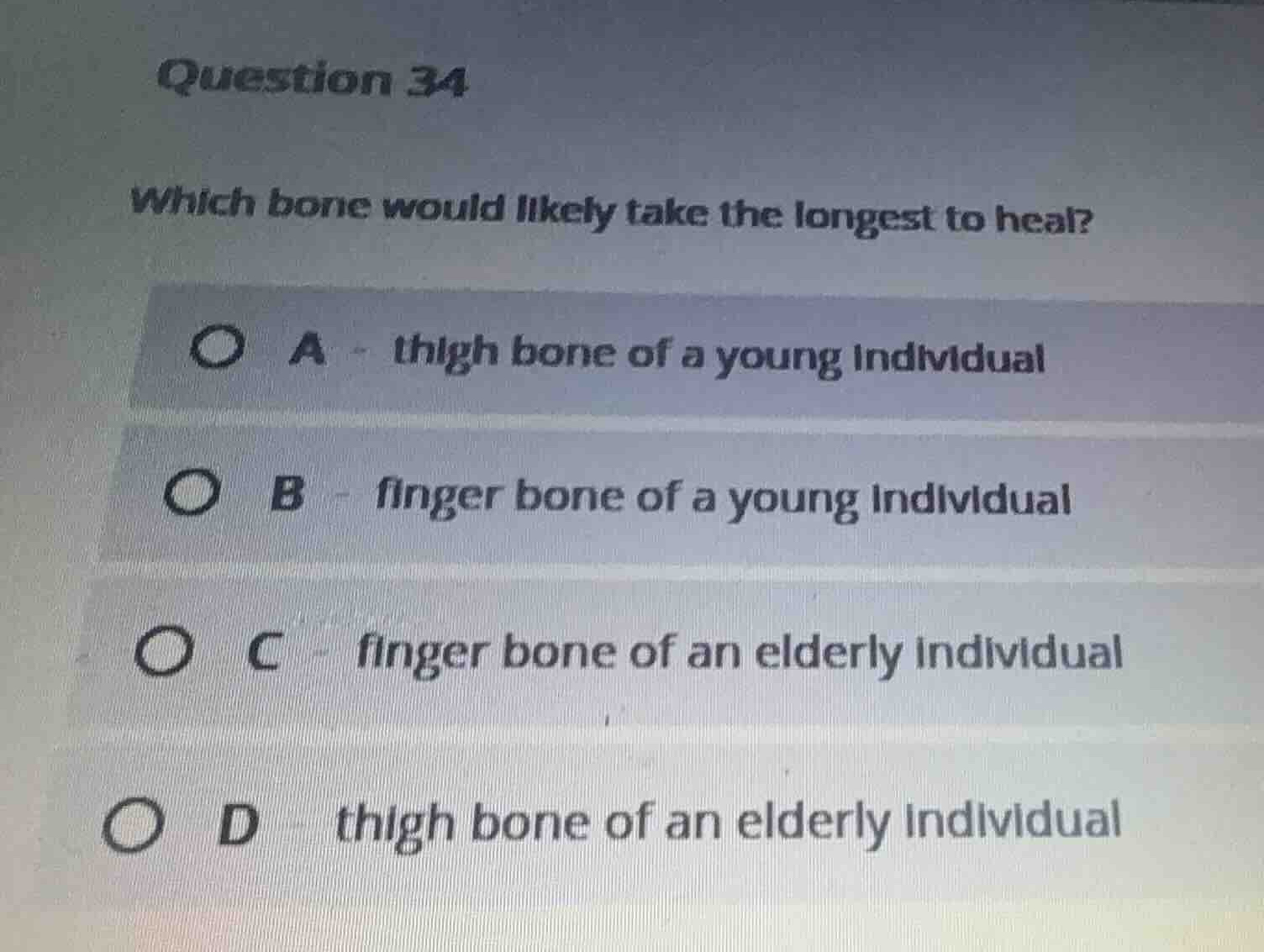
question 34
which bone would likely take the longest to heal?
a thigh bone of a young individual
b finger bone of a young individual
c finger bone of an elderly individual
d thigh bone of an elderly individual
Analyze the effect of age on bone healing
Age is a critical factor in bone repair. Younger individuals have highly active osteoblasts, a robust blood supply, and higher levels of growth factors, which facilitate rapid bone remodeling and healing. In contrast, elderly individuals experience a decline in osteoblast activity, reduced bone density (osteopenia or osteoporosis), and compromised vascular circulation, which significantly slows down the bone healing process.
Analyze the effect of bone size and weight-bearing status
The size and weight-bearing nature of the bone also dictate healing time. A finger bone (phalanx) is small, non-weight-bearing, and experiences relatively low mechanical stress, allowing it to heal faster. The thigh bone (femur) is the largest, heaviest, and primary weight-bearing long bone in the body. Healing a femur requires extensive remodeling of a massive cortical bone matrix and must withstand immense mechanical loads, which inherently takes much longer than healing a small phalangeal bone.
Combine the factors to determine the longest healing time
Combining both variables:
- The slowest healing rate occurs in an elderly individual due to decreased physiological remodeling capacity.
- The bone that requires the most time to structurally repair is the large, weight-bearing thigh bone (femur).
Therefore, the thigh bone of an elderly individual will take the longest to heal.

Snap & solve any problem in the app
Get step-by-step solutions on Sovi AI
Photo-based solutions with guided steps
Explore more problems and detailed explanations
- (A) thigh bone of a young individual
- (B) finger bone of a young individual
- (C) finger bone of an elderly individual
- (D) thigh bone of an elderly individual (Correct answer)