QUESTION IMAGE
Question
question 10
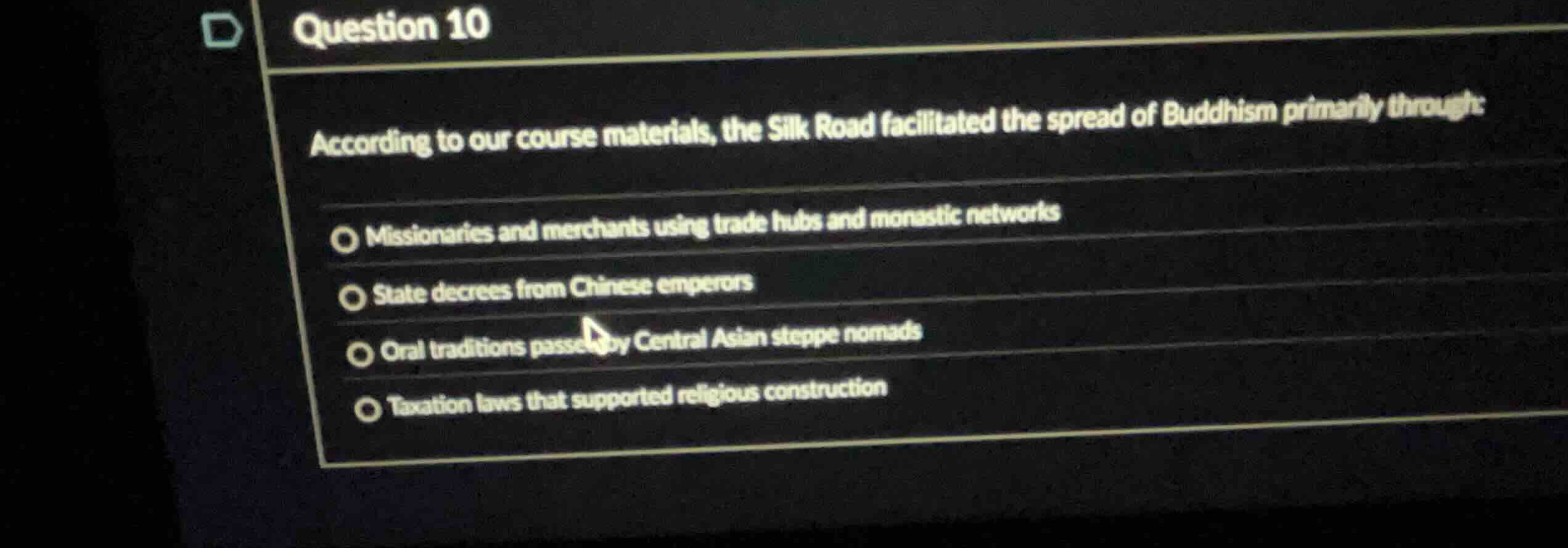
according to our course materials, the silk road facilitated the spread of buddhism primarily through:
missionaries and merchants using trade hubs and monastic networks
state decrees from chinese emperors
oral traditions passed by central asian steppe nomads
taxation laws that supported religious construction
Analyze the mechanism of transmission
The Silk Road was a network of trade routes connecting East Asia with the Mediterranean. Buddhism spread from India to China and Central Asia primarily through the movement of merchants, travelers, and Buddhist missionaries who traveled along these trade routes, establishing monasteries at key trade hubs and oases.
Evaluate the options
- Option 1: Missionaries and merchants using trade hubs and monastic networks directly aligns with historical evidence of how Buddhism spread along trade routes.
- Option 2: State decrees from Chinese emperors came much later after Buddhism was already established, rather than being the primary initial facilitator.
- Option 3: Central Asian steppe nomads had oral traditions, but they were not the primary vehicle for spreading the highly structured, text-based Buddhist monastic tradition.
- Option 4: Taxation laws did not drive the primary transmission of the religion across borders.

Snap & solve any problem in the app
Get step-by-step solutions on Sovi AI
Photo-based solutions with guided steps
Explore more problems and detailed explanations
- (A) Missionaries and merchants using trade hubs and monastic networks (Correct answer)
- (B) State decrees from Chinese emperors
- (C) Oral traditions passed by Central Asian steppe nomads
- (D) Taxation laws that supported religious construction