QUESTION IMAGE
Question
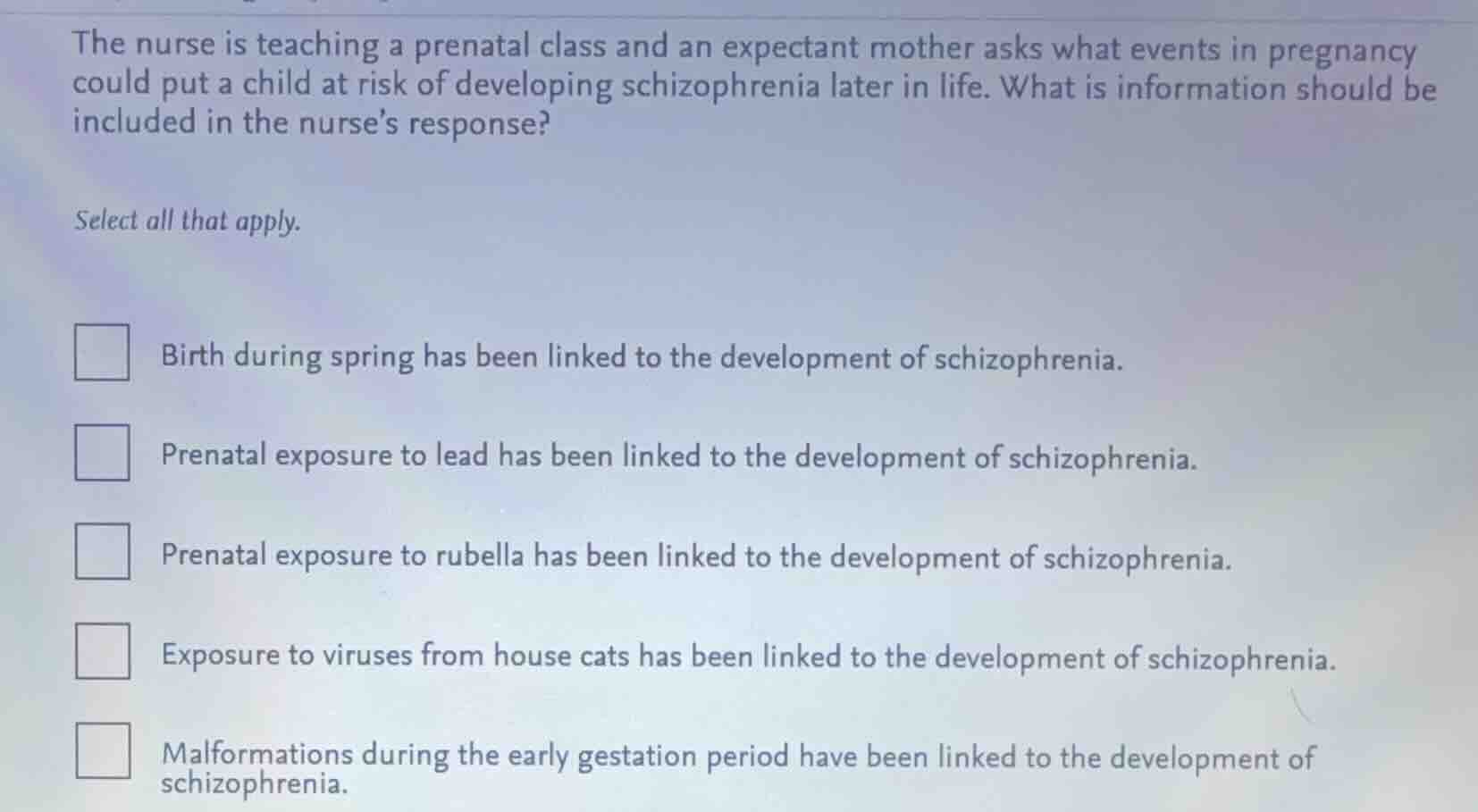
the nurse is teaching a prenatal class and an expectant mother asks what events in pregnancy could put a child at risk of developing schizophrenia later in life. what is information should be included in the nurses response?
select all that apply.
birth during spring has been linked to the development of schizophrenia.
prenatal exposure to lead has been linked to the development of schizophrenia.
prenatal exposure to rubella has been linked to the development of schizophrenia.
exposure to viruses from house cats has been linked to the development of schizophrenia.
malformations during the early gestation period have been linked to the development of schizophrenia.
Analyze prenatal risk factors for schizophrenia
Epidemiological and neurodevelopmental research links several prenatal and perinatal factors to an increased risk of developing schizophrenia later in life:
- Season of birth: Birth during late winter or early spring (often linked to seasonal viral exposures) is a documented risk factor.
- Prenatal lead exposure: Maternal exposure to lead during pregnancy is associated with an increased risk of schizophrenia in offspring.
- Prenatal viral infections: Maternal exposure to infections such as rubella, influenza, or toxoplasmosis (often associated with house cats/litter boxes) during pregnancy increases risk.
- Early gestational malformations: Minor physical anomalies (malformations) arising during early gestation reflect disrupted early neurodevelopment, which is linked to schizophrenia.
Evaluate the given options
- Birth during spring: Correct. Winter/spring birth is a known epidemiological risk factor.
- Prenatal exposure to lead: Correct. Lead is a neurotoxin linked to increased risk.
- Prenatal exposure to rubella: Correct. Maternal rubella infection is a well-established prenatal risk factor.
- Exposure to viruses from house cats: Correct. This refers to Toxoplasma gondii (a parasite, though sometimes grouped broadly under infectious/environmental exposures in nursing curricula) which is transmitted via cat feces and linked to schizophrenia risk.
- Malformations during early gestation: Correct. Minor physical anomalies from early gestation are markers of disrupted prenatal development associated with schizophrenia.
All five options represent documented prenatal/perinatal risk factors or markers associated with the development of schizophrenia.

Snap & solve any problem in the app
Get step-by-step solutions on Sovi AI
Photo-based solutions with guided steps
Explore more problems and detailed explanations
- Birth during spring has been linked to the development of schizophrenia. (Correct answer)
- Prenatal exposure to lead has been linked to the development of schizophrenia. (Correct answer)
- Prenatal exposure to rubella has been linked to the development of schizophrenia. (Correct answer)
- Exposure to viruses from house cats has been linked to the development of schizophrenia. (Correct answer)
- Malformations during the early gestation period have been linked to the development of schizophrenia. (Correct answer)