QUESTION IMAGE
Question
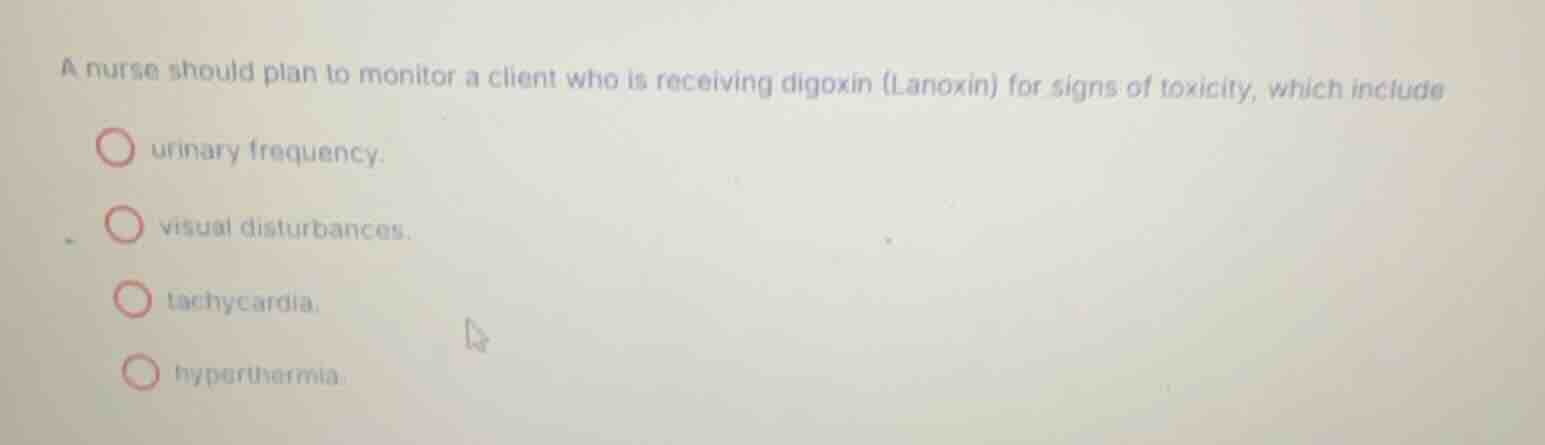
a nurse should plan to monitor a client who is receiving digoxin (lanoxin) for signs of toxicity, which include
urinary frequency.
visual disturbances.
tachycardia.
hyperthermia.
🆕 New Concept Discovered: Digoxin Toxicity Monitoring
Recognizing adverse effects of narrow therapeutic index drugs
Step 1: Understand the drug and its therapeutic index
Digoxin (Lanoxin) is a cardiac glycoside used to treat heart failure and certain cardiac arrhythmias (like atrial fibrillation). It has a very narrow therapeutic index, meaning the difference between a safe, effective dose and a toxic dose is very small. Because of this, monitoring for signs of digoxin toxicity is a critical nursing responsibility.
Step 2: Identify classic signs of digoxin toxicity
Digoxin toxicity affects multiple body systems. The most common and classic signs include:
- Gastrointestinal symptoms: Anorexia (loss of appetite), nausea, vomiting, and abdominal pain (usually the earliest signs).
- Neurological and Visual disturbances: Fatigue, headache, confusion, and classic visual changes such as blurred vision, double vision (diplopia), and seeing yellow-green halos around objects.
- Cardiac dysrhythmias: Most commonly bradycardia (slow heart rate) rather than tachycardia, as digoxin slows down conduction through the AV node.
Step 3: Evaluate the given options
- Urinary frequency: Not a recognized sign of digoxin toxicity.
- Visual disturbances: Correct. Visual changes (especially yellow-green halos or blurred vision) are classic, well-documented signs of digoxin toxicity.
- Tachycardia: Incorrect. Digoxin toxicity typically causes bradycardia (slow heart rate) due to its vagal effect and slowing of AV node conduction.
- Hyperthermia: Incorrect. Digoxin toxicity does not cause an elevated body temperature.

Snap & solve any problem in the app
Get step-by-step solutions on Sovi AI
Photo-based solutions with guided steps
Explore more problems and detailed explanations
visual disturbances.