QUESTION IMAGE
Question
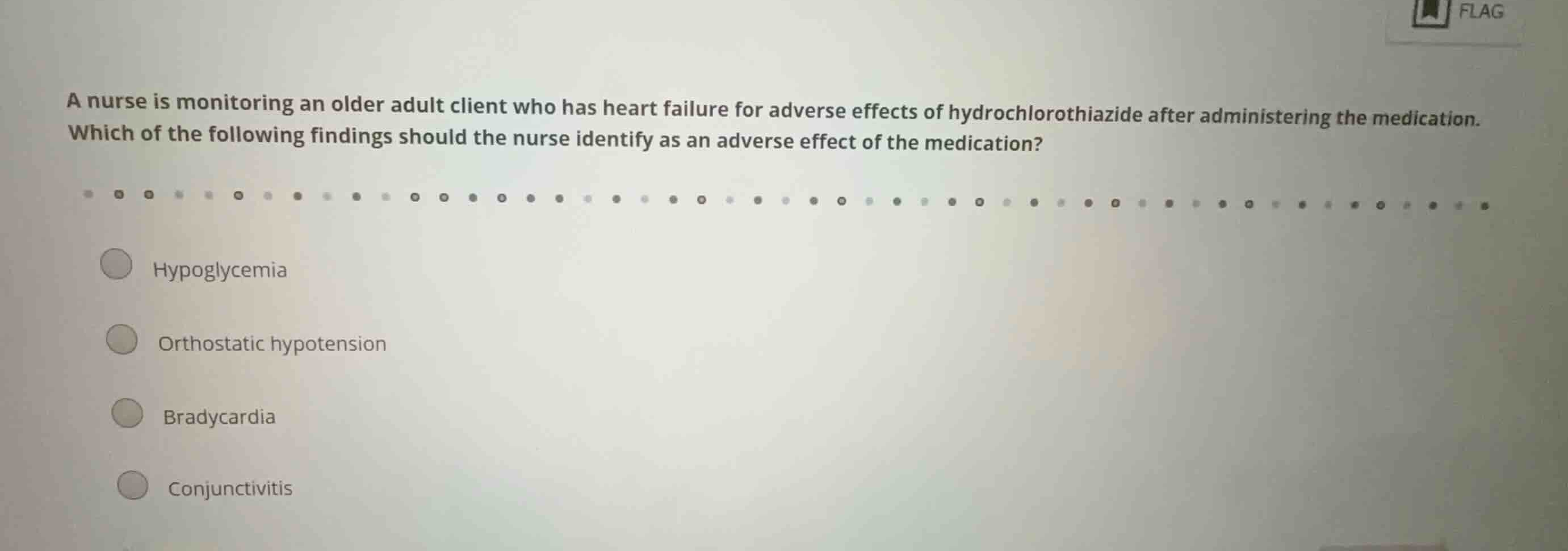
a nurse is monitoring an older adult client who has heart failure for adverse effects of hydrochlorothiazide after administering the medication. which of the following findings should the nurse identify as an adverse effect of the medication?
hypoglycemia
orthostatic hypotension
bradycardia
conjunctivitis
Identify the drug class and mechanism
The medication administered is hydrochlorothiazide, which is a thiazide diuretic. It works by inhibiting sodium and chloride reabsorption in the distal convoluted tubules of the kidneys, leading to increased excretion of sodium, water, and potassium.
Analyze the effects on fluid volume
By promoting fluid excretion, thiazide diuretics decrease circulating blood volume. In an older adult client, this volume depletion significantly increases the risk of volume-related adverse effects.
Evaluate the clinical options
- Hypoglycemia: Thiazides typically cause hyperglycemia (elevated blood glucose), not hypoglycemia.
- Orthostatic hypotension: Decreased blood volume and venous return frequently lead to a drop in blood pressure upon standing, especially in older adults. This is a well-documented adverse effect of Geriatric Pharmacotherapy involving diuretics.
- Bradycardia: Diuretics do not directly lower heart rate; volume depletion is more likely to cause compensatory tachycardia.
- Conjunctivitis: This is an inflammatory eye condition unrelated to diuretic therapy.
Select the correct finding
Orthostatic hypotension is a direct consequence of the volume depletion caused by hydrochlorothiazide, making it the correct adverse effect to monitor.

Snap & solve any problem in the app
Get step-by-step solutions on Sovi AI
Photo-based solutions with guided steps
Explore more problems and detailed explanations
- Hypoglycemia
- Orthostatic hypotension (Correct answer)
- Bradycardia
- Conjunctivitis