QUESTION IMAGE
Question
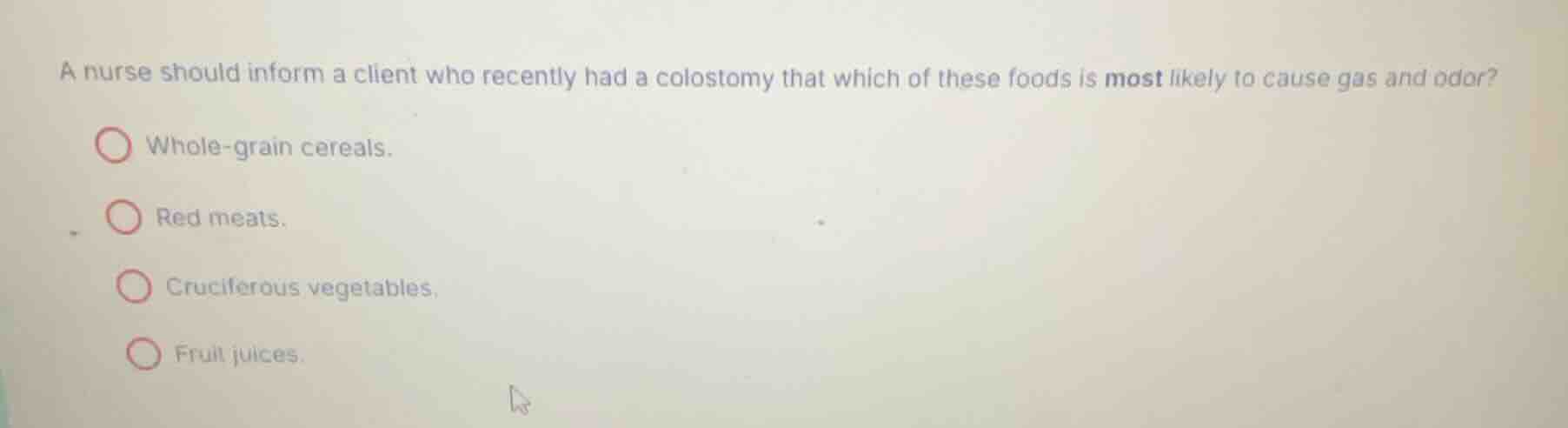
a nurse should inform a client who recently had a colostomy that which of these foods is most likely to cause gas and odor?
whole-grain cereals.
red meats.
cruciferous vegetables.
fruit juices.
🆕 New Concept Discovered: Colostomy Dietary Management
Managing food choices to minimize gas, odor, and blockage.
Step 1: Understand the physiological impact of a colostomy
A colostomy is a surgically created opening (stoma) in the large intestine (colon) to divert waste. Because the normal control of gas and stool passage is altered, patients must manage their diet carefully to prevent excessive gas (flatus) and unpleasant odors, which can cause embarrassment and physical discomfort.
Step 2: Evaluate the food options
- Whole-grain cereals: These are high in fiber. While they can increase stool bulk and occasionally cause mild gas, they are not primary contributors to strong, offensive odors.
- Red meats: These can contribute to stool odor during digestion due to protein breakdown, but they do not typically produce significant amounts of gas.
- Cruciferous vegetables: This family of vegetables includes broccoli, cabbage, Brussels sprouts, cauliflower, and kale. They contain high amounts of complex carbohydrates (like raffinose) and sulfur compounds. When broken down by bacteria in the colon, they produce significant amounts of both gas and highly odorous sulfur compounds.
- Fruit juices: These can sometimes cause loose stools or mild gas if consumed in large quantities due to fructose, but they are not a primary cause of strong odor.
Step 3: Identify the most likely cause of both gas and odor
Cruciferous vegetables are well-documented in clinical nutrition as major culprits for producing both excessive gas and strong, offensive odors in clients with ostomies.

Snap & solve any problem in the app
Get step-by-step solutions on Sovi AI
Photo-based solutions with guided steps
Explore more problems and detailed explanations
Cruciferous vegetables.