QUESTION IMAGE
Question
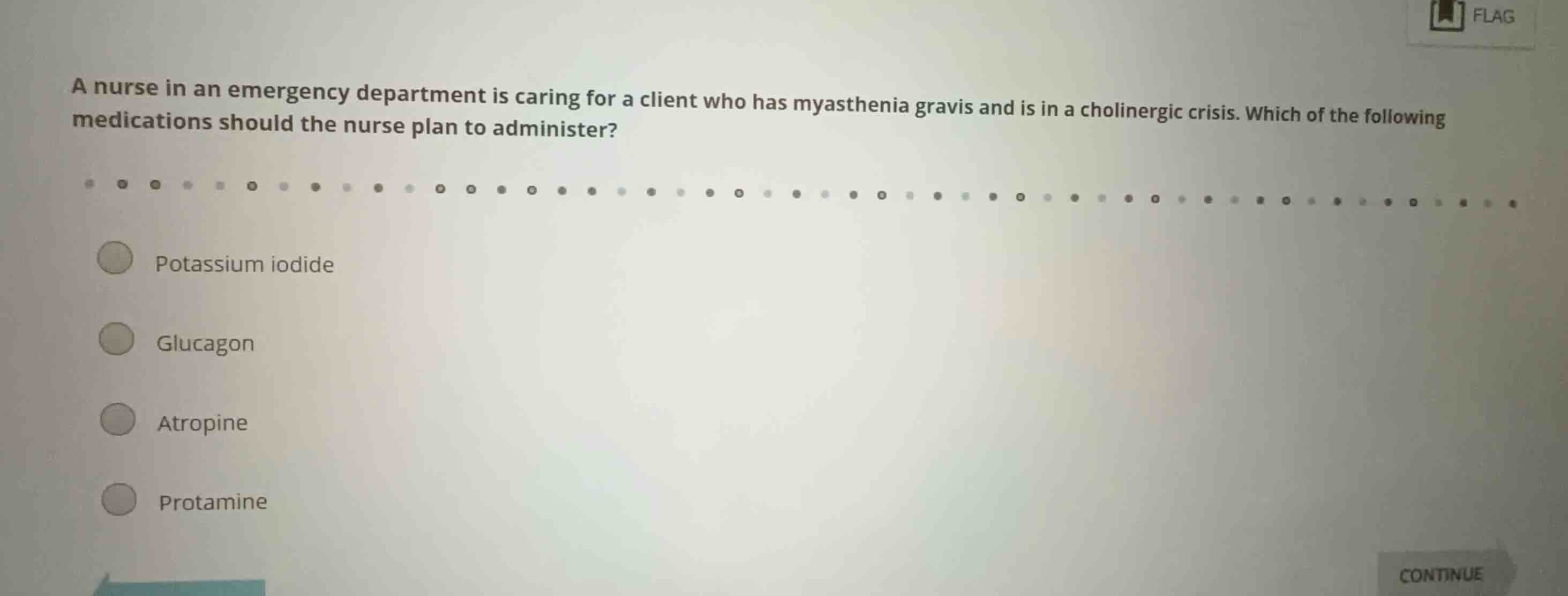
a nurse in an emergency department is caring for a client who has myasthenia gravis and is in a cholinergic crisis. which of the following medications should the nurse plan to administer?
potassium iodide
glucagon
atropine
protamine
Identify the clinical condition
The patient has myasthenia gravis and is experiencing a cholinergic crisis. A cholinergic crisis is caused by an overabundance of acetylcholine, typically due to overmedication with acetylcholinesterase inhibitors.
Analyze the pathophysiology
Excess acetylcholine overstimulates muscarinic and nicotinic receptors. This leads to severe muscle weakness, bronchospasm, excessive secretions, bradycardia, diarrhea, and pupillary constriction.
Determine the pharmacological antidote
To reverse the life-threatening muscarinic effects of excess acetylcholine, an anticholinergic medication is required. Atropine is a competitive muscarinic receptor antagonist that blocks the action of acetylcholine, thereby reversing symptoms like bradycardia and excessive secretions.
Evaluate the other options
- Potassium iodide is used to treat hyperthyroidism or protect the thyroid gland from radioactive iodine.
- Glucagon is used to treat severe hypoglycemia or beta-blocker overdoses.
- Protamine is the reversal agent for heparin.

Snap & solve any problem in the app
Get step-by-step solutions on Sovi AI
Photo-based solutions with guided steps
Explore more problems and detailed explanations
- Potassium iodide
- Glucagon
- Atropine (Correct answer)
- Protamine