QUESTION IMAGE
Question
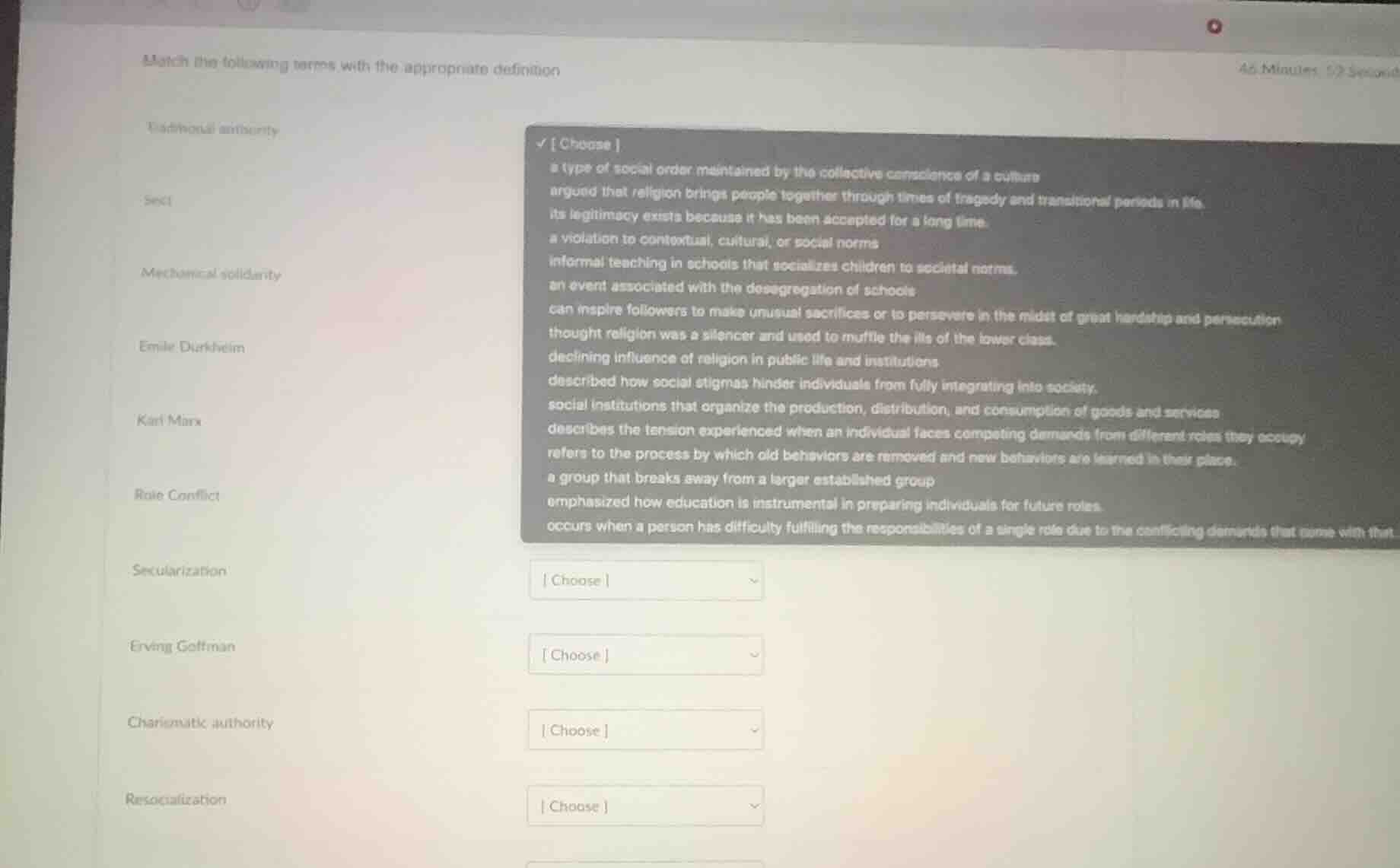
match the following terms with the appropriate definition
traditional authority
sect
mechanical solidarity
emile durkheim
karl marx
role conflict
secularization
erving goffman
charismatic authority
resocialization
choose
a type of social order maintained by the collective conscience of a culture
argued that religion brings people together through times of tragedy and transitional periods in life.
its legitimacy exists because it has been accepted for a long time.
a violation to contextual, cultural, or social norms
informal teaching in schools that socializes children to societal norms.
an event associated with the desegregation of schools
can inspire followers to make unusual sacrifices or to persevere in the midst of great hardship and persecution
thought religion was a silencer and used to muffle the ills of the lower class.
declining influence of religion in public life and institutions
described how social stigmas hinder individuals from fully integrating into society.
social institutions that organize the production, distribution, and consumption of goods and services
describes the tension experienced when an individual faces competing demands from different roles they occupy
refers to the process by which old behaviors are removed and new behaviors are learned in their place.
a group that breaks away from a larger established group
emphasized how education is instrumental in preparing individuals for future roles.
occurs when a person has difficulty fulfilling the responsibilities of a single role due to the conflicting demands that come with that.
Match terms with their sociological definitions
- Traditional authority: its legitimacy exists because it has been accepted for a long time.
- Sect: a group that breaks away from a larger established group.
- Mechanical solidarity: a type of social order maintained by the collective conscience of a culture.
- Emile Durkheim: argued that religion brings people together through times of tragedy and transitional periods in life.
- Karl Marx: thought religion was a silencer and used to muffle the ills of the lower class.
- Role Conflict: describes the tension experienced when an individual faces competing demands from different roles they occupy.
- Secularization: declining influence of religion in public life and institutions.
- Erving Goffman: described how social stigmas hinder individuals from fully integrating into society.
- Charismatic authority: can inspire followers to make unusual sacrifices or to persevere in the midst of great hardship and persecution.
- Resocialization: refers to the process by which old behaviors are removed and new behaviors are learned in their place.

Snap & solve any problem in the app
Get step-by-step solutions on Sovi AI
Photo-based solutions with guided steps
Explore more problems and detailed explanations
| Term | Definition |
|---|---|
| Sect | a group that breaks away from a larger established group. |
| Mechanical solidarity | a type of social order maintained by the collective conscience of a culture. |
| Emile Durkheim | argued that religion brings people together through times of tragedy and transitional periods in life. |
| Karl Marx | thought religion was a silencer and used to muffle the ills of the lower class. |
| Role Conflict | describes the tension experienced when an individual faces competing demands from different roles they occupy. |
| Secularization | declining influence of religion in public life and institutions. |
| Erving Goffman | described how social stigmas hinder individuals from fully integrating into society. |
| Charismatic authority | can inspire followers to make unusual sacrifices or to persevere in the midst of great hardship and persecution. |
| Resocialization | refers to the process by which old behaviors are removed and new behaviors are learned in their place. |