Sovi.AI - AI Math Tutor

Scan to solve math questions

QUESTION IMAGE

m1 pre-assessment: earth as a system-the geosphere do your best on this…

Question

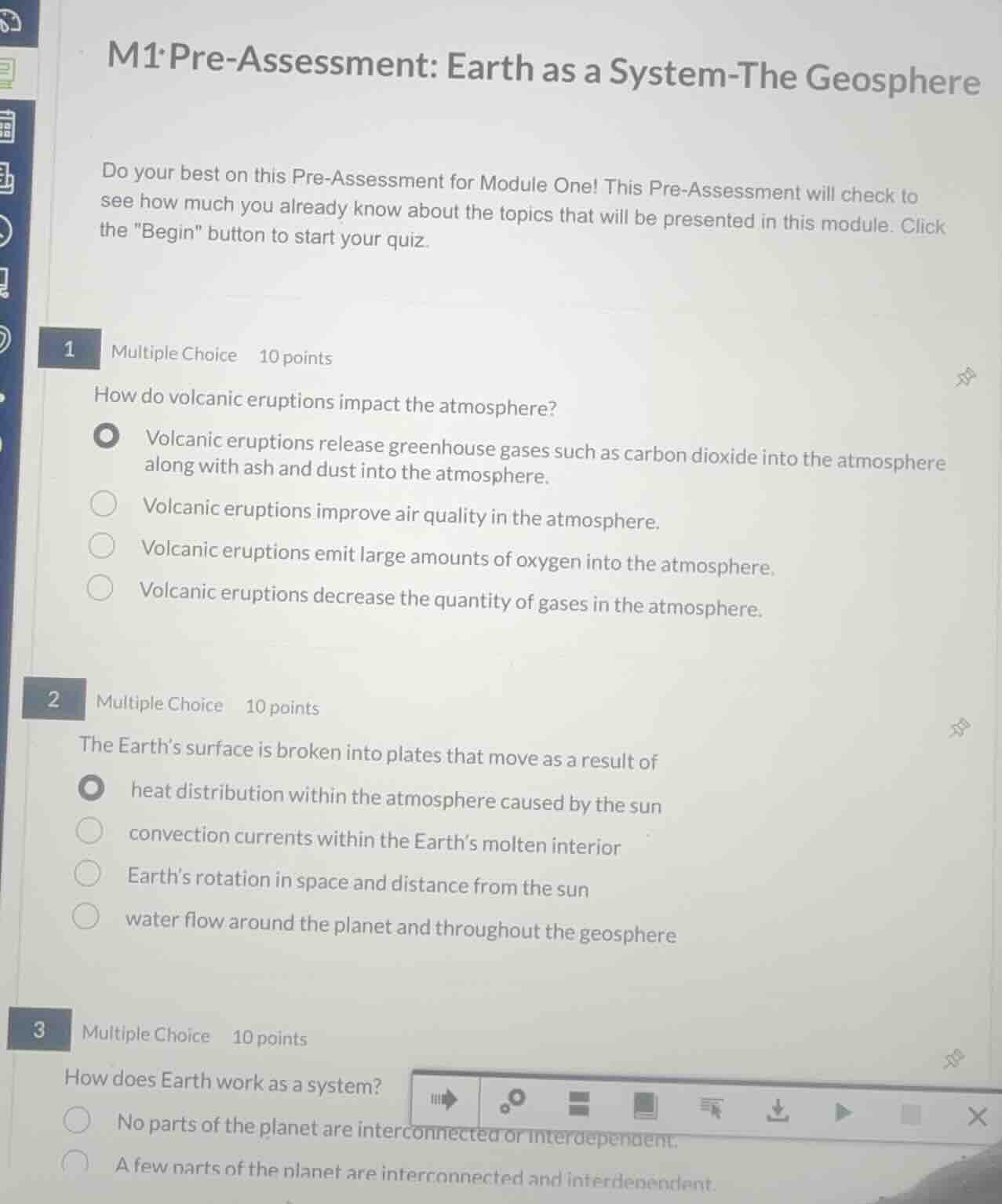
m1 pre-assessment: earth as a system-the geosphere

do your best on this pre-assessment for module one! this pre-assessment will check to see how much you already know about the topics that will be presented in this module. click the \begin\ button to start your quiz.

1 multiple choice 10 points
how do volcanic eruptions impact the atmosphere?
volcanic eruptions release greenhouse gases such as carbon dioxide into the atmosphere along with ash and dust into the atmosphere.
volcanic eruptions improve air quality in the atmosphere.
volcanic eruptions emit large amounts of oxygen into the atmosphere.
volcanic eruptions decrease the quantity of gases in the atmosphere.

2 multiple choice 10 points
the earths surface is broken into plates that move as a result of
heat distribution within the atmosphere caused by the sun
convection currents within the earths molten interior
earths rotation in space and distance from the sun
water flow around the planet and throughout the geosphere

3 multiple choice 10 points
how does earth work as a system?
no parts of the planet are interconnected or interdependent.
a few parts of the planet are interconnected and interdependent.

Explanation:

Response

<pre_analysis>
{
"quality": "clear",
"question_count": 3,
"skills_matched": [
"direct_cot",
"multiple_choice_formatter",
"explain_then_answer",
"quick"
],
"needs_drawing": false,
"concepts_used": [
"Earth Systems",
"Plate Tectonics",
"Volcanic Impacts"
],
"new_concepts": [],
"current_concepts": [
"Earth Systems",
"Plate Tectonics",
"Volcanic Impacts"
]
}
</pre_analysis>

<reasoning>

Analyze volcanic impacts on the atmosphere

Volcanoes release gases (like \(CO_2\), \(SO_2\), water vapor) and particulate matter (ash, dust) directly into the air. This matches the first option for Question 1.

Analyze the driving force of plate tectonics

Tectonic plates move due to thermal convection currents in the mantle (Earth's molten interior), where hot material rises and cooler material sinks. This matches the second option for Question 2.

Analyze Earth as a system

Earth operates as a complex system where all spheres (geosphere, atmosphere, hydrosphere, biosphere) are interconnected and interdependent. This matches the third option (partially visible but clearly stating interconnectedness) for Question 3.
</reasoning>

<answer>

Question 1

<mcq-correct>(A) Volcanic eruptions release greenhouse gases such as carbon dioxide into the atmosphere along with ash and dust into the atmosphere.</mcq-correct>
<mcq-option>(B) Volcanic eruptions improve air quality in the atmosphere.</mcq-option>
<mcq-option>(C) Volcanic eruptions emit large amounts of oxygen into the atmosphere.</mcq-option>
<mcq-option>(D) Volcanic eruptions decrease the quantity of gases in the atmosphere.</mcq-option>

Question 2

<mcq-option>(A) heat distribution within the atmosphere caused by the sun</mcq-option>
<mcq-correct>(B) convection currents within the Earth's molten interior</mcq-correct>
<mcq-option>(C) Earth's rotation in space and distance from the sun</mcq-option>
<mcq-option>(D) water flow around the planet and throughout the geosphere</mcq-option>

Question 3

<mcq-option>(A) No parts of the planet are interconnected or interdependent.</mcq-option>
<mcq-option>(B) A few parts of the planet are interconnected and interdependent.</mcq-option>
<mcq-correct>(C) All parts of the planet are interconnected and interdependent.</mcq-correct>
</answer>

<post_analysis>
{
"subject": "Natural Science",
"question_type": "Multiple Choice",
"knowledge_point": [
"Natural Science",
"Earth Science",
"Earth Systems"
]
}
</post_analysis>

Answer:

<pre_analysis>
{
"quality": "clear",
"question_count": 3,
"skills_matched": [
"direct_cot",
"multiple_choice_formatter",
"explain_then_answer",
"quick"
],
"needs_drawing": false,
"concepts_used": [
"Earth Systems",
"Plate Tectonics",
"Volcanic Impacts"
],
"new_concepts": [],
"current_concepts": [
"Earth Systems",
"Plate Tectonics",
"Volcanic Impacts"
]
}
</pre_analysis>

<reasoning>

Analyze volcanic impacts on the atmosphere

Volcanoes release gases (like \(CO_2\), \(SO_2\), water vapor) and particulate matter (ash, dust) directly into the air. This matches the first option for Question 1.

Analyze the driving force of plate tectonics

Tectonic plates move due to thermal convection currents in the mantle (Earth's molten interior), where hot material rises and cooler material sinks. This matches the second option for Question 2.

Analyze Earth as a system

Earth operates as a complex system where all spheres (geosphere, atmosphere, hydrosphere, biosphere) are interconnected and interdependent. This matches the third option (partially visible but clearly stating interconnectedness) for Question 3.
</reasoning>

<answer>

Question 1

<mcq-correct>(A) Volcanic eruptions release greenhouse gases such as carbon dioxide into the atmosphere along with ash and dust into the atmosphere.</mcq-correct>
<mcq-option>(B) Volcanic eruptions improve air quality in the atmosphere.</mcq-option>
<mcq-option>(C) Volcanic eruptions emit large amounts of oxygen into the atmosphere.</mcq-option>
<mcq-option>(D) Volcanic eruptions decrease the quantity of gases in the atmosphere.</mcq-option>

Question 2

<mcq-option>(A) heat distribution within the atmosphere caused by the sun</mcq-option>
<mcq-correct>(B) convection currents within the Earth's molten interior</mcq-correct>
<mcq-option>(C) Earth's rotation in space and distance from the sun</mcq-option>
<mcq-option>(D) water flow around the planet and throughout the geosphere</mcq-option>

Question 3

<mcq-option>(A) No parts of the planet are interconnected or interdependent.</mcq-option>
<mcq-option>(B) A few parts of the planet are interconnected and interdependent.</mcq-option>
<mcq-correct>(C) All parts of the planet are interconnected and interdependent.</mcq-correct>
</answer>

<post_analysis>
{
"subject": "Natural Science",
"question_type": "Multiple Choice",
"knowledge_point": [
"Natural Science",
"Earth Science",
"Earth Systems"
]
}
</post_analysis>