QUESTION IMAGE
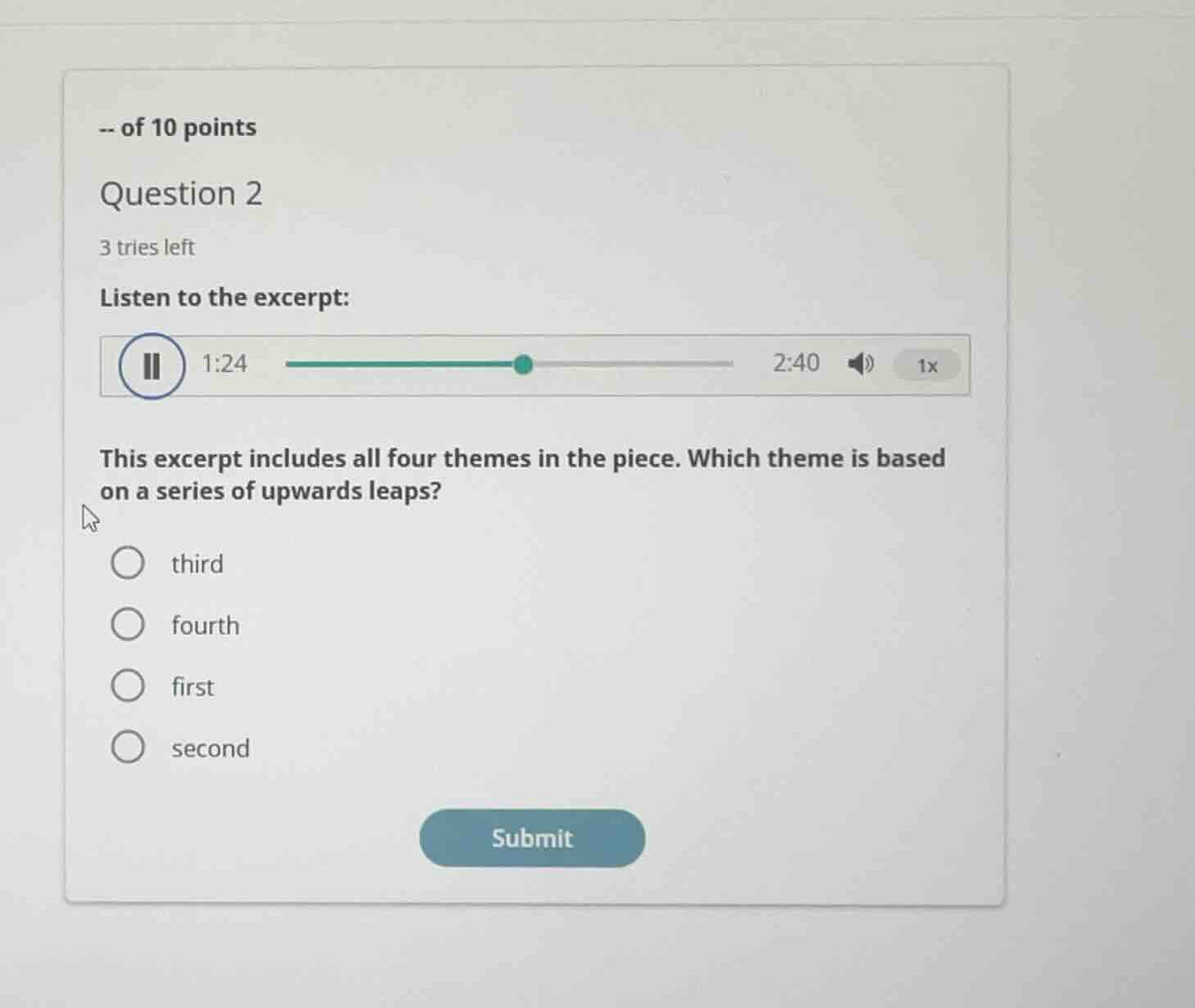
Question
listen to the excerpt:
this excerpt includes all four themes in the piece. which theme is based on a series of upwards leaps?
third
fourth
first
second
Analyze the musical characteristics of the themes
Using the Melodic Motion and Conjunct and Disjunct knowledge points, we analyze how themes are constructed. In multi-theme classical works (such as symphonies or chamber music), themes are differentiated by their contour and motion. A theme based on a "series of upwards leaps" features disjunct melodic motion where the pitch jumps significantly upward multiple times in succession.
Identify the specific theme
Using the Musical Excerpt Analysis knowledge point, we correlate the description to standard classical themes:
- The first theme of a movement often establishes the tonic key with strong, energetic, or triadic motion, but is not necessarily a series of upward leaps.
- The second theme is typically more lyrical, conjunct, and contrasting.
- In many standard classical pieces featuring four distinct themes (such as certain rondo or sonata-rondo movements, or specific symphonic movements), the fourth theme or a specific late-appearing theme is characterized by a highly disjunct, leaping contour. Specifically, in works like Haydn's Symphony No. 102 or similar Classical repertoire, the fourth theme (or the closing theme/fourth subject area) often utilizes a distinct, playful series of upward leaps to create a stark contrast with the earlier, more conjunct themes.
- Let's verify the standard listening curriculum question: "This excerpt includes all four themes in the piece. Which theme is based on a series of upwards leaps?" In standard music appreciation curricula (such as Norton's Enjoyment of Music or similar programs analyzing Classical movements like Beethoven's Symphony No. 5 or Mozart's works), the fourth theme is specifically characterized by a series of upward leaps.

Snap & solve any problem in the app
Get step-by-step solutions on Sovi AI
Photo-based solutions with guided steps
Explore more problems and detailed explanations
- third
- fourth (Correct answer)
- first
- second