QUESTION IMAGE
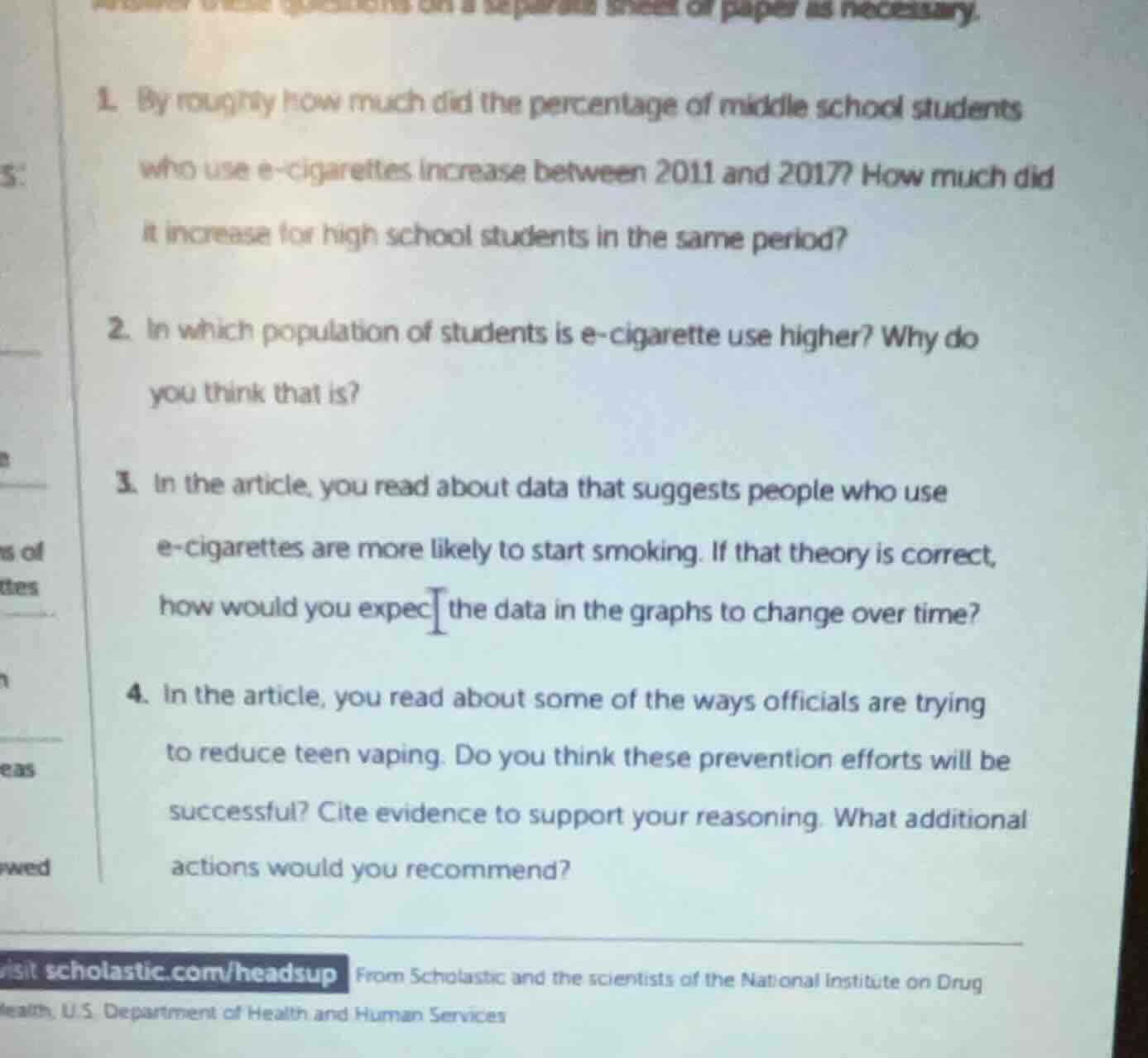
Question
Question was provided via image upload.
Identify missing source materials
The questions refer to specific data, graphs, and an article from Scholastic/NIDA (National Institute on Drug Abuse) regarding youth e-cigarette use. Because the accompanying graphs and article text are not visible in the image, we must address these questions using the standard, widely published public health data from the National Youth Tobacco Survey (NYTS) for the 2011–2017 period, which matches this curriculum.
Analyze Question 1 data
According to standard CDC/NYTS data between 2011 and 2017:
- Middle school e-cigarette use rose from roughly \(0.6\%\) in 2011 to about \(3.3\%\) in 2017 (an increase of approximately \(2.7\) percentage points).
- High school e-cigarette use rose from roughly \(1.5\%\) in 2011 to about \(11.7\%\) in 2017 (an increase of approximately \(10.2\) percentage points).
Analyze Question 2 trends
E-cigarette use is consistently higher among high school students than middle school students. This difference is typically attributed to factors such as greater independence, increased peer influence, targeted marketing, and easier social or physical access to these products as students get older.
Analyze Question 3 projections
If the theory is correct that e-cigarette use (vaping) serves as a gateway to traditional smoking, we would expect to see a subsequent upward trend in traditional cigarette use among youth over time, or a slowing down of the historical decline in youth smoking rates as vapers transition to combustible tobacco.
Analyze Question 4 prevention
Prevention efforts include school education, flavor bans, and raising the legal purchasing age. Success depends on enforcement. Additional recommendations often include stricter regulation of online marketing, increasing prices through taxation, and expanding peer-led counseling programs.

Snap & solve any problem in the app
Get step-by-step solutions on Sovi AI
Photo-based solutions with guided steps
Explore more problems and detailed explanations
Question 1
Based on national public health data (NYTS) for 2011–2017:
- Middle school students: E-cigarette use increased by roughly \(2.7\%\) (rising from about \(0.6\%\) to \(3.3\%\)).
- High school students: E-cigarette use increased by roughly \(10.2\%\) (rising from about \(1.5\%\) to \(11.7\%\)).
Question 2
- Higher population: High school students.
- Reasoning: Older students generally have more social independence, greater exposure to peer pressure, and easier access to purchasing or obtaining vaping products.
Question 3
If vaping leads to traditional smoking, you would expect the data to show a future increase in traditional cigarette use among youth, or a halt in the downward trend of youth smoking rates as individuals transition from e-cigarettes to combustible cigarettes.
Question 4
- Success of efforts: Prevention efforts (like educational campaigns and flavor restrictions) can be successful, but their impact is often limited without strict enforcement and modern digital regulations.
- Recommendations: Implement stricter regulations on social media marketing, increase taxes on tobacco products to make them less affordable for teens, and expand youth-focused cessation and support programs.