QUESTION IMAGE
Question
Question was provided via image upload.
Identify the missing question context
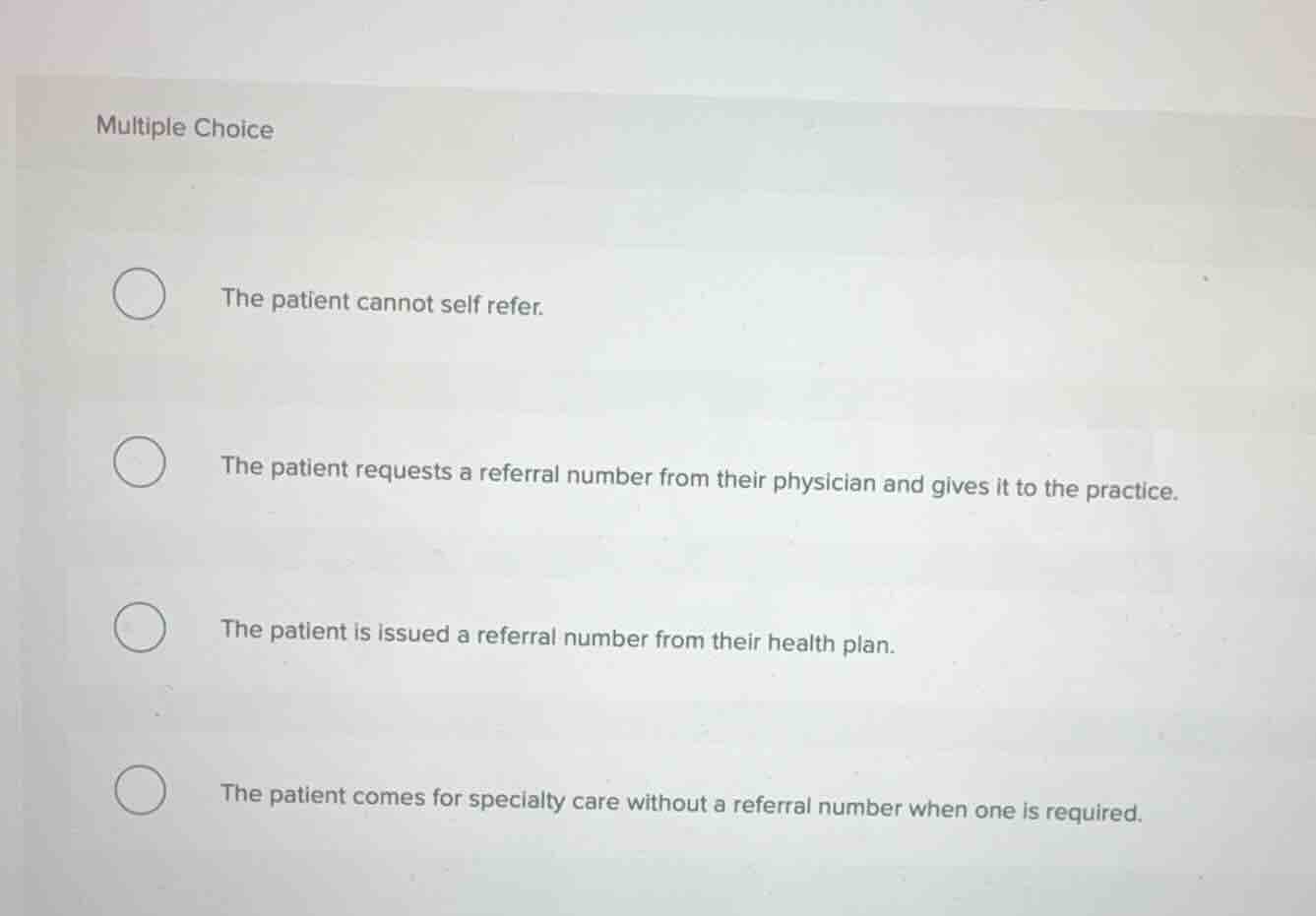
The image shows four multiple-choice options without the explicit question stem. Based on the options provided, the topic relates to medical referrals, specifically what constitutes a "self-referral" or a breakdown in the referral process.
The options are:
- "The patient cannot self refer."
- "The patient requests a referral number from their physician and gives it to the practice."
- "The patient is issued a referral number from their health plan."
- "The patient comes for specialty care without a referral number when one is required."
In medical billing and patient administration, a "self-referral" occurs when a patient schedules an appointment with a specialist without obtaining the required referral authorization from their primary care physician (PCP) or health plan first. Therefore, the scenario describing a patient coming for specialty care without a required referral number represents this situation (or a direct violation of the referral requirement).
Analyze the options under the Medical Referral Document concept
Using the Medical Referral Document knowledge point:
- Option 1 is a general rule statement rather than a scenario.
- Option 2 describes a standard, correct referral workflow where the patient coordinates with their PCP.
- Option 3 describes a standard insurance authorization workflow.
- Option 4 describes a situation where a patient bypasses the required referral process to seek specialty care directly, which defines a self-referral scenario (or a referral failure at patient intake). This is the most distinct administrative scenario among the choices.
Determine the correct choice
The fourth option, "The patient comes for specialty care without a referral number when one is required," represents the classic administrative definition of a self-referral issue or unauthorized specialist visit during patient intake.

Snap & solve any problem in the app
Get step-by-step solutions on Sovi AI
Photo-based solutions with guided steps
Explore more problems and detailed explanations
- (A) The patient cannot self refer.
- (B) The patient requests a referral number from their physician and gives it to the practice.
- (C) The patient is issued a referral number from their health plan.
- (D) The patient comes for specialty care without a referral number when one is required. (Correct answer)