QUESTION IMAGE
24,045 Learners found this answer helpful
Question
Question was provided via image upload.
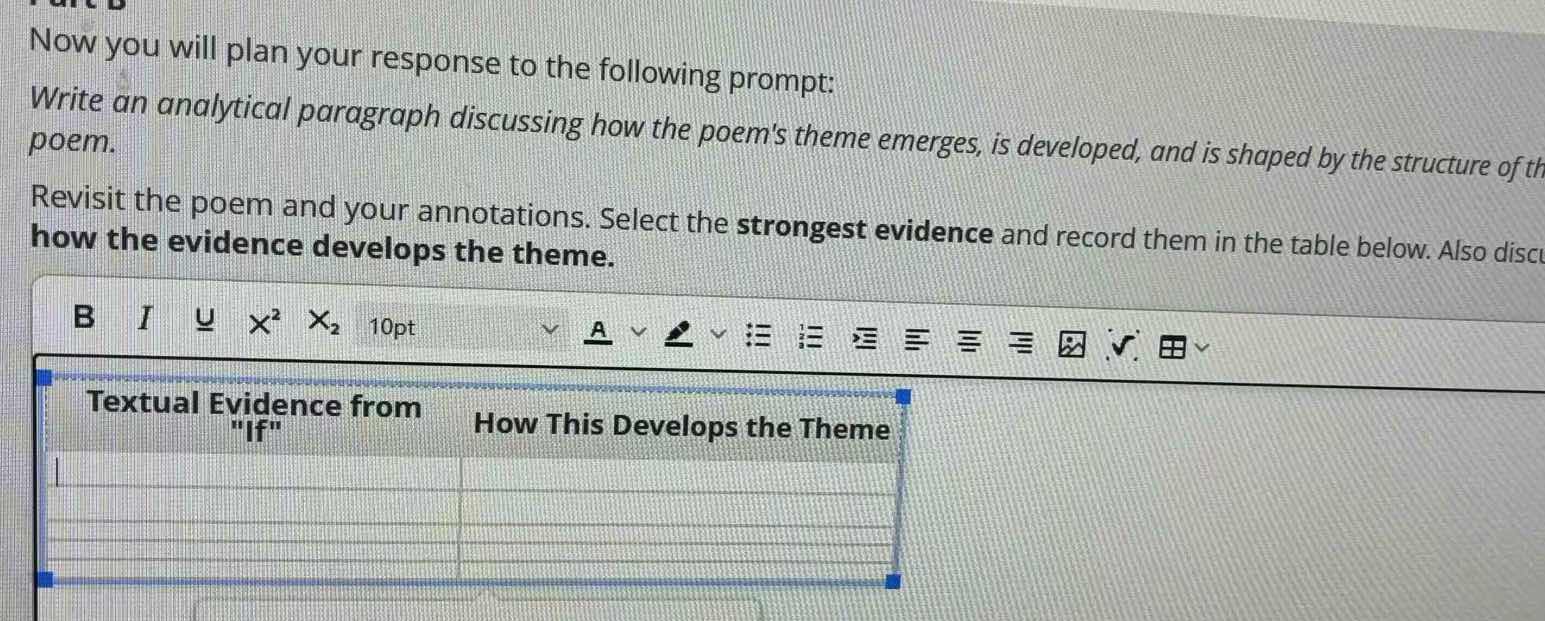
Identify the prompt requirements and source text
The prompt asks to select strong textual evidence from the poem "If" (by Rudyard Kipling) and explain how this evidence develops the theme of the poem (which centers on maturity, self-possession, and integrity).
Select key textual evidence from "If"
- "If you can keep your head when all about you / Are losing theirs and blaming it on you"
- "If you can trust yourself when all men doubt you, / But make allowance for their doubting too"
- "If you can meet with Triumph and Disaster / And treat those two impostors just the same"
Analyze how each piece of evidence develops the theme
- The first quote establishes the theme of emotional control and composure under pressure as the foundation of personal integrity.
- The second quote develops the theme by balancing self-confidence with intellectual humility and empathy for others' perspectives.
- The third quote highlights the theme of resilience, showing that true maturity requires maintaining perspective and stability through both success and failure.

Snap & solve any problem in the app
Get step-by-step solutions on Sovi AI
Photo-based solutions with guided steps
Explore more problems and detailed explanations
| Textual Evidence from "If" | How This Develops the Theme |
|---|---|
| "If you can trust yourself when all men doubt you, / But make allowance for their doubting too" | Develops the theme by balancing inner self-confidence with humility and empathy, showing that maturity requires both conviction and openness. |
| "If you can meet with Triumph and Disaster / And treat those two impostors just the same" | Illustrates the theme of resilience and equanimity, emphasizing that a person of true character remains steady and unswayed by temporary highs or lows. |