QUESTION IMAGE
Question
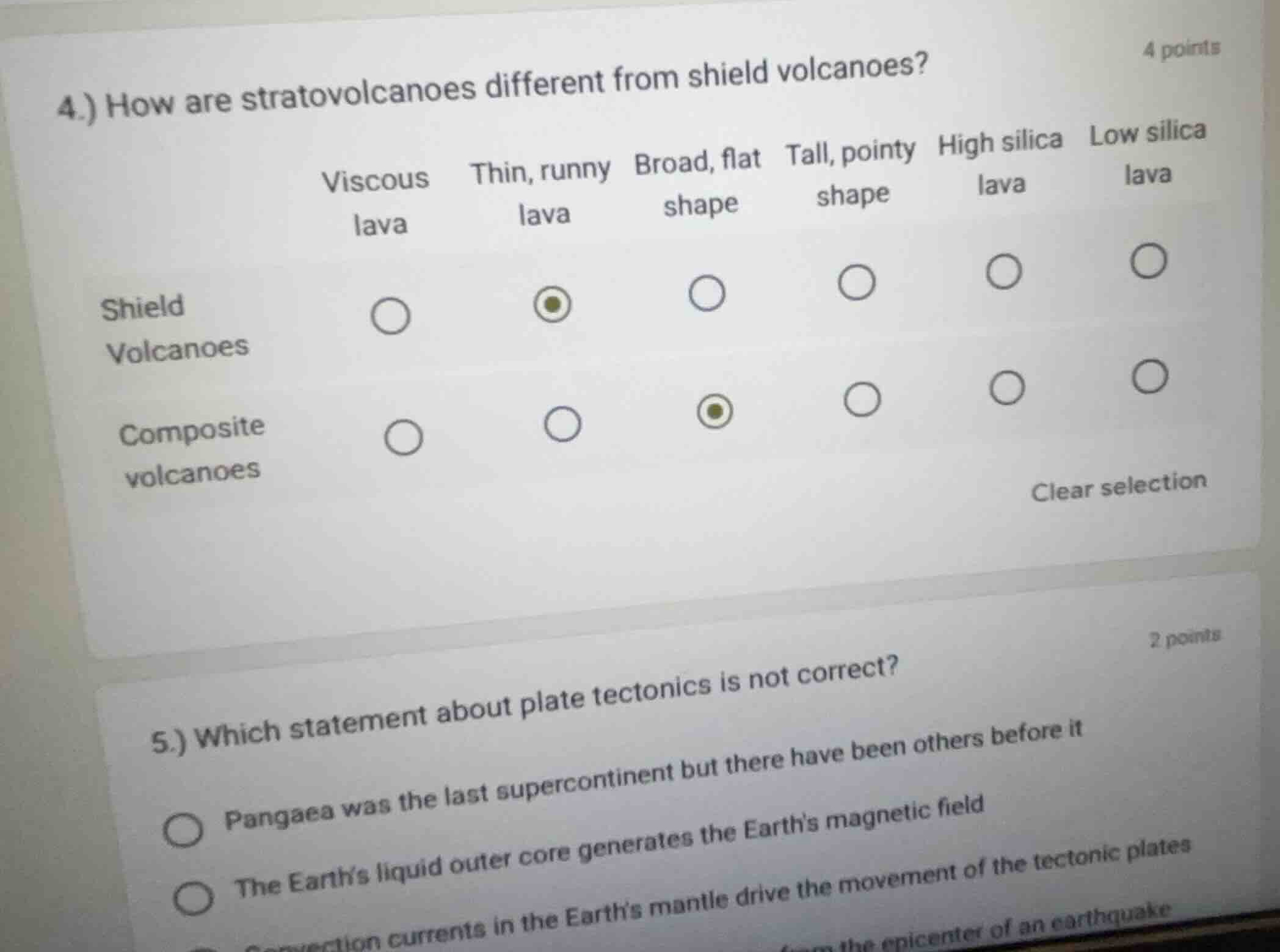
4.) how are stratovolcanoes different from shield volcanoes?
shield volcanoes: viscous lava, thin, runny lava, broad, flat shape, tall, pointy shape, high silica lava, low silica lava
composite volcanoes: viscous lava, thin, runny lava, broad, flat shape, tall, pointy shape, high silica lava, low silica lava
5.) which statement about plate tectonics is not correct?
- pangaea was the last supercontinent but there have been others before it
- the earths liquid outer core generates the earths magnetic field
- convection currents in the earths mantle drive the movement of the tectonic plates
- ... the epicenter of an earthquake
Clasificación de volcanes (Pregunta 4)
- Volcanes en escudo (Shield Volcanoes): Se caracterizan por lava fluida y poco viscosa (thin, runny lava), bajo contenido de sílice (low silica lava) y una forma amplia y plana (broad, flat shape).
- Volcanes compuestos o estratovolcanes (Composite/Stratovolcanoes): Se caracterizan por lava viscosa (viscous lava), alto contenido de sílice (high silica lava) y una forma alta y puntiaguda (tall, pointy shape).
- Las selecciones actuales en la imagen muestran errores (por ejemplo, marcar "Composite volcanoes" como "Broad, flat shape").
Evaluación de afirmaciones sobre tectónica de placas (Pregunta 5)
- Pangaea was the last supercontinent but there have been others before it: Correcto (Pangea fue el más reciente, precedido por Rodinia, Columbia, etc.).
- The Earth's liquid outer core generates the Earth's magnetic field: Correcto (el dinamo en el núcleo externo genera el campo geomagnético).
- Convection currents in the Earth's mantle drive the movement of the tectonic plates: Correcto (las corrientes de convección son el motor principal del movimiento de las placas).
- La última opción (parcialmente visible): "...from the epicenter of an earthquake". Generalmente, las ondas sísmicas se originan en el hipocentro (foco), no en el epicentro (que es la proyección en la superficie). Por lo tanto, la afirmación incorrecta suele estar relacionada con esta definición.

Snap & solve any problem in the app
Get step-by-step solutions on Sovi AI
Photo-based solutions with guided steps
Explore more problems and detailed explanations
Question 4
- Shield Volcanoes: Thin, runny lava | Broad, flat shape | Low silica lava
- Composite volcanoes: Viscous lava | Tall, pointy shape | High silica lava
Question 5
La afirmación incorrecta es la última opción (parcialmente visible en la parte inferior):
- "Seismic waves originate from the epicenter of an earthquake" (u otra afirmación similar que confunda el epicentro con el hipocentro/foco).