Sovi.AI - AI Math Tutor

Scan to solve math questions

QUESTION IMAGE

how is setting revealed? through a central message that applies to anyo…

Question

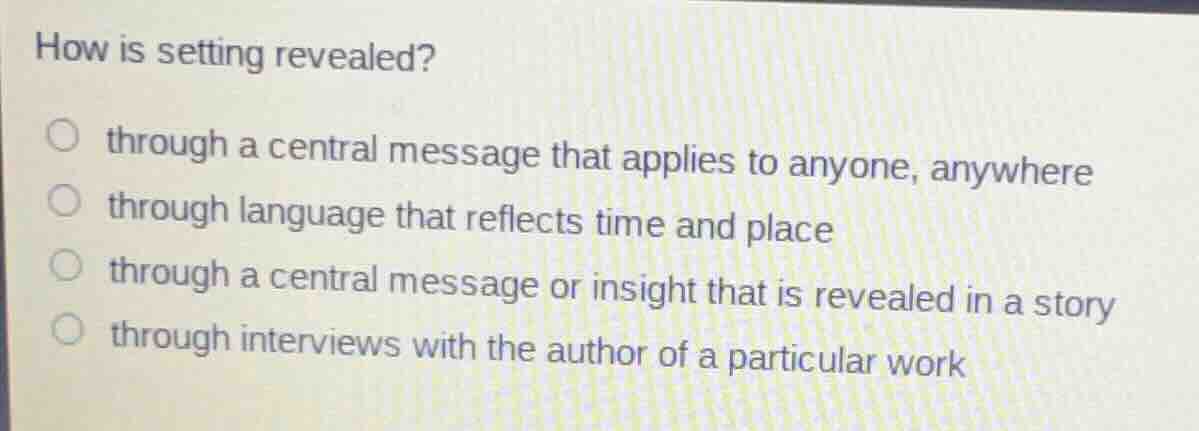
how is setting revealed?

through a central message that applies to anyone, anywhere
through language that reflects time and place
through a central message or insight that is revealed in a story
through interviews with the author of a particular work

Explanation:

Response

<pre_analysis>
{
"quality": "clear",
"question_count": 1,
"skills_matched": [
"direct_cot",
"multiple_choice_formatter",
"explain_then_answer",
"tutor",
"mastery_adaptive_brevity"
],
"needs_drawing": false,
"concepts_used": [
"Setting Analysis"
],
"new_concepts": [],
"current_concepts": [
"Setting Analysis",
"Literary Devices"
]
}
</pre_analysis>

<reasoning>

Define setting in literature

Using the Setting Analysis knowledge point
The setting of a literary work refers to the time and geographic location in which the story takes place. It establishes the historical, cultural, and social backdrop for the characters and plot.

Evaluate the options

  • Option 1: "through a central message that applies to anyone, anywhere" describes a universal theme, not setting.
  • Option 2: "through language that reflects time and place" directly aligns with how authors use sensory details, dialect, and descriptions to establish when and where a story occurs.
  • Option 3: "through a central message or insight that is revealed in a story" describes the theme of a work.
  • Option 4: "through interviews with the author of a particular work" refers to external biographical research rather than how setting is revealed within the text itself.

</reasoning>

<answer>
<mcq-option>through a central message that applies to anyone, anywhere</mcq-option>
<mcq-correct>through language that reflects time and place</mcq-correct>
<mcq-option>through a central message or insight that is revealed in a story</mcq-option>
<mcq-option>through interviews with the author of a particular work</mcq-option>
</answer>

<post_analysis>
{
"subject": "Arts",
"question_type": "Multiple Choice",
"knowledge_point": [
"Arts",
"Literary Analysis",
"Setting Analysis"
]
}
</post_analysis>

Answer:

<pre_analysis>
{
"quality": "clear",
"question_count": 1,
"skills_matched": [
"direct_cot",
"multiple_choice_formatter",
"explain_then_answer",
"tutor",
"mastery_adaptive_brevity"
],
"needs_drawing": false,
"concepts_used": [
"Setting Analysis"
],
"new_concepts": [],
"current_concepts": [
"Setting Analysis",
"Literary Devices"
]
}
</pre_analysis>

<reasoning>

Define setting in literature

Using the Setting Analysis knowledge point
The setting of a literary work refers to the time and geographic location in which the story takes place. It establishes the historical, cultural, and social backdrop for the characters and plot.

Evaluate the options

  • Option 1: "through a central message that applies to anyone, anywhere" describes a universal theme, not setting.
  • Option 2: "through language that reflects time and place" directly aligns with how authors use sensory details, dialect, and descriptions to establish when and where a story occurs.
  • Option 3: "through a central message or insight that is revealed in a story" describes the theme of a work.
  • Option 4: "through interviews with the author of a particular work" refers to external biographical research rather than how setting is revealed within the text itself.

</reasoning>

<answer>
<mcq-option>through a central message that applies to anyone, anywhere</mcq-option>
<mcq-correct>through language that reflects time and place</mcq-correct>
<mcq-option>through a central message or insight that is revealed in a story</mcq-option>
<mcq-option>through interviews with the author of a particular work</mcq-option>
</answer>

<post_analysis>
{
"subject": "Arts",
"question_type": "Multiple Choice",
"knowledge_point": [
"Arts",
"Literary Analysis",
"Setting Analysis"
]
}
</post_analysis>