QUESTION IMAGE
Question
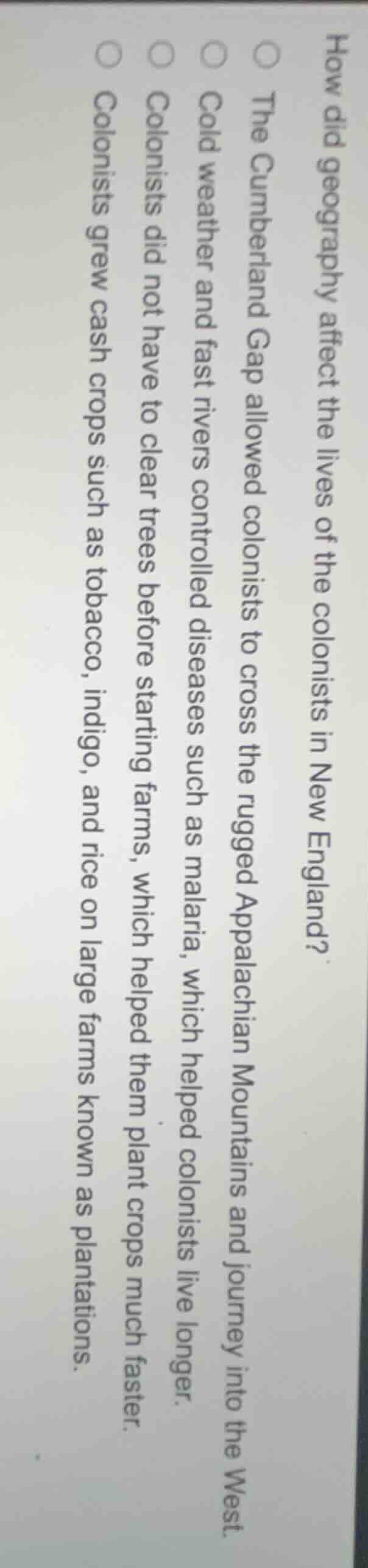
how did geography affect the lives of the colonists in new england?
○ the cumberland gap allowed colonists to cross the rugged appalachian mountains and journey into the west.
○ cold weather and fast rivers controlled diseases such as malaria, which helped colonists live longer.
○ colonists did not have to clear trees before starting farms, which helped them plant crops much faster.
○ colonists grew cash crops such as tobacco, indigo, and rice on large farms known as plantations.
To determine the correct answer, we analyze each option in the context of New England's geography:
- Option 1: The Cumberland Gap is in the Appalachian region, not New England. So this is incorrect.
- Option 2: New England has a cold climate and fast - flowing rivers. Malaria is a tropical disease, and the cold weather in New England would not support malaria. However, the cold weather and fast rivers could help control other diseases, and the cold climate is a characteristic of New England's geography that affects colonists' lives (e.g., shorter growing seasons, different settlement patterns). This option is plausible.
- Option 3: New England has a lot of forests, and colonists had to clear trees for farming. So this statement is false.
- Option 4: Cash crops like tobacco, indigo, and rice were grown in the Southern colonies, not New England. New England's geography (rocky soil, cold climate) was not suitable for large - scale cash crop plantations. So this is incorrect.

Snap & solve any problem in the app
Get step-by-step solutions on Sovi AI
Photo-based solutions with guided steps
Explore more problems and detailed explanations
B. Cold weather and fast rivers controlled diseases such as malaria, which helped colonists live longer.