QUESTION IMAGE
Question
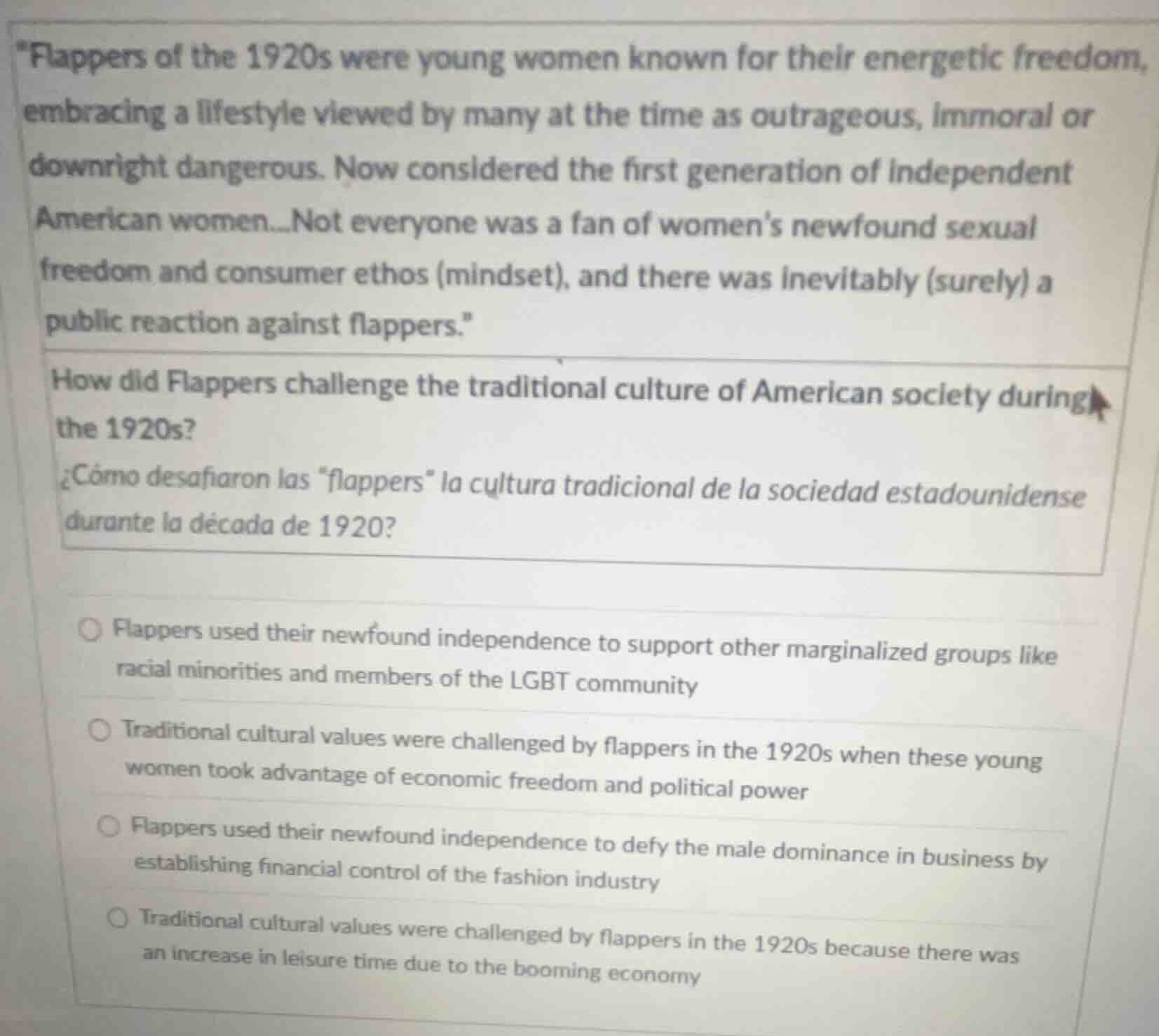
flappers of the 1920s were young women known for their energetic freedom, embracing a lifestyle viewed by many at the time as outrageous, immoral or downright dangerous. now considered the first generation of independent american women...not everyone was a fan of women’s newfound sexual freedom and consumer ethos (mindset), and there was inevitably (surely) a public reaction against flappers. how did flappers challenge the traditional culture of american society during the 1920s? ¿cómo desafiaron las \flappers\ la cultura tradicional de la sociedad estadounidense durante la década de 1920? - flappers used their newfound independence to support other marginalized groups like racial minorities and members of the lgbt community - traditional cultural values were challenged by flappers in the 1920s when these young women took advantage of economic freedom and political power - flappers used their newfound independence to defy the male dominance in business by establishing financial control of the fashion industry - traditional cultural values were challenged by flappers in the 1920s because there was an increase in leisure time due to the booming economy
Flappers challenged 1920s American traditional culture by leveraging the economic freedom of the booming era (which gave them disposable income for consumer lifestyles) and the political power gained from women's suffrage (19th Amendment, 1920) to reject restrictive gender norms. The other options are incorrect: there is no major historical link between flappers and supporting racial/LGBT groups, they did not take financial control of the fashion industry, and increased leisure time was a context, not the direct way they challenged culture.

Snap & solve any problem in the app
Get step-by-step solutions on Sovi AI
Photo-based solutions with guided steps
Explore more problems and detailed explanations
B. Traditional cultural values were challenged by flappers in the 1920s when these young women took advantage of economic freedom and political power