QUESTION IMAGE
Question
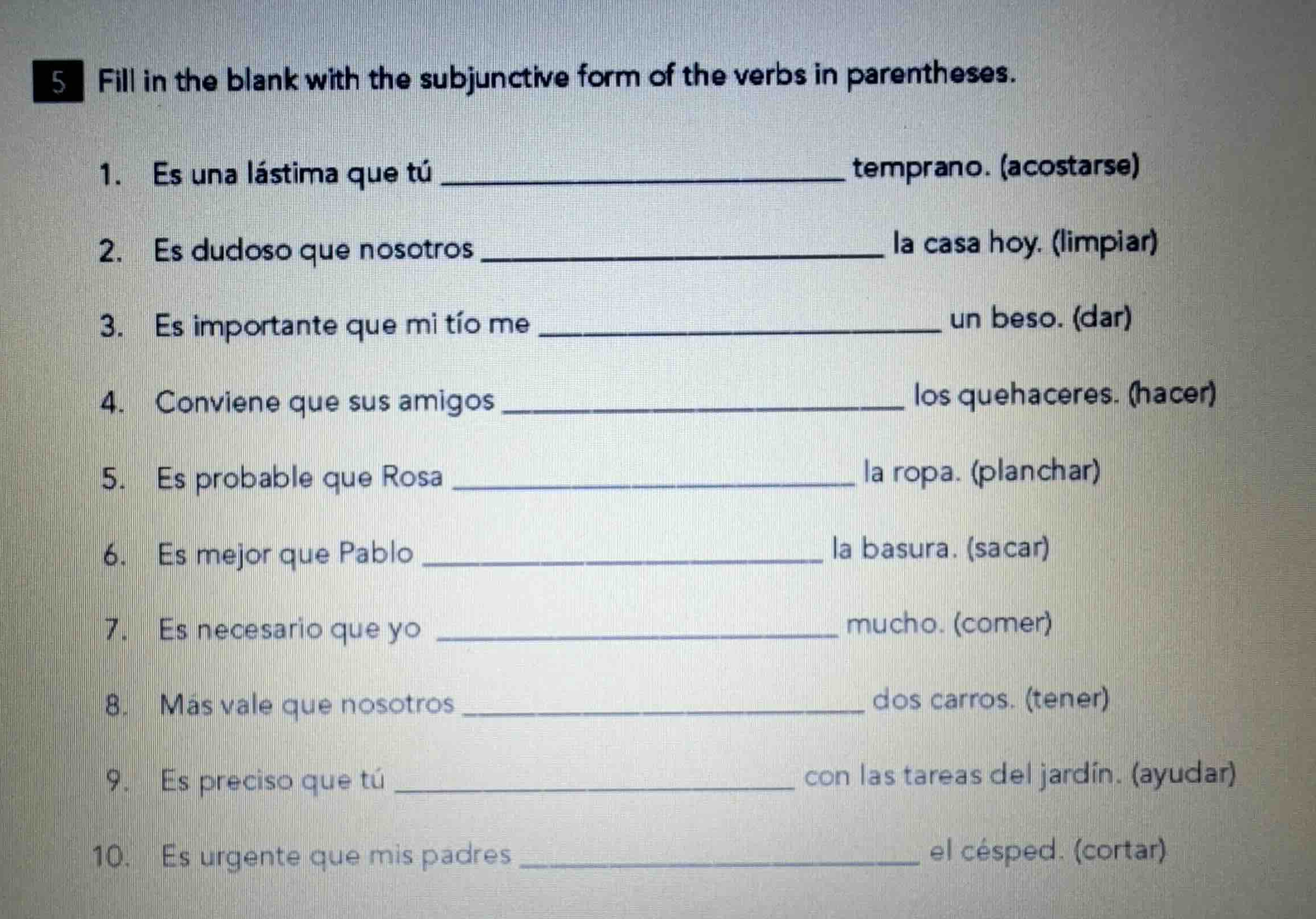
5 fill in the blank with the subjunctive form of the verbs in parentheses.
- es una lástima que tú ____________________ temprano. (acostarse)
- es dudoso que nosotros ____________________ la casa hoy. (limpiar)
- es importante que mi tío me ____________________ un beso. (dar)
- conviene que sus amigos ____________________ los quehaceres. (hacer)
- es probable que rosa ____________________ la ropa. (planchar)
- es mejor que pablo ____________________ la basura. (sacar)
- es necesario que yo ____________________ mucho. (comer)
- más vale que nosotros ____________________ dos carros. (tener)
- es preciso que tú ____________________ con las tareas del jardín. (ayudar)
- es urgente que mis padres ____________________ el césped. (cortar)
Analyze the grammatical requirements
The task requires filling in each blank with the present subjunctive form of the verb in parentheses. The main clauses contain impersonal expressions of emotion, doubt, influence, or necessity (e.g., Es una lástima que, Es dudoso que, Es importante que), which trigger the subjunctive mood in the subordinate clause.
Conjugate verbs 1 through 5
- acostarse (reflexive, stem-changing o-ue): The subject is tú. The reflexive pronoun te goes before the verb. The subjunctive of acostar for tú is acuestes. Combining them gives te acuestes.
- limpiar (regular -ar): The subject is nosotros. The subjunctive ending is -emos. This gives limpiemos.
- dar (irregular): The subject is mi tío (he). The subjunctive of dar is irregular: dé (with an accent mark to distinguish it from the preposition de). This gives dé.
- hacer (irregular yo stem): The subject is sus amigos (they). The yo form in the present indicative is hago, so the subjunctive stem is hag-. The ending for ellos is -an. This gives hagan.
- planchar (regular -ar): The subject is Rosa (she). The subjunctive ending is -e. This gives planche.
Conjugate verbs 6 through 10
- sacar (spelling change c-qu): The subject is Pablo (he). To maintain the hard "k" sound, c changes to qu before e. This gives saque.
- comer (regular -er): The subject is yo. The subjunctive ending is -a. This gives coma.
- tener (irregular yo stem): The subject is nosotros. The yo form stem is teng-. The ending for nosotros is -amos. This gives tengamos.
- ayudar (regular -ar): The subject is tú. The subjunctive ending is -es. This gives ayudes.
- cortar (regular -ar): The subject is mis padres (they). The subjunctive ending is -en. This gives corten.

Snap & solve any problem in the app
Get step-by-step solutions on Sovi AI
Photo-based solutions with guided steps
Explore more problems and detailed explanations
Question 1
Es una lástima que tú <blank>te acuestes</blank> temprano. (acostarse)
Question 2
Es dudoso que nosotros <blank>limpiemos</blank> la casa hoy. (limpiar)
Question 3
Es importante que mi tío me <blank>dé</blank> un beso. (dar)
Question 4
Conviene que sus amigos <blank>hagan</blank> los quehaceres. (hacer)
Question 5
Es probable que Rosa <blank>planche</blank> la ropa. (planchar)
Question 6
Es mejor que Pablo <blank>saque</blank> la basura. (sacar)
Question 7
Es necesario que yo <blank>coma</blank> mucho. (comer)
Question 8
Más vale que nosotros <blank>tengamos</blank> dos carros. (tener)
Question 9
Es preciso que tú <blank>ayudes</blank> con las tareas del jardín. (ayudar)
Question 10
Es urgente que mis padres <blank>corten</blank> el césped. (cortar)