Sovi.AI - AI Math Tutor

Scan to solve math questions

QUESTION IMAGE

your diabetic patient is unresponsive, pale, cool, and diaphoretic. whi…

Question

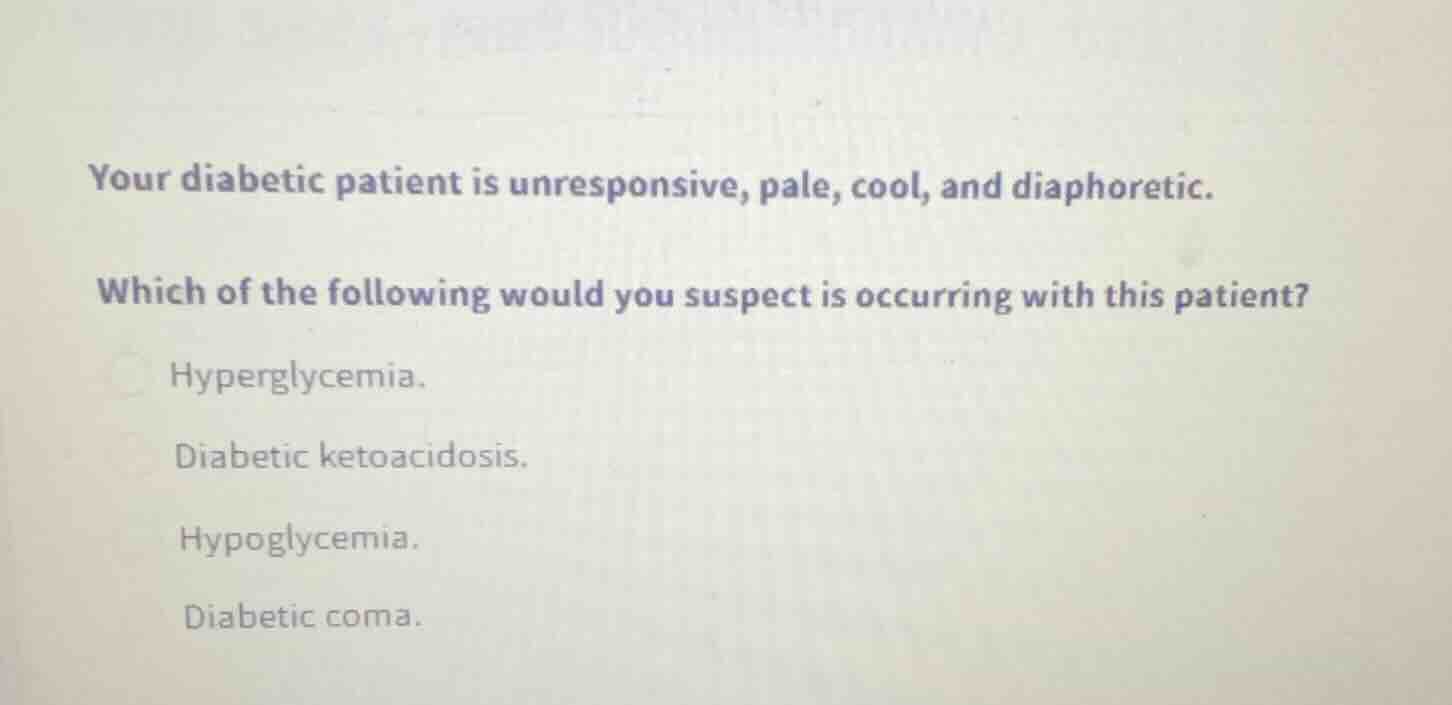
your diabetic patient is unresponsive, pale, cool, and diaphoretic.

which of the following would you suspect is occurring with this patient?

hyperglycemia.
diabetic ketoacidosis.
hypoglycemia.
diabetic coma.

Explanation:

Response

<pre_analysis>
{
"quality": "clear",
"question_count": 1,
"skills_matched": [
"direct_cot",
"multiple_choice_formatter",
"explain_then_answer",
"tutor",
"mastery_adaptive_brevity"
],
"needs_drawing": false,
"concepts_used": [
"Hypoglycemia Pathophysiology",
"Diabetic Emergencies Onset"
],
"new_concepts": [],
"current_concepts": [
"Hypoglycemia Pathophysiology",
"Diabetic Emergencies Onset",
"Diabetic Ketoacidosis Pathophysiology"
]
}
</pre_analysis>

<reasoning>

Analyze the clinical presentation

Using the Hypoglycemia Pathophysiology and Diabetic Emergencies Onset knowledge points

The patient presents with an altered mental status (unresponsive) and signs of sympathetic nervous system activation, specifically pale, cool, and diaphoretic (sweaty) skin. These classic signs point directly to a rapid onset emergency.

Differentiate diabetic emergencies

Using the Hypoglycemia Pathophysiology knowledge point

  • Hypoglycemia (low blood sugar) has a rapid onset (minutes to hours). The brain is deprived of glucose, leading to rapid deterioration of mental status (unresponsiveness). The body releases epinephrine (adrenaline) to mobilize glucose stores, which causes vasoconstriction (pale, cool skin) and sweating (diaphoresis).
  • Hyperglycemia and Diabetic Ketoacidosis (DKA) typically develop slowly over days. These conditions lead to dehydration, resulting in warm, dry, flushed skin, and rapid, deep respirations (Kussmaul breathing), rather than cool, clammy skin.
  • Diabetic coma is a general term that can result from severe states of either extreme, but the specific autonomic symptoms (pale, cool, diaphoretic) specifically indicate hypoglycemia.

Determine the correct suspect condition

Using the Hypoglycemia Pathophysiology knowledge point

Based on the rapid onset of unresponsiveness accompanied by classic sympathetic/adrenergic signs (pale, cool, diaphoretic skin), the most likely underlying condition is hypoglycemia.
</reasoning>

<answer>
<mcq-option>Hyperglycemia.</mcq-option>
<mcq-option>Diabetic ketoacidosis.</mcq-option>
<mcq-correct>Hypoglycemia.</mcq-correct>
<mcq-option>Diabetic coma.</mcq-option>
</answer>

<post_analysis>
{
"subject": "Natural Science",
"question_type": "Multiple Choice",
"knowledge_point": [
"Natural Science",
"Medicine",
"Emergency Medical Services"
]
}
</post_analysis>

Answer:

<pre_analysis>
{
"quality": "clear",
"question_count": 1,
"skills_matched": [
"direct_cot",
"multiple_choice_formatter",
"explain_then_answer",
"tutor",
"mastery_adaptive_brevity"
],
"needs_drawing": false,
"concepts_used": [
"Hypoglycemia Pathophysiology",
"Diabetic Emergencies Onset"
],
"new_concepts": [],
"current_concepts": [
"Hypoglycemia Pathophysiology",
"Diabetic Emergencies Onset",
"Diabetic Ketoacidosis Pathophysiology"
]
}
</pre_analysis>

<reasoning>

Analyze the clinical presentation

Using the Hypoglycemia Pathophysiology and Diabetic Emergencies Onset knowledge points

The patient presents with an altered mental status (unresponsive) and signs of sympathetic nervous system activation, specifically pale, cool, and diaphoretic (sweaty) skin. These classic signs point directly to a rapid onset emergency.

Differentiate diabetic emergencies

Using the Hypoglycemia Pathophysiology knowledge point

  • Hypoglycemia (low blood sugar) has a rapid onset (minutes to hours). The brain is deprived of glucose, leading to rapid deterioration of mental status (unresponsiveness). The body releases epinephrine (adrenaline) to mobilize glucose stores, which causes vasoconstriction (pale, cool skin) and sweating (diaphoresis).
  • Hyperglycemia and Diabetic Ketoacidosis (DKA) typically develop slowly over days. These conditions lead to dehydration, resulting in warm, dry, flushed skin, and rapid, deep respirations (Kussmaul breathing), rather than cool, clammy skin.
  • Diabetic coma is a general term that can result from severe states of either extreme, but the specific autonomic symptoms (pale, cool, diaphoretic) specifically indicate hypoglycemia.

Determine the correct suspect condition

Using the Hypoglycemia Pathophysiology knowledge point

Based on the rapid onset of unresponsiveness accompanied by classic sympathetic/adrenergic signs (pale, cool, diaphoretic skin), the most likely underlying condition is hypoglycemia.
</reasoning>

<answer>
<mcq-option>Hyperglycemia.</mcq-option>
<mcq-option>Diabetic ketoacidosis.</mcq-option>
<mcq-correct>Hypoglycemia.</mcq-correct>
<mcq-option>Diabetic coma.</mcq-option>
</answer>

<post_analysis>
{
"subject": "Natural Science",
"question_type": "Multiple Choice",
"knowledge_point": [
"Natural Science",
"Medicine",
"Emergency Medical Services"
]
}
</post_analysis>