QUESTION IMAGE
Question
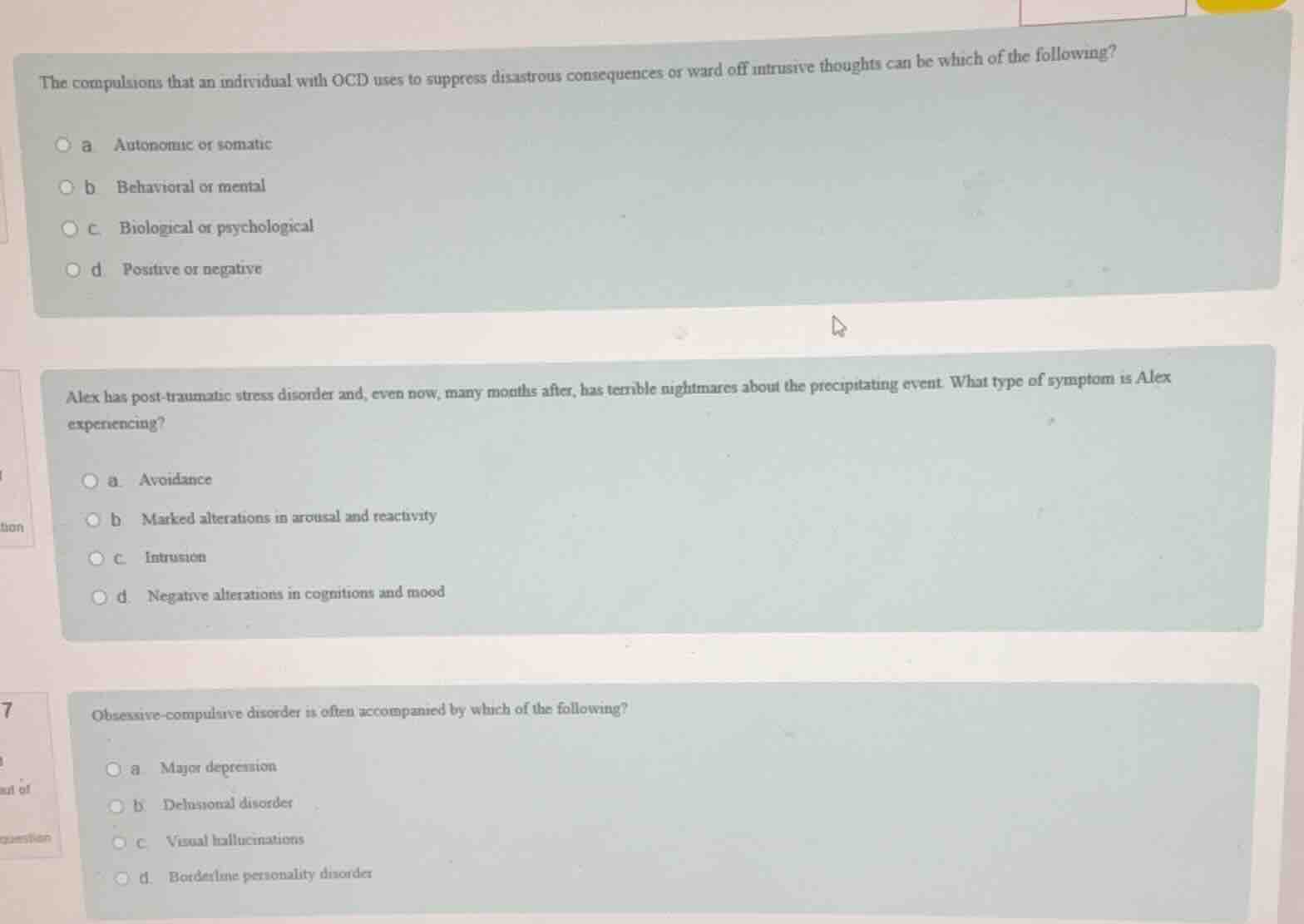
the compulsions that an individual with ocd uses to suppress disastrous consequences or ward off intrusive thoughts can be which of the following?
a. autonomic or somatic
b. behavioral or mental
c. biological or psychological
d. positive or negative
alex has post-traumatic stress disorder and, even now, many months after, has terrible nightmares about the precipitating event. what type of symptom is alex experiencing?
a. avoidance
b. marked alterations in arousal and reactivity
c. intrusion
d. negative alterations in cognitions and mood
obsessive-compulsive disorder is often accompanied by which of the following?
a. major depression
b. delusional disorder
c. visual hallucinations
d. borderline personality disorder
Analyze OCD compulsions
The first question asks about the nature of compulsions in Obsessive-Compulsive Disorder (OCD). Compulsions are repetitive behaviors (such as handwashing or checking) or mental acts (such as praying, counting, or repeating words silently) that an individual feels driven to perform in response to an obsession. Therefore, compulsions can be behavioral or mental.
Analyze PTSD symptoms
The second question describes Alex, who has PTSD and experiences terrible nightmares about the precipitating event. Nightmares, flashbacks, and distressing memories are classic examples of intrusive symptoms, where the traumatic event is persistently re-experienced. Thus, this is an intrusion symptom.
Analyze OCD comorbidities
The third question asks what often accompanies OCD. Obsessive-compulsive disorder has high rates of comorbidity with other psychiatric conditions. The most common comorbid disorder is major depressive disorder (unipolar depression), which affects a large percentage of individuals diagnosed with OCD.

Snap & solve any problem in the app
Get step-by-step solutions on Sovi AI
Photo-based solutions with guided steps
Explore more problems and detailed explanations
Question 1
- a. Autonomic or somatic
- b. Behavioral or mental (Correct answer)
- c. Biological or psychological
- d. Positive or negative
Question 2
- a. Avoidance
- b. Marked alterations in arousal and reactivity
- c. Intrusion (Correct answer)
- d. Negative alterations in cognitions and mood
Question 3
- a. Major depression (Correct answer)
- b. Delusional disorder
- c. Visual hallucinations
- d. Borderline personality disorder