QUESTION IMAGE
Question
chapter 1 quiz
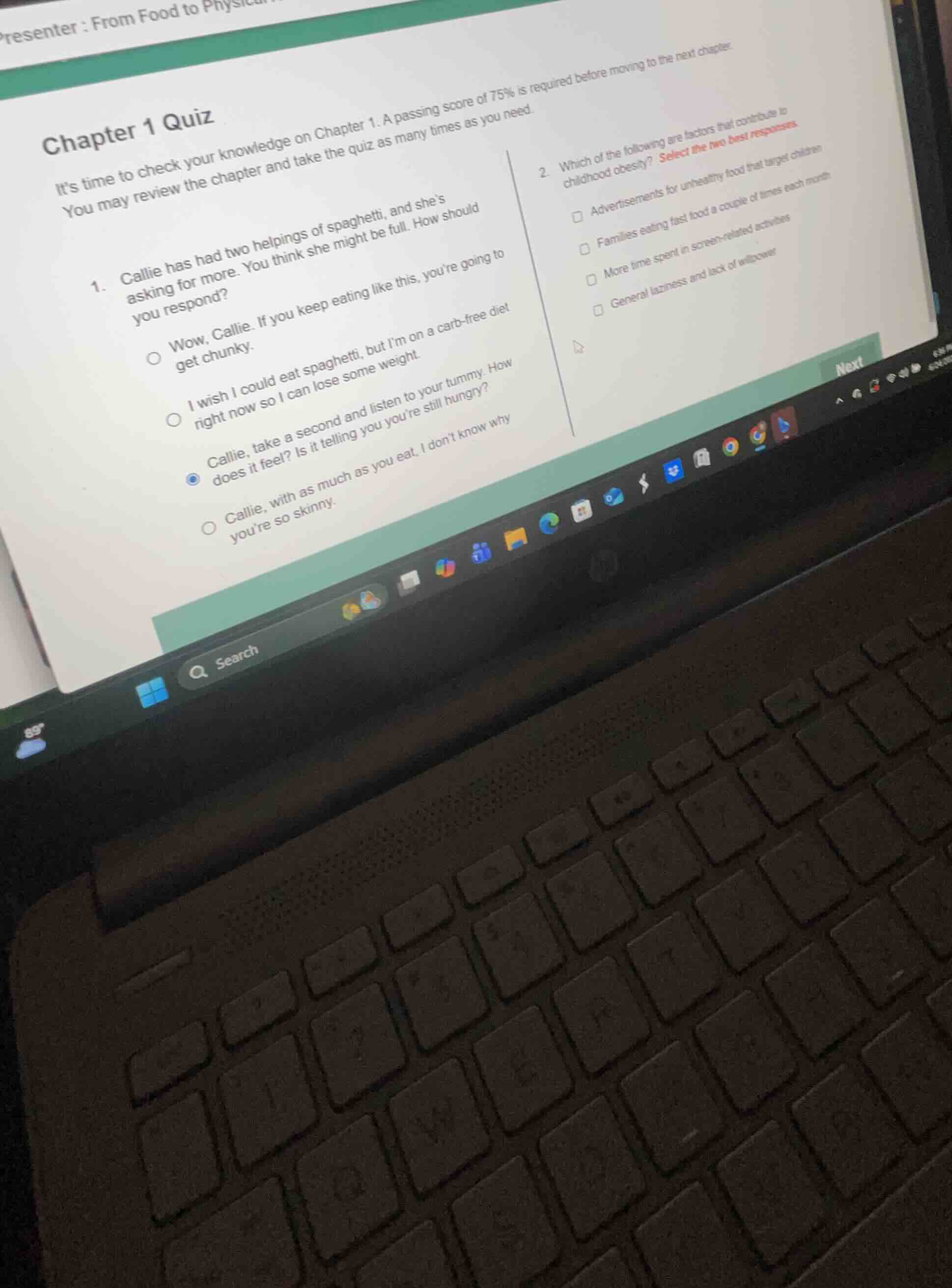
its time to check your knowledge on chapter 1. a passing score of 75% is required before moving to the next chapter. you may review the chapter and take the quiz as many times as you need.
- callie has had two helpings of spaghetti, and shes asking for more. you think she might be full. how should you respond?
- wow, callie. if you keep eating like this, youre going to get chunky.
- i wish i could eat spaghetti, but im on a carb-free diet right now so i can lose some weight.
- callie, take a second and listen to your tummy. how does it feel? is it telling you youre still hungry?
- callie, with as much as you eat, i dont know why youre so skinny.
- which of the following are factors that contribute to childhood obesity? select the two best responses.
- advertisements for unhealthy food that target children
- families eating fast food a couple of times each month
- more time spent in screen-related activities
- general laziness and lack of willpower
Analyze Question 1
The first question asks how to respond to a child (Callie) who has had two helpings of spaghetti and is asking for more, when you think she might be full.
- The first option ("Wow, Callie. If you keep eating like this, you're going to get chunky.") uses body-shaming and negative labeling, which is psychologically harmful.
- The second option ("I wish I could eat spaghetti, but I'm on a carb-diet right now so I can lose some weight.") projects adult dieting anxieties and restrictive eating habits onto a child.
- The third option ("Callie, take a second and listen to your tummy. How does it feel? Is it telling you you're still hungry?") promotes mindful eating, self-regulation, and internal hunger cues.
- The fourth option ("Callie, with as much as you eat, I don't know why you're so skinny.") comments inappropriately on body size and food volume.
Therefore, the third option is the most supportive and developmentally appropriate response.
Analyze Question 2
The second question asks to select the two best factors that contribute to childhood obesity from the choices provided.
- "Advertisements for unhealthy food that target children": Marketing of high-calorie, low-nutrient foods directly to children is a well-documented environmental factor contributing to childhood obesity.
- "Families eating fast food a couple of times each month": Eating fast food only a couple of times a month is relatively infrequent and unlikely to be a primary driver of obesity compared to more pervasive daily habits.
- "More time spent in screen-related activities": Increased sedentary behavior and screen time are strongly linked to reduced physical activity and increased snacking, making this a major contributing factor.
- "General laziness and lack of willpower": This option relies on biased, unscientific stereotypes rather than recognized public health or environmental factors.
Therefore, the two best responses are advertisements targeting children and increased screen-related activities.

Snap & solve any problem in the app
Get step-by-step solutions on Sovi AI
Photo-based solutions with guided steps
Explore more problems and detailed explanations
Question 1
- (A) Wow, Callie. If you keep eating like this, you're going to get chunky.
- (B) I wish I could eat spaghetti, but I'm on a carb-diet right now so I can lose some weight.
- (C) Callie, take a second and listen to your tummy. How does it feel? Is it telling you you're still hungry? (Correct answer)
- (D) Callie, with as much as you eat, I don't know why you're so skinny.
Question 2
- (A) Advertisements for unhealthy food that target children (Correct answer)
- (B) Families eating fast food a couple of times each month
- (C) More time spent in screen-related activities (Correct answer)
- (D) General laziness and lack of willpower