QUESTION IMAGE
Question
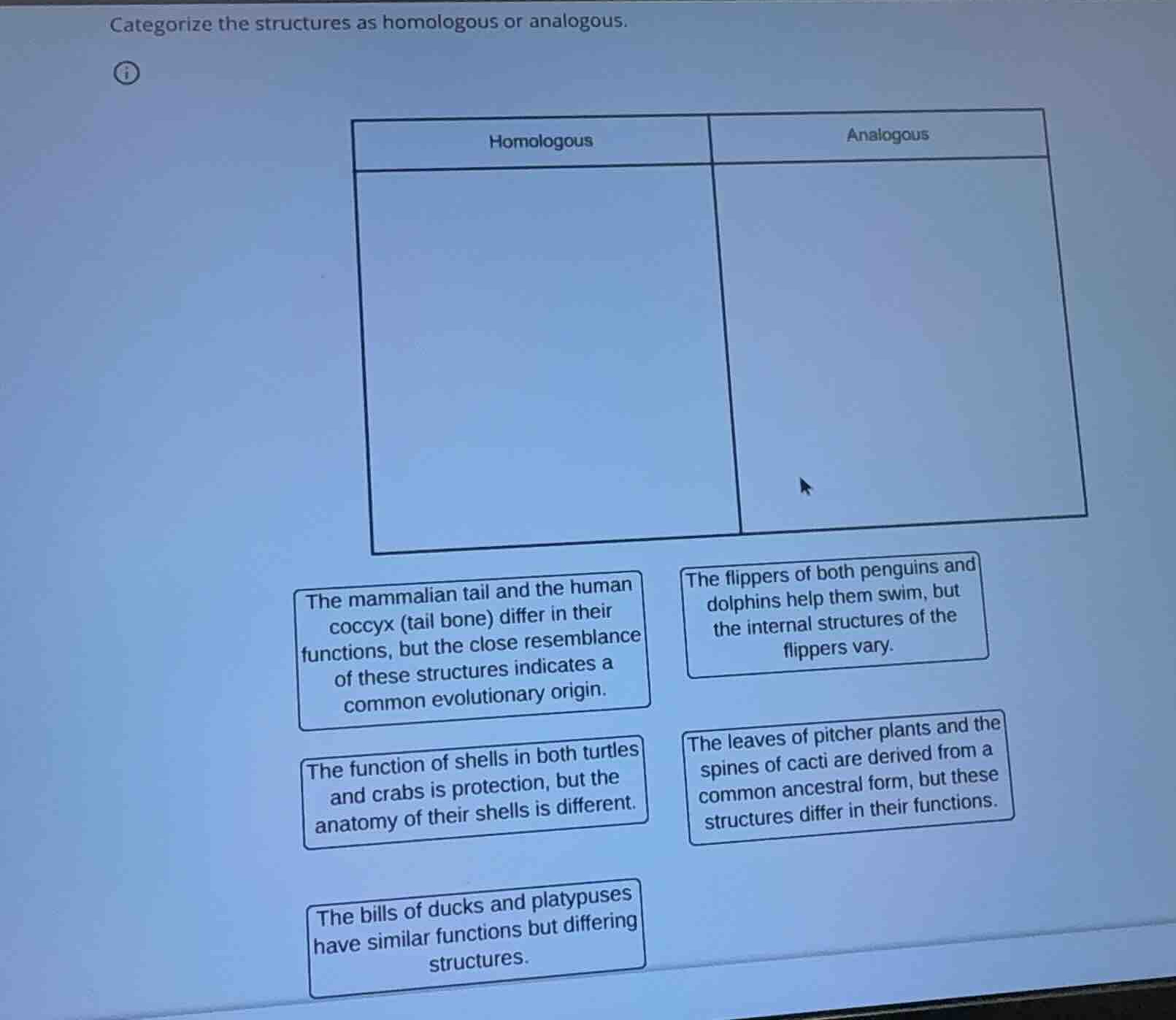
categorize the structures as homologous or analogous.
homologous | analogous
- the mammalian tail and the human coccyx (tail bone) differ in their functions, but the close resemblance of these structures indicates a common evolutionary origin.
- the flippers of both penguins and dolphins help them swim, but the internal structures of the flippers vary.
- the function of shells in both turtles and crabs is protection, but the anatomy of their shells is different.
- the leaves of pitcher plants and the spines of cacti are derived from a common ancestral form, but these structures differ in their functions.
- the bills of ducks and platypuses have similar functions but differing structures.
Definir conceptos clave
Using the Convergent Evolution and Divergent Evolution knowledge points
- Las estructuras homólogas provienen de un ancestro común, aunque sus funciones actuales difieran.
- Las estructuras análogas realizan funciones similares debido a presiones ambientales parecidas, pero no comparten un origen evolutivo cercano.
Analizar casos homólogos
Using the Cactus Anatomy and Divergent Evolution knowledge points
- Cola de mamífero y cóccix humano: Comparten un origen evolutivo común (ancestro vertebrado común).
- Hojas de plantas jarra y espinas de cactus: Ambas son modificaciones de hojas ancestrales comunes.
Analizar casos análogos
Using the Convergent Evolution knowledge point
- Aletas de pingüinos y delfines: Estructuras internas distintas (aves vs. mamíferos) adaptadas para nadar.
- Caparazones de tortugas y cangrejos: Funciones idénticas de protección, pero anatomías y orígenes completamente distintos (vertebrados vs. artrópodos).
- Picos de patos y ornitorrincos: Funciones similares para alimentarse en el agua, pero con estructuras óseas y orígenes evolutivos diferentes.

Snap & solve any problem in the app
Get step-by-step solutions on Sovi AI
Photo-based solutions with guided steps
Explore more problems and detailed explanations
| Homologous | Analogous |
|---|