QUESTION IMAGE
Question
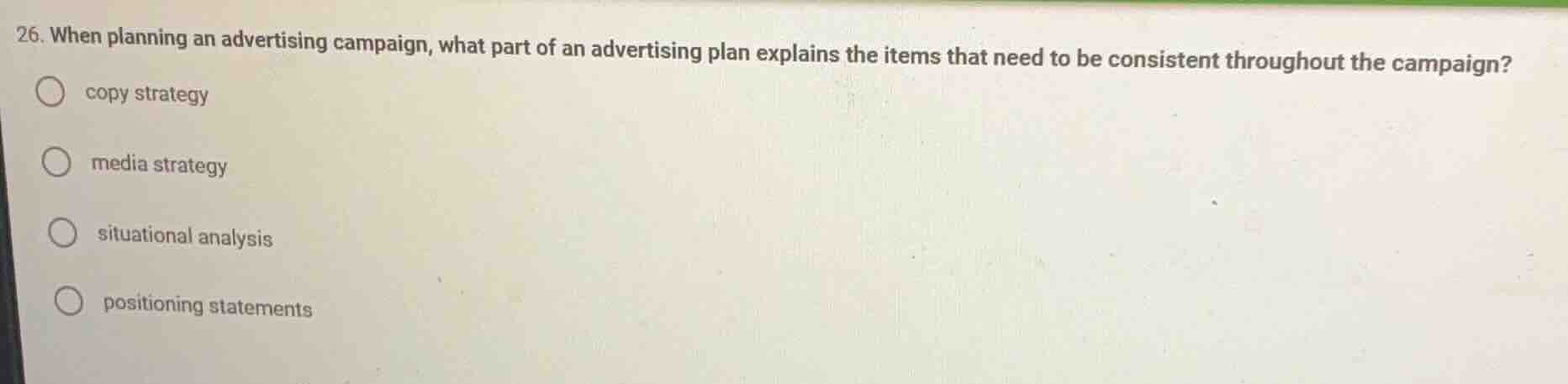
- when planning an advertising campaign, what part of an advertising plan explains the items that need to be consistent throughout the campaign?
copy strategy
media strategy
situational analysis
positioning statements
Analyze the question requirements
The question asks which part of an advertising plan explains the items that need to remain consistent throughout an advertising campaign. Consistency in message, tone, theme, and creative execution across various media channels is a core requirement of campaign planning.
Evaluate the options
- Copy strategy: This document or section of the Advertising Plan outlines the creative objectives, target audience, key benefits, support points, and the overall tone or brand personality. A primary purpose of the Copy Strategy is to ensure that all creative executions (print, digital, broadcast) remain consistent in their messaging and brand representation throughout the campaign.
- Media strategy: This section focuses on selecting the channels (TV, radio, digital, print) and scheduling the advertisements to reach the target audience effectively. It does not govern creative consistency.
- Situational analysis: This is the background research phase (such as a SWOT analysis) that examines the market, competitors, and internal brand environment before planning begins.
- Positioning statements: While positioning defines how a brand wants to be perceived relative to competitors, the specific operational document within the plan that details the consistent creative guidelines and message elements for execution is the copy strategy.
Formulate the conclusion
The Copy Strategy serves as the guiding framework for copywriters and designers, ensuring that all campaign elements deliver a unified message and maintain brand consistency.

Snap & solve any problem in the app
Get step-by-step solutions on Sovi AI
Photo-based solutions with guided steps
Explore more problems and detailed explanations
- (A) copy strategy (Correct answer)
- (B) media strategy
- (C) situational analysis
- (D) positioning statements