QUESTION IMAGE
Question
17 multiple choice 1 point
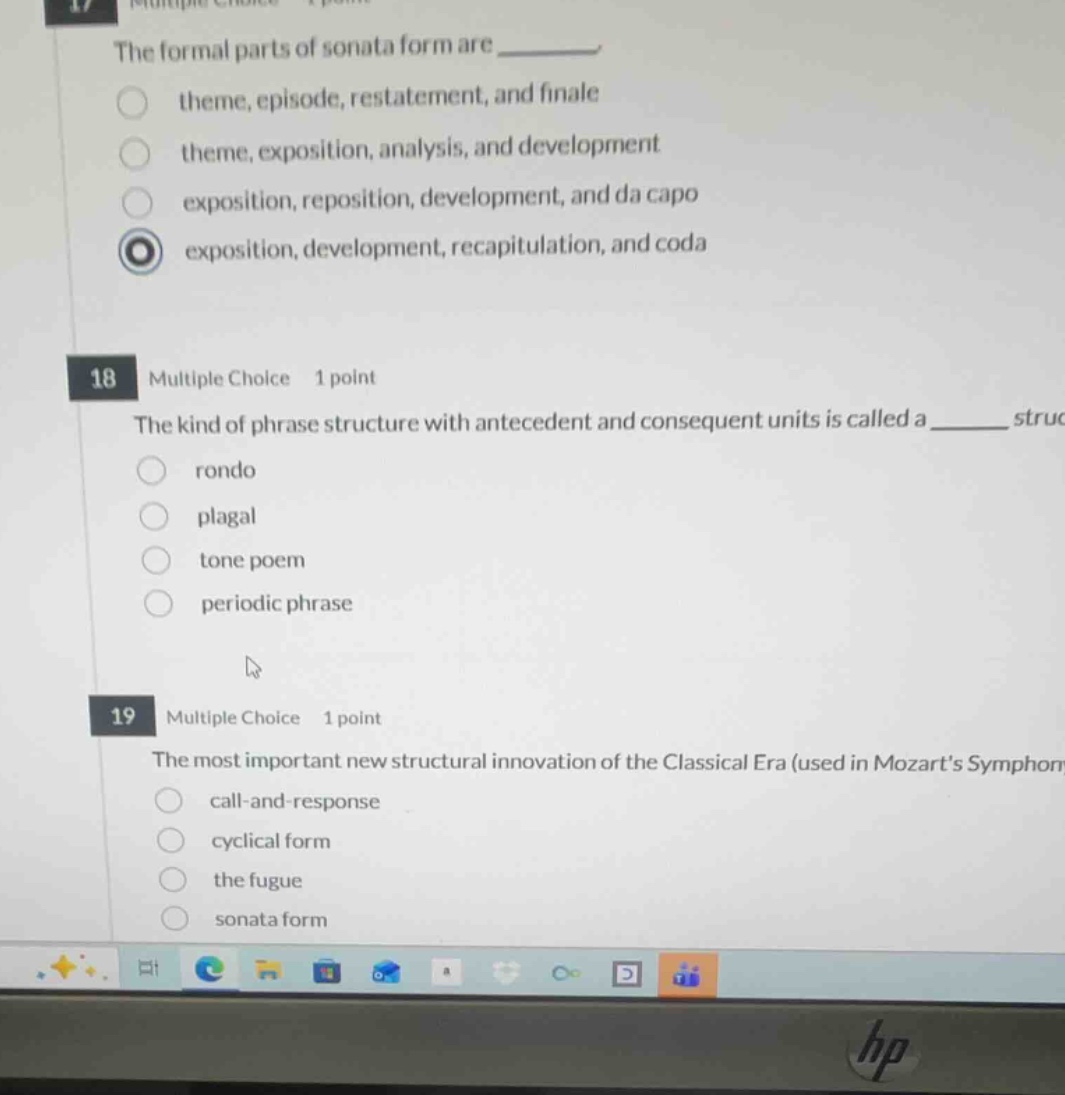
the formal parts of sonata form are _______
theme, episode, restatement, and finale
theme, exposition, analysis, and development
exposition, reposition, development, and da capo
exposition, development, recapitulation, and coda
18 multiple choice 1 point
the kind of phrase structure with antecedent and consequent units is called a ______ structure
rondo
plagal
tone poem
periodic phrase
19 multiple choice 1 point
the most important new structural innovation of the classical era (used in mozarts symphony
call-and-response
cyclical form
the fugue
sonata form
Analyze Question 17
Using the Sonata Form Structure knowledge point
The question asks for the formal parts of sonata form. The standard structural components of a classical sonata form movement are the exposition, development, and recapitulation, often followed by a concluding section called the coda. Therefore, the correct option is "exposition, development, recapitulation, and coda".
Analyze Question 18
Using the Classical Period Phrase Structure knowledge point
The question asks for the phrase structure consisting of antecedent and consequent units. In classical music theory, a periodic phrase structure (or period) is characterized by a pair of phrases where the first (antecedent) ends with an incomplete cadence and the second (consequent) ends with a stronger, more conclusive cadence. Thus, the correct option is "periodic phrase".
Analyze Question 19
The question asks for the most important new structural innovation of the Classical Era (used in Mozart's Symphony No. 40). Sonata form (also known as sonata-allegro form) was the defining structural innovation of the Classical period, serving as the organizing framework for the first movements of symphonies, string quartets, and sonatas. Therefore, the correct option is "sonata form".

Snap & solve any problem in the app
Get step-by-step solutions on Sovi AI
Photo-based solutions with guided steps
Explore more problems and detailed explanations
Question 17
- theme, episode, restatement, and finale
- theme, exposition, analysis, and development
- exposition, reposition, development, and da capo
- exposition, development, recapitulation, and coda (Correct answer)
Question 18
- rondo
- plagal
- tone poem
- periodic phrase (Correct answer)
Question 19
- call-and-response
- cyclical form
- the fugue
- sonata form (Correct answer)