QUESTION IMAGE
Question
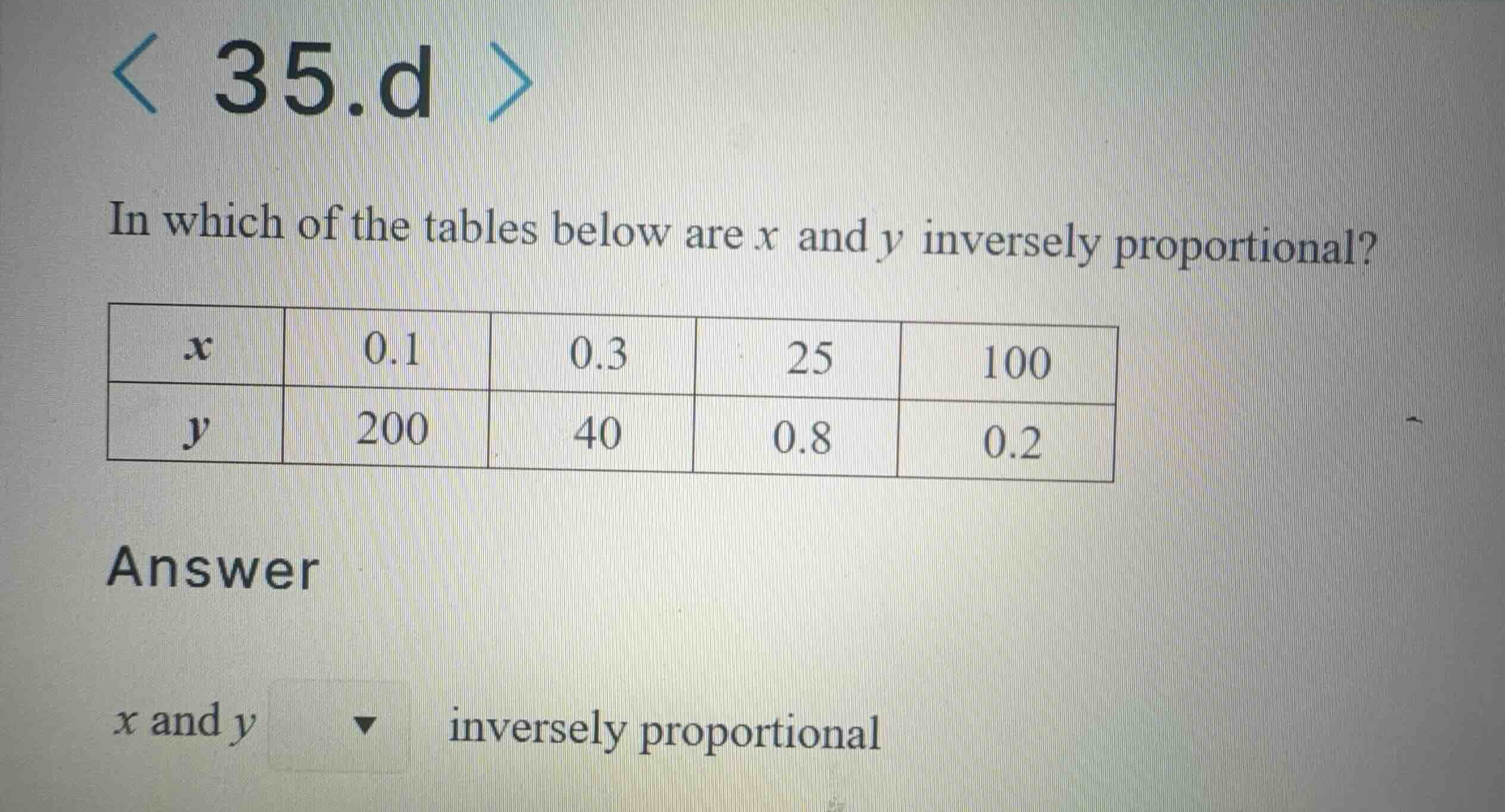
in which of the tables below are \\(x\\) and \\(y\\) inversely proportional?
\\(\
\\)
answer
\\(x\\) and \\(y\\) dropdown inversely proportional
Define inverse proportionality
Two variables \(x\) and \(y\) are inversely proportional if their product is a constant value \(k\).
Calculate the product for each pair
We will multiply each \(x\) value by its corresponding \(y\) value from the table.
Using the Proportions knowledge point:
- First pair: \(0.1 \cdot 200 = 20\)
- Second pair: \(0.3 \cdot 40 = 12\)
- Third pair: \(25 \cdot 0.8 = 20\)
- Fourth pair: \(100 \cdot 0.2 = 20\)
Determine if they are inversely proportional
Since the product \(x \cdot y\) is not constant for all pairs (the second pair gives \(12\) while the others give \(20\)), the variables in this table are not inversely proportional.

Snap & solve any problem in the app
Get step-by-step solutions on Sovi AI
Photo-based solutions with guided steps
Explore more problems and detailed explanations
\(x\) and \(y\) <blank>are not</blank> inversely proportional