QUESTION IMAGE
Question
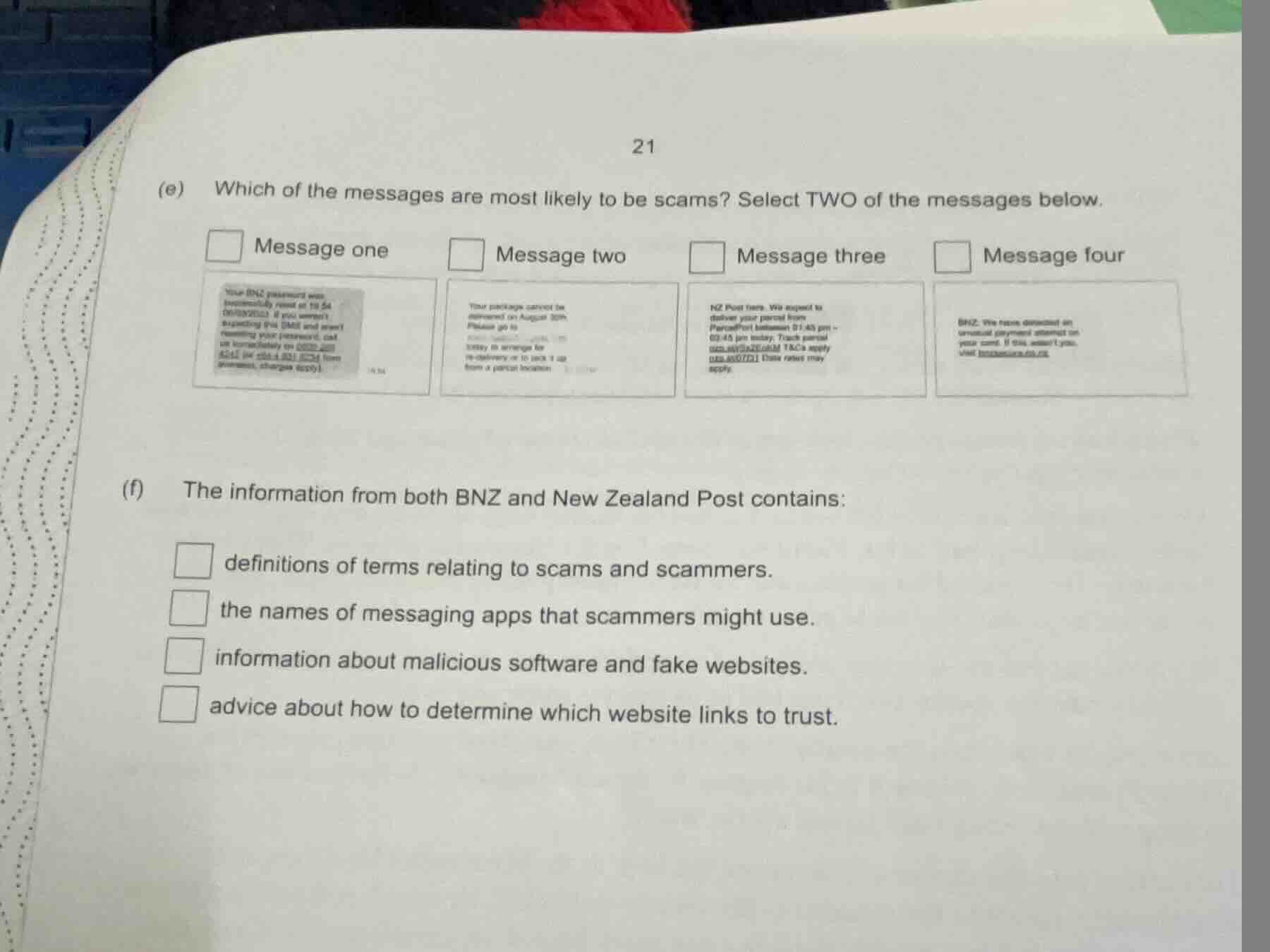
(e) which of the messages are most likely to be scams? select two of the messages below.
message one
message two
message three
message four
(f) the information from both bnz and new zealand post contains:
definitions of terms relating to scams and scammers.
the names of messaging apps that scammers might use.
information about malicious software and fake websites.
advice about how to determine which website links to trust.
Analyze the messages in question (e)
- Message one: Advises that a BNZ password was reset and provides a phone number to call immediately if unexpected. This is a standard security alert.
- Message two: Claims a package cannot be delivered and provides a suspicious, shortened link to arrange re-delivery. This is a common phishing scam tactic.
- Message three: A delivery notification from NZ Post with a tracking link containing a suspicious URL structure (
nzp.co/s...) instead of an official domain. This is a phishing scam. - Message four: A security alert from BNZ regarding an unusual payment attempt, directing the user to a suspicious URL (
bnzsecure.co.nzinstead of the officialbnz.co.nz). This is a phishing scam. - Comparing the options, Message two and Message three contain highly characteristic phishing indicators (unsolicited delivery issues with suspicious links to resolve them).
Analyze the options in question (f)
- The overall context of the worksheet (including the messages from BNZ and NZ Post) focuses on identifying phishing attempts, malicious links, and fake websites used by scammers to steal information.
- Therefore, the information from both organizations contains information about malicious software and fake websites.

Snap & solve any problem in the app
Get step-by-step solutions on Sovi AI
Photo-based solutions with guided steps
Explore more problems and detailed explanations
Question (e)
- Message one
- Message two (Correct answer)
- Message three (Correct answer)
- Message four
Question (f)
- definitions of terms relating to scams and scammers.
- the names of messaging apps that scammers might use.</mcq-correct>
- information about malicious software and fake websites. (Correct answer)
<mcq-option>advice about how to determine which website links to trust.