QUESTION IMAGE
Question
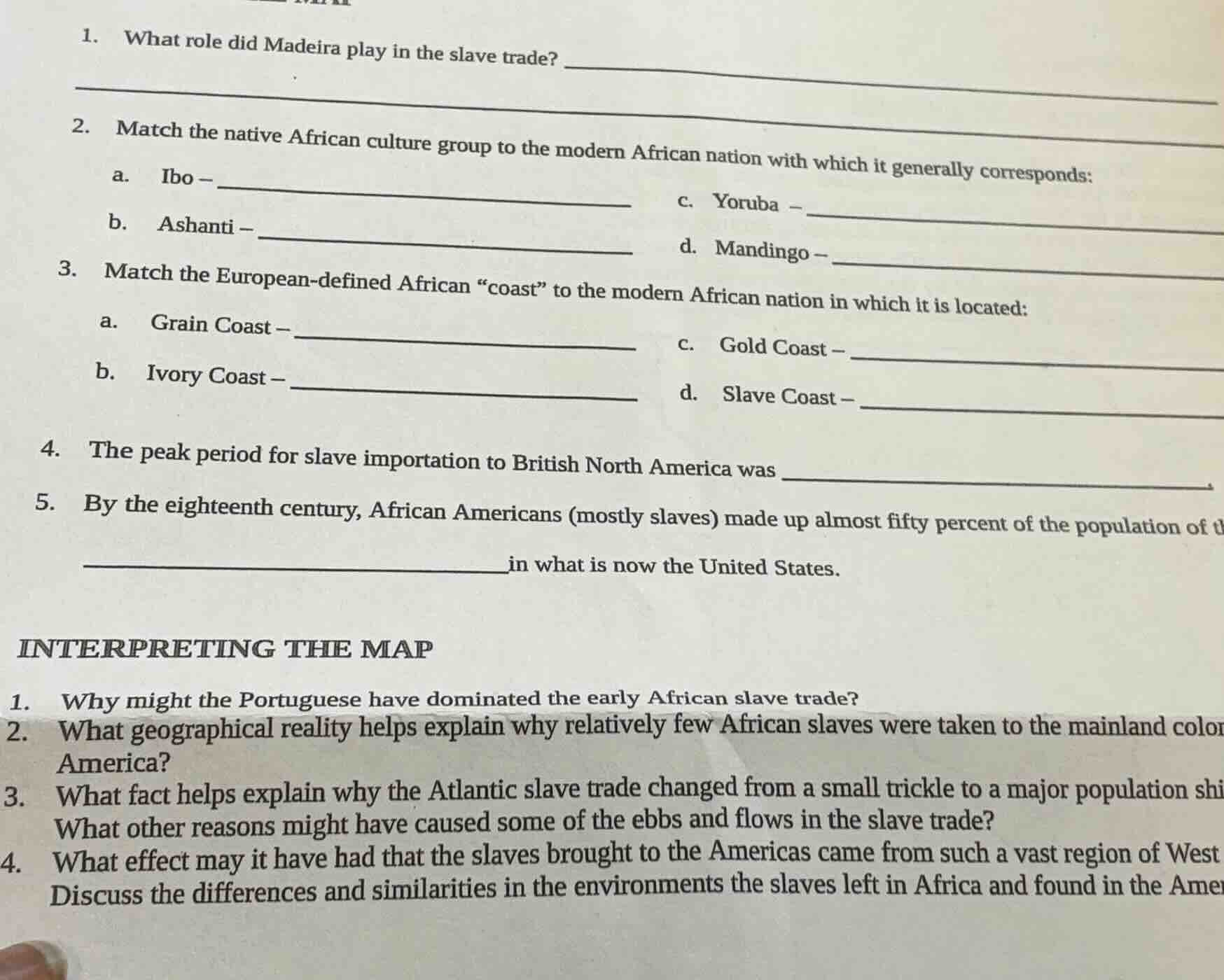
- what role did madeira play in the slave trade?
- match the native african culture group to the modern african nation with which it generally corresponds:
a. ibo –
c. yoruba –
b. ashanti –
d. mandingo –
- match the european - defined african “coast” to the modern african nation in which it is located:
a. grain coast –
c. gold coast –
b. ivory coast –
d. slave coast –
- the peak period for slave importation to british north america was
- by the eighteenth century, african americans (mostly slaves) made up almost fifty percent of the population of
in what is now the united states.
interpreting the map
- why might the portuguese have dominated the early african slave trade?
- what geographical reality helps explain why relatively few african slaves were taken to the mainland colon
america?
- what fact helps explain why the atlantic slave trade changed from a small trickle to a major population shi
what other reasons might have caused some of the ebbs and flows in the slave trade?
- what effect may it have had that the slaves brought to the americas came from such a vast region of west
discuss the differences and similarities in the environments the slaves left in africa and found in the amer
Question 1: What role did Madeira play in the slave trade?
Madeira (a Portuguese island) was a key hub in the slave trade. It had sugar plantations that relied on enslaved labor, and its ports facilitated the transshipment of enslaved Africans. It also served as a place where slave traders would process and prepare captives for transport to the Americas, and the profits from sugar production (using slave labor) funded further slave - trading ventures.
The Igbo (Ibo) people are predominantly associated with modern - day Nigeria. They are one of the major ethnic groups in Nigeria, with a significant population in the southeastern part of the country.
The Ashanti (Asante) people are mainly associated with modern - day Ghana. The Ashanti Kingdom was a powerful entity in what is now Ghana, and the Ashanti people remain a major ethnic group in Ghana.

Snap & solve any problem in the app
Get step-by-step solutions on Sovi AI
Photo-based solutions with guided steps
Explore more problems and detailed explanations
Madeira (a Portuguese territory) was a hub for the slave trade: its sugar plantations used enslaved labor, its ports facilitated transshipment of enslaved Africans, and profits from sugar (via slave labor) funded slave - trading. It also processed captives for transport to the Americas.