QUESTION IMAGE
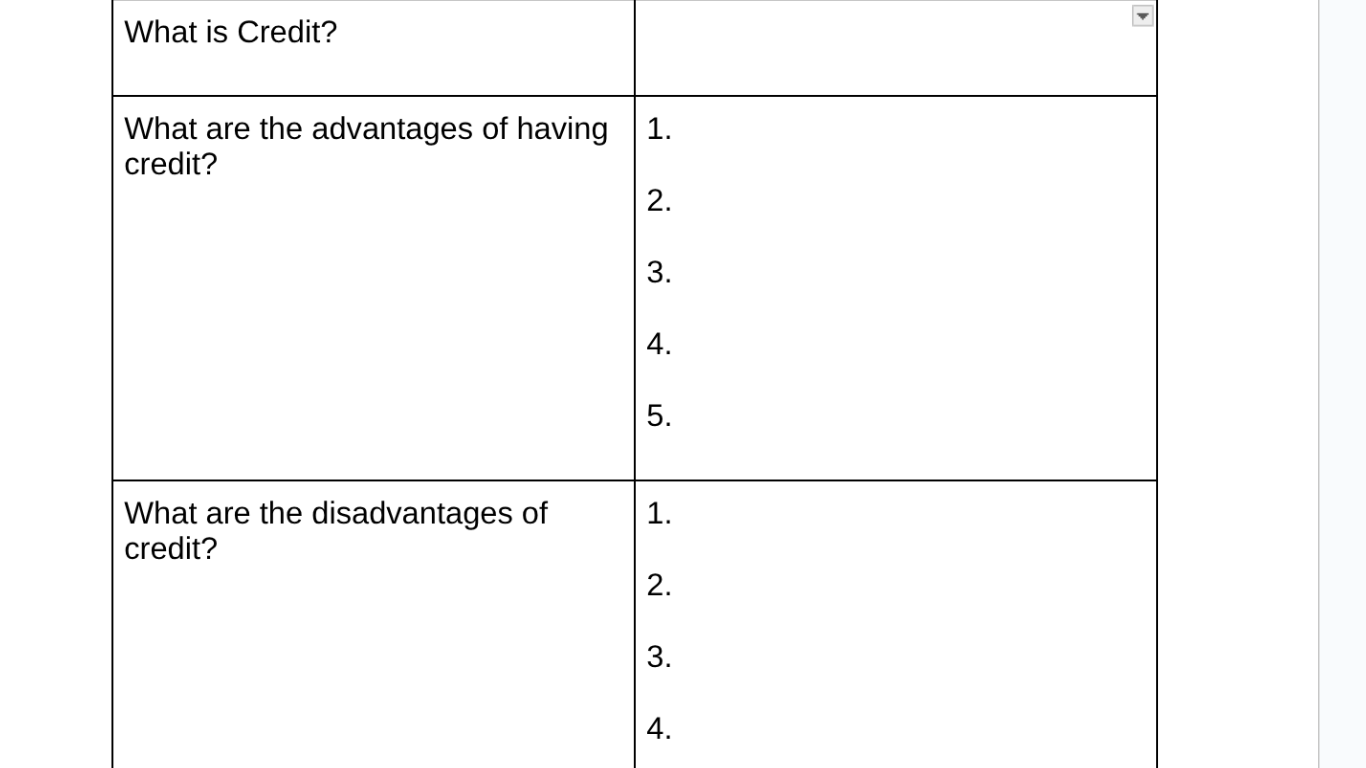
Question
what is credit?
what are the advantages of having credit?
1.
2.
3.
4.
5.
what are the disadvantages of credit?
1.
2.
3.
4.
What is Credit?
Credit is an agreement where a lender provides money, goods, or services to a borrower with the expectation of future repayment, often with interest or fees. It allows individuals or businesses to access resources they don't have immediate funds for, like loans for a house, credit card purchases, or business financing.
- Financial Flexibility: Allows making large purchases (e.g., home, car) by spreading payments over time instead of needing full upfront cash.
- Emergency Funds: Provides a safety net for unexpected expenses (medical bills, car repairs) when savings are insufficient.
- Build Credit History: Responsible credit use (timely payments) improves credit score, leading to better loan terms (lower interest) in the future.
- Convenience: Credit cards simplify transactions (online shopping, travel) and offer fraud protection compared to cash.
- Rewards/Perks: Many credit cards offer cashback, travel miles, or points for purchases, providing additional value.
- Debt Accumulation: Easy access to credit can lead to overspending, resulting in high debt (e.g., credit card balances) and interest charges.
- Interest Costs: Borrowed funds accrue interest; high-interest debt (e.g., credit cards) can become expensive if not repaid quickly.
- Impact on Credit Score: Late payments, high credit utilization, or defaulting on credit obligations damage credit scores, limiting future credit access.
- Fees/Charges: Credit products often have fees (annual fees, late payment fees, over-limit fees) that add to costs.
- Psychological Stress: Debt-related stress from managing credit obligations can affect mental health and financial well-being.

Snap & solve any problem in the app
Get step-by-step solutions on Sovi AI
Photo-based solutions with guided steps
Explore more problems and detailed explanations
Credit is an arrangement where a party (lender) provides resources (money, goods, services) to another (borrower) with the understanding that the borrower will repay (with interest/fees, typically) in the future, enabling access to funds/goods/services when immediate payment isn’t feasible.