QUESTION IMAGE
Question
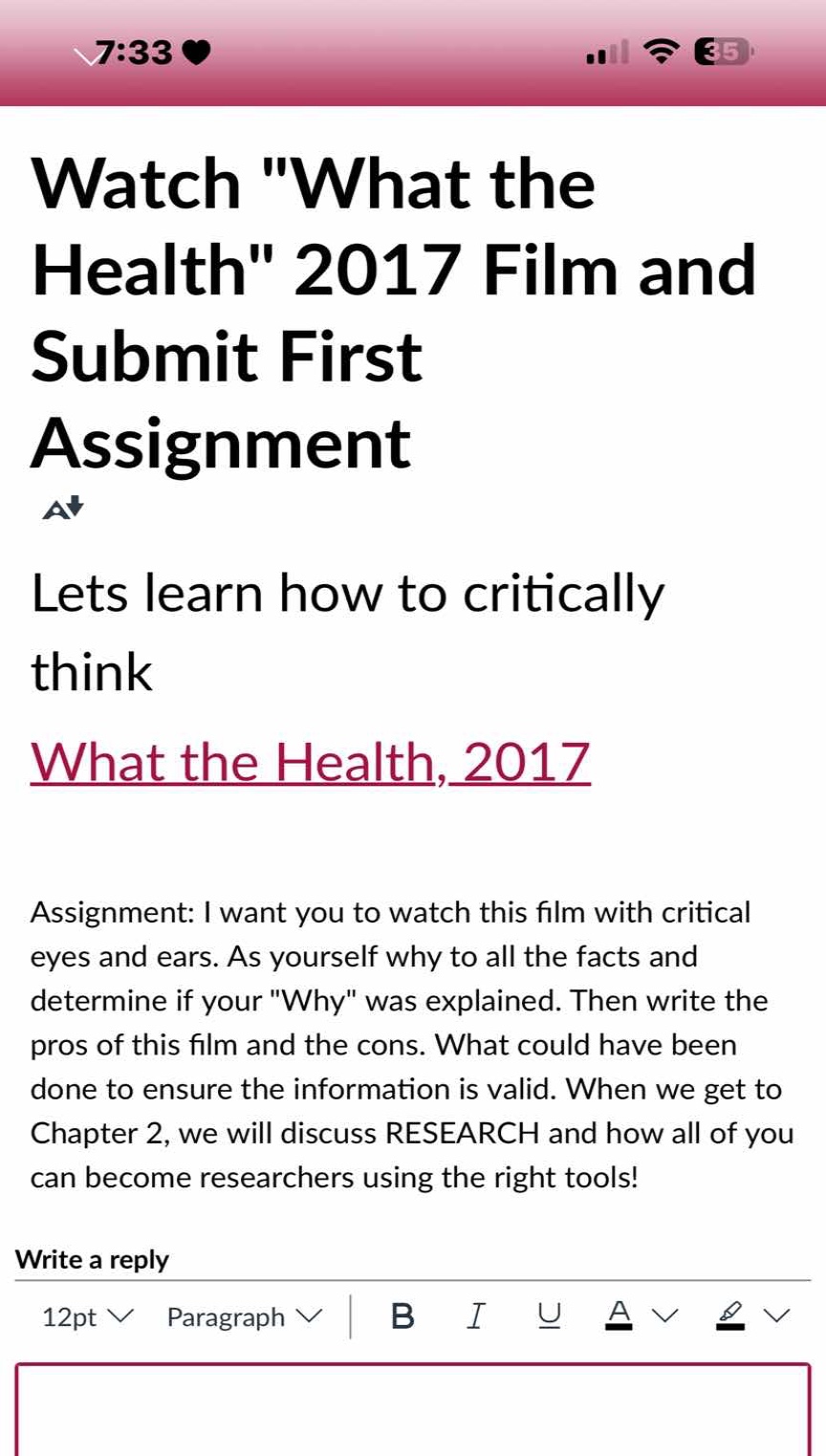
watch \what the health\ 2017 film and submit first assignment
lets learn how to critically think
what the health, 2017
assignment: i want you to watch this film with critical eyes and ears. as yourself why to all the facts and determine if your \why\ was explained. then write the pros of this film and the cons. what could have been done to ensure the information is valid. when we get to chapter 2, we will discuss research and how all of you can become researchers using the right tools!
Analyze the assignment prompt
The prompt asks to critically evaluate the 2017 documentary "What the Health." It requires identifying the pros and cons of the film, assessing if the facts presented are explained logically ("Why"), and suggesting methods to ensure the validity of the information.
Evaluate the pros of the film
The film successfully raises public awareness about the connection between diet and chronic diseases. It encourages viewers to critically examine the influence of corporate sponsorship on public health organizations and promotes a plant-based diet.
Evaluate the cons of the film
The film relies heavily on cherry-picked scientific data, sensationalized claims (such as equating eating processed meat to smoking cigarettes), and anecdotal evidence. It often presents correlation as causation without sufficient scientific nuance.
Determine how to ensure validity
To ensure information validity, one should cross-reference claims with peer-reviewed scientific studies, consult independent health organizations without corporate conflicts of interest, and look for consensus reviews from established scientific bodies.

Snap & solve any problem in the app
Get step-by-step solutions on Sovi AI
Photo-based solutions with guided steps
Explore more problems and detailed explanations
Here is a structured guide to help you write your response for this assignment:
Pros of the Film
- Raises Awareness: It successfully encourages viewers to think about the direct connection between diet, lifestyle, and chronic illnesses.
- Exposes Conflicts of Interest: It highlights how major health organizations receive funding from food industry corporations, raising valid questions about institutional bias.
- Promotes Preventive Health: It advocates for a whole-food, plant-based diet as a powerful tool for preventing and reversing chronic diseases.
Cons of the Film
- Sensationalism: The film uses extreme comparisons, such as equating eating one egg per day to smoking five cigarettes, which distorts scientific reality.
- Correlation vs. Causation: It frequently confuses correlation with causation, presenting observational studies as definitive proof of direct harm.
- Cherry-Picked Data: It selectively highlights studies that support its narrative while ignoring a vast body of conflicting scientific evidence.
Ensuring Information Validity
- Consult Peer-Reviewed Studies: Look up the primary research papers cited in the film on databases like PubMed to see if the findings were accurately represented.
- Check Scientific Consensus: Compare the film's claims with statements from major, independent global health authorities (like the World Health Organization) rather than relying on a single source.
- Analyze Funding and Bias: Investigate whether the researchers or organizations cited have conflicts of interest or pre-determined agendas.