QUESTION IMAGE
Question
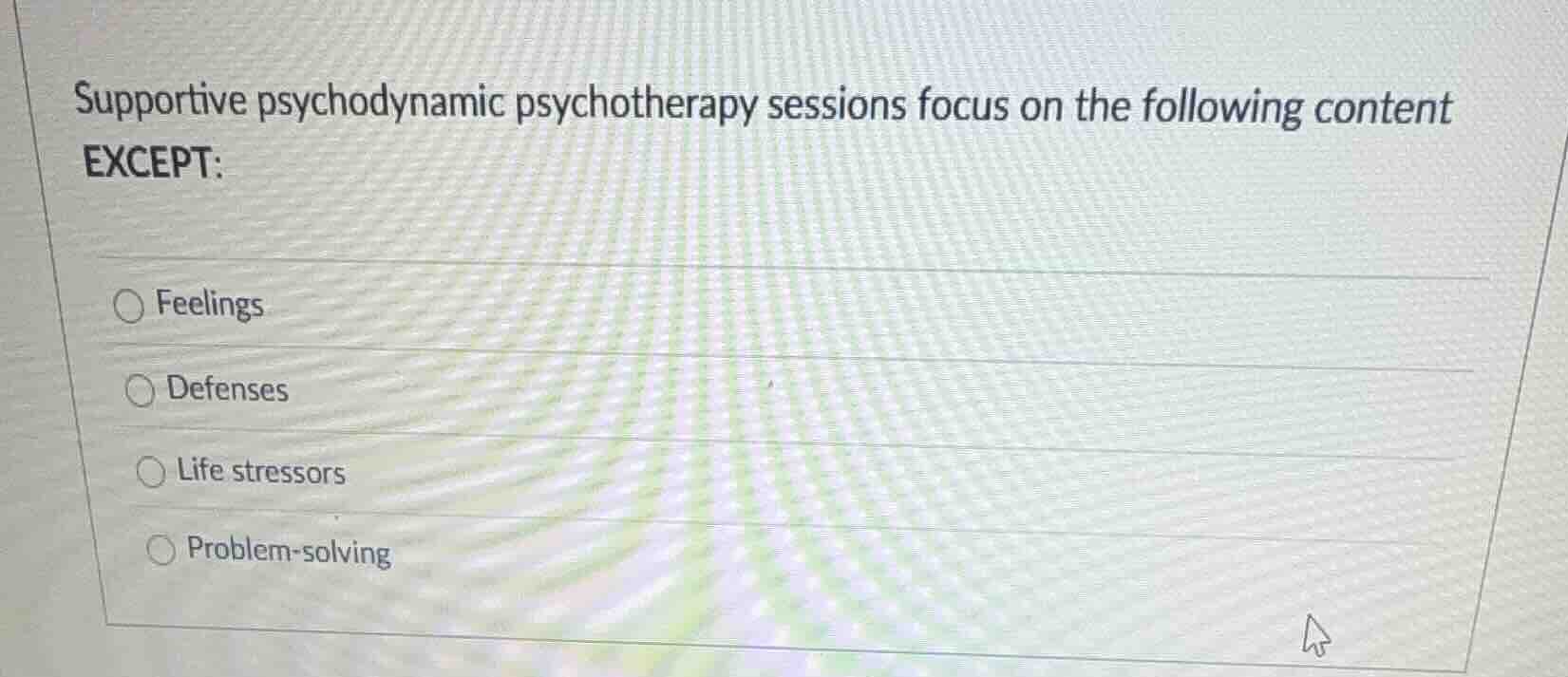
supportive psychodynamic psychotherapy sessions focus on the following content except:
feelings
defenses
life stressors
problem-solving
🆕 New Concept Discovered: Supportive Psychodynamic Therapy
Focuses on strengthening healthy defenses and coping mechanisms.
Step 1: Define Supportive Psychodynamic Psychotherapy
Supportive psychodynamic psychotherapy is a therapeutic approach designed to help patients maintain or improve their level of functioning. Unlike expressive or insight-oriented psychodynamic therapies—which aim to uncover deep unconscious conflicts and analyze defense mechanisms to restructure personality—supportive therapy aims to reinforce the patient's healthy defense mechanisms, reduce anxiety, and improve adaptive coping skills.
Step 2: Analyze the Core Focus Areas of Supportive Therapy
In supportive psychodynamic sessions, the therapist and patient focus on:
- Feelings: Validating, exploring, and helping the patient manage current emotional states.
- Life stressors: Addressing immediate, real-world challenges, interpersonal issues, and environmental stressors.
- Problem-solving: Actively working on practical strategies, coping mechanisms, and direct solutions to manage daily life.
Step 3: Identify the Exception
- Defenses: In expressive (insight-oriented) psychodynamic therapy, the therapist actively interprets, confronts, and deconstructs a patient's defense mechanisms to uncover unconscious conflicts. In contrast, supportive therapy avoids challenging or analyzing defenses unless they are highly maladaptive; instead, it seeks to support and strengthen healthy defenses. Therefore, analyzing or focusing on uncovering "Defenses" is not a primary focus of supportive psychodynamic psychotherapy sessions.

Snap & solve any problem in the app
Get step-by-step solutions on Sovi AI
Photo-based solutions with guided steps
Explore more problems and detailed explanations
Defenses