QUESTION IMAGE
Question
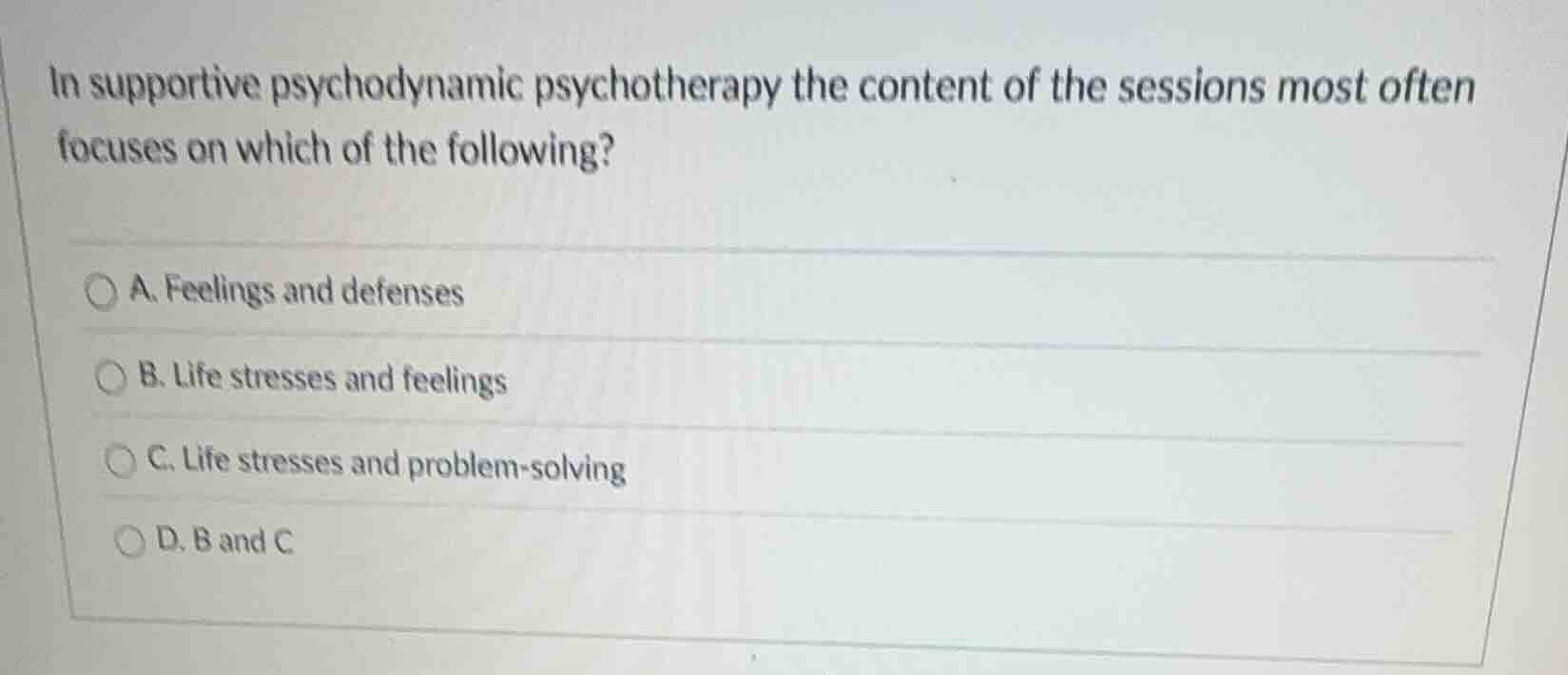
in supportive psychodynamic psychotherapy the content of the sessions most often focuses on which of the following?
a. feelings and defenses
b. life stresses and feelings
c. life stresses and problem-solving
d. b and c
🆕 New Concept Discovered: Supportive Psychodynamic Psychotherapy
Focusing on conscious coping and current life events rather than deep unconscious exploration.
Step 1: Define Supportive Psychodynamic Psychotherapy
Supportive psychodynamic psychotherapy is a form of therapy that aims to strengthen a patient's healthy defenses, improve coping mechanisms, and restore adaptive functioning.
Unlike expressive or insight-oriented psychodynamic therapy—which dives deep into unconscious conflicts, defense mechanisms, and transference (Option A)—supportive therapy focuses primarily on the "here-and-now."
Step 2: Identify the Core Focus of Sessions
Because the goal is to help the patient manage current difficulties and maintain emotional stability, the content of the sessions is centered on:
- Life stresses: Discussing immediate, real-world challenges, relationships, and stressors.
- Feelings: Helping the patient identify, express, and regulate their emotional responses to these current stressors.
- Problem-solving: Actively working on practical solutions, coping strategies, and adaptive behaviors to navigate daily life.
Step 3: Evaluate the Options
- Option A (Feelings and defenses): This is more characteristic of expressive/insight-oriented psychodynamic psychotherapy, where defense mechanisms are actively analyzed and challenged.
- Option B (Life stresses and feelings): This is a major component of supportive therapy, as it addresses current emotional reactions to real-world stressors.
- Option C (Life stresses and problem-solving): This is also a major component, as supportive therapy is highly practical and aims to bolster coping skills and resolve immediate crises.
- Option D (B and C): Since both Option B and Option C describe the primary, practical focus areas of supportive psychodynamic sessions, this is the most complete and correct choice.

Snap & solve any problem in the app
Get step-by-step solutions on Sovi AI
Photo-based solutions with guided steps
Explore more problems and detailed explanations
D. B and C