QUESTION IMAGE
Question
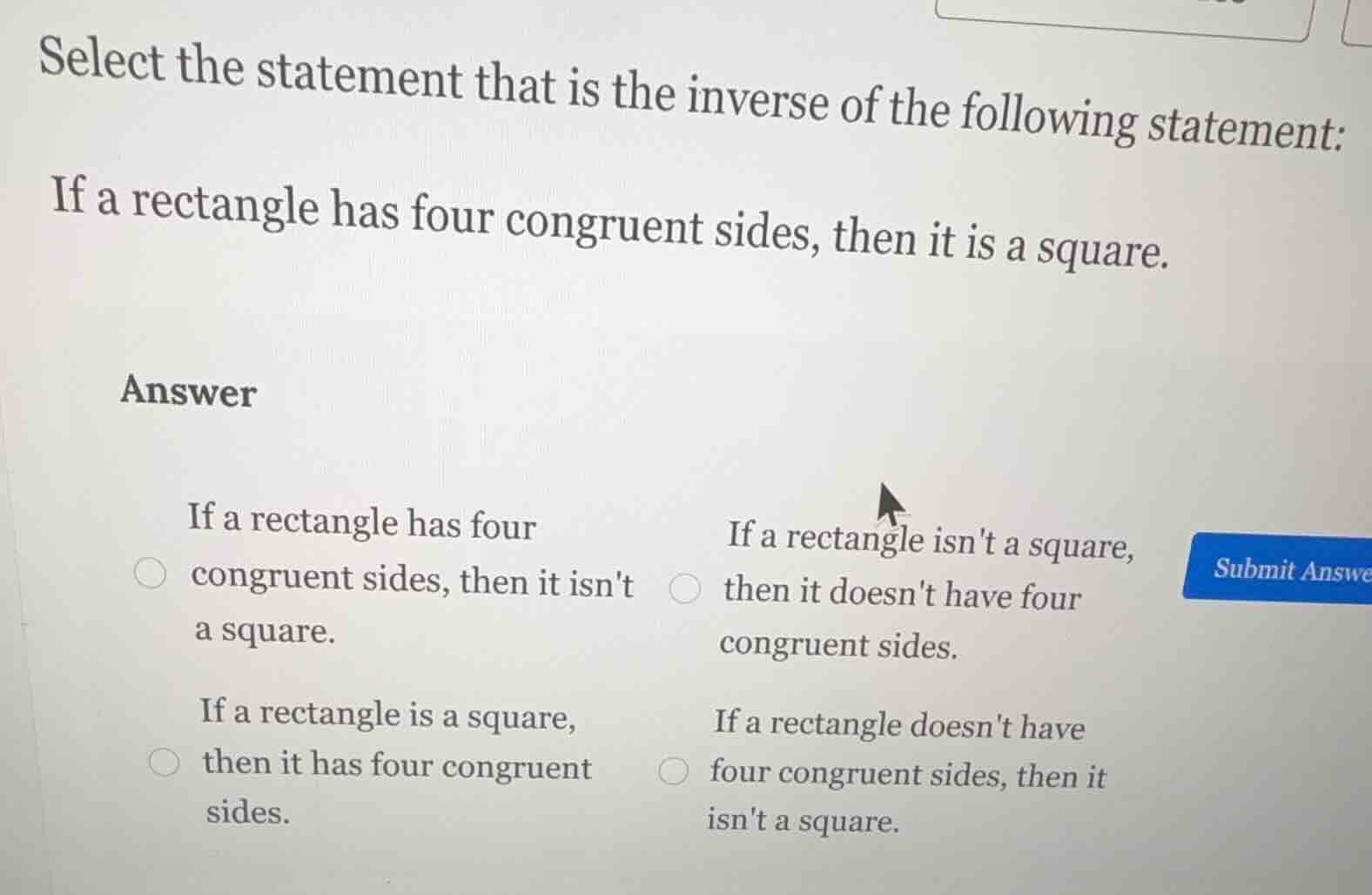
select the statement that is the inverse of the following statement:
if a rectangle has four congruent sides, then it is a square.
answer
if a rectangle has four congruent sides, then it isnt a square.
if a rectangle isnt a square, then it doesnt have four congruent sides.
if a rectangle is a square, then it has four congruent sides.
if a rectangle doesnt have four congruent sides, then it isnt a square.
The inverse of a conditional statement "If P, then Q" is "If not P, then not Q". For the given statement "If a rectangle has four congruent sides (P), then it is a square (Q)", the inverse negates both P and Q: "If a rectangle doesn't have four congruent sides (not P), then it isn't a square (not Q)".

Snap & solve any problem in the app
Get step-by-step solutions on Sovi AI
Photo-based solutions with guided steps
Explore more problems and detailed explanations
If a rectangle doesn't have four congruent sides, then it isn't a square.