QUESTION IMAGE
Question
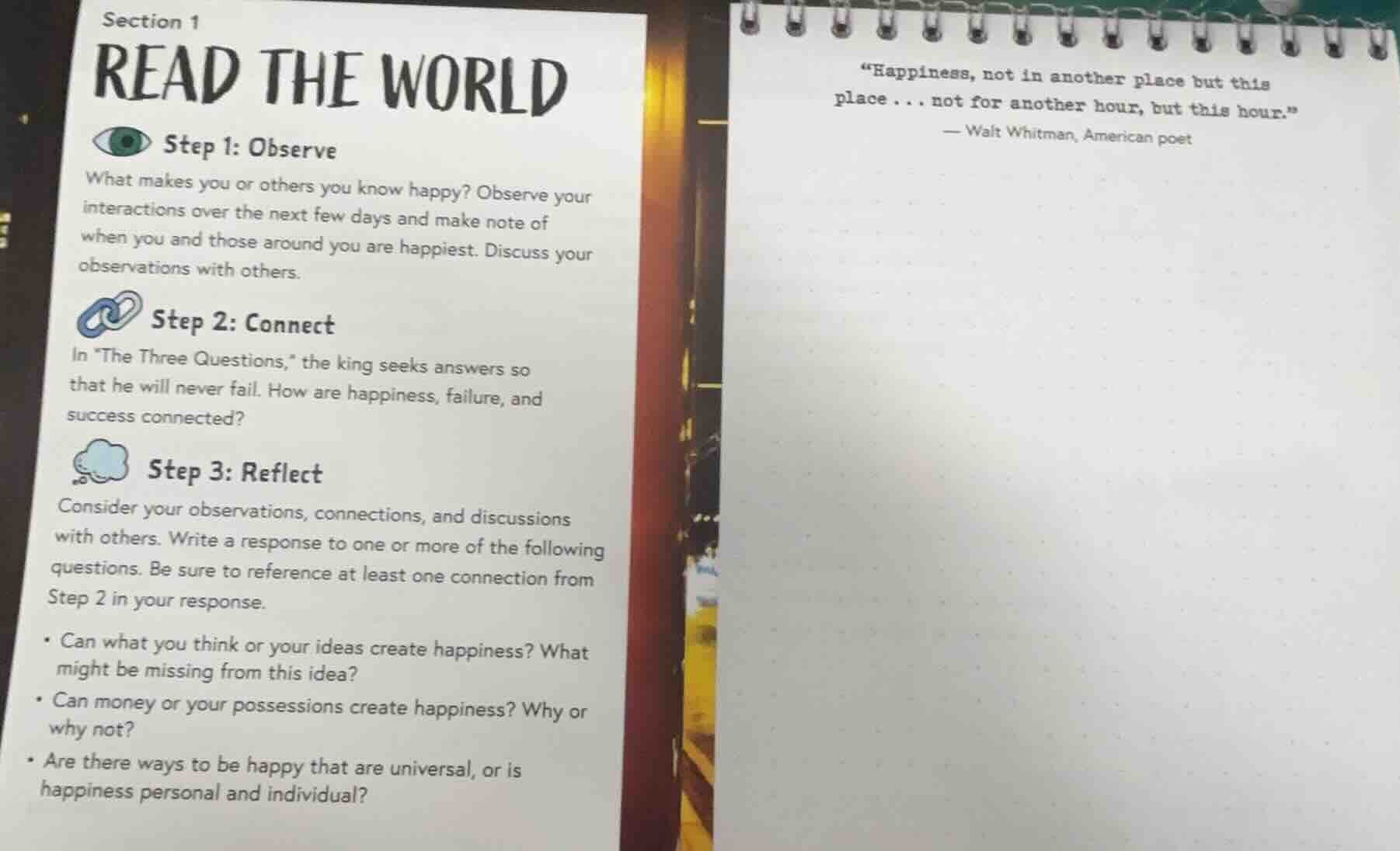
section 1
read the world
step 1: observe
what makes you or others you know happy? observe your interactions over the next few days and make note of when you and those around you are happiest. discuss your observations with others.
step 2: connect
in \the three questions,\ the king seeks answers so that he will never fail. how are happiness, failure, and success connected?
step 3: reflect
consider your observations, connections, and discussions with others. write a response to one or more of the following questions. be sure to reference at least one connection from step 2 in your response.
- can what you think or your ideas create happiness? what might be missing from this idea?
- can money or your possessions create happiness? why or why not?
- are there ways to be happy that are universal, or is happiness personal and individual?
\happiness, not in another place but this place... not for another hour, but this hour.\
— walt whitman, american poet
For Step 1: This encourages documenting moments of happiness in daily interactions with oneself and others, then discussing these observations to identify common or personal triggers of happiness.
For Step 2: In The Three Questions, the king learns that success lies in acting for the present and others, failure comes from focusing on the wrong priorities, and happiness is tied to meaningful, present-moment action. So happiness often emerges from successful, purposeful engagement, while failure can redirect one to the actions that foster true happiness and success.
For Step 3 (responding to the questions, using the Step 2 connection):
- Thoughts/ideas can create happiness (e.g., the king's shift in thinking about "right time/people/action" brought him fulfillment). What is missing is actionable effort—ideas alone don't create happiness without acting on them in the present.
- Money/possessions cannot create lasting happiness. The king had wealth but lacked fulfillment until he focused on serving others, aligning with the story's lesson that success (and happiness) comes from purpose, not material gain.
- There are universal foundations of happiness (like acting with purpose in the present, connecting with others, as the king's lesson shows) but the specific expressions of happiness are personal (e.g., one person finds joy in helping strangers, another in creative work).

Snap & solve any problem in the app
Get step-by-step solutions on Sovi AI
Photo-based solutions with guided steps
Explore more problems and detailed explanations
Step 1 Completion:
(Example) Over 3 days, I noted happiness moments: my sibling laughed while baking cookies with me; my neighbor smiled when I helped carry groceries; I felt calm reading a book in the park. Discussing with a friend, we found shared happiness in small, present-moment interactions.
Step 2 Connection:
Happiness, failure, and success are linked through present-moment purpose: the king's "failure" was chasing abstract answers, his success came from acting for others in the now, which brought him happiness. Failure redirects people to the actions that build meaningful success and happiness.
Step 3 Response (to "Can money or your possessions create happiness? Why or why not?"):
Money and possessions cannot create lasting happiness. In The Three Questions, the king had great wealth and power but was unhappy and fearful of failure until he shifted his focus to helping a wounded man and his subjects. This shows that happiness comes from purposeful, present-moment connection and action, not material goods—money can meet basic needs, but it does not provide the fulfillment tied to meaningful success as the king learned.