Sovi.AI - AI Math Tutor

Scan to solve math questions

QUESTION IMAGE

representatives in colonial virginia were elected to the house of burge…

Question

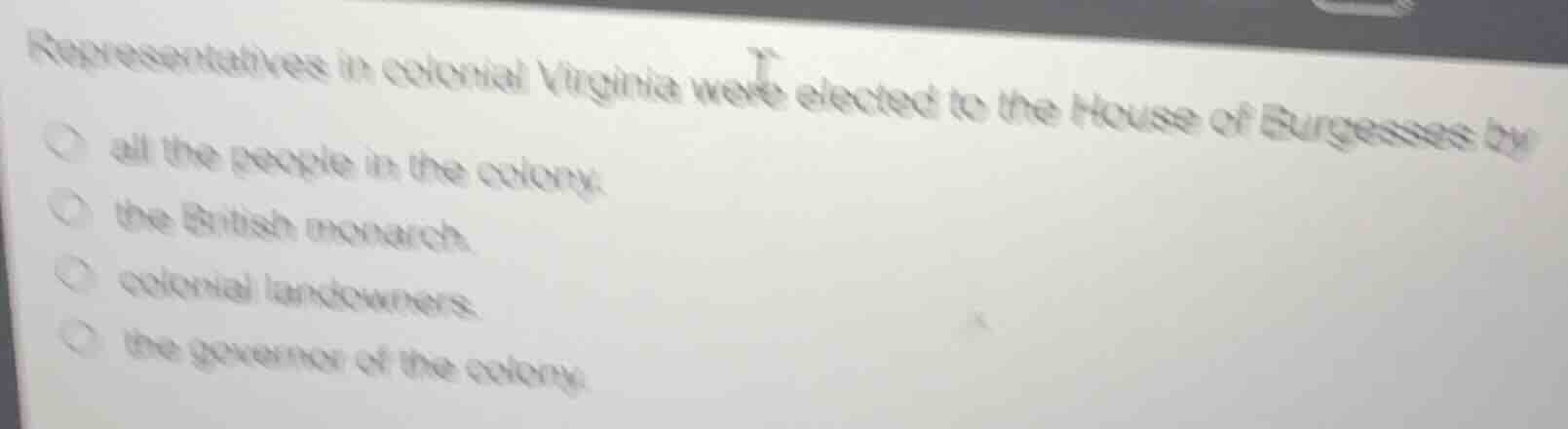
representatives in colonial virginia were elected to the house of burgesses by

all the people in the colony
the british monarch
colonial landowners
the governor of the colony

Explanation:

Response

<pre_analysis>
{
"quality": "clear",
"question_count": 1,
"skills_matched": [
"direct_cot",
"multiple_choice_formatter",
"explain_then_answer",
"tutor"
],
"needs_drawing": false,
"concepts_used": [],
"new_concepts": [
"House of Burgesses",
"Colonial Suffrage"
],
"current_concepts": [
"House of Burgesses",
"Colonial Suffrage",
"Colonial Self-Governance"
]
}
</pre_analysis>

<reasoning>

Analyze the House of Burgesses

The House of Burgesses, established in Virginia in 1619, was the first legislative assembly of elected representatives in North America. It represented an early step toward representative self-government in the British colonies.

Determine the electorate

To understand who voted for these representatives, we must look at colonial voting requirements. Voting was not universal; it was restricted to specific groups. Specifically, only free, adult white males who owned a certain amount of land (landowners) were granted the right to vote for burgesses.

Evaluate the options

  • all the people in the colony: Incorrect. Women, enslaved people, indentured servants, and landless men could not vote.
  • the British monarch: Incorrect. The monarch did not elect them; they were chosen locally.
  • colonial landowners: Correct. Free male colonists who owned land elected the representatives.
  • the governor of the colony: Incorrect. The governor appointed his council, but the burgesses were elected by the eligible colonists.

</reasoning>

<answer>
<mcq-option>(A) all the people in the colony</mcq-option>
<mcq-option>(B) the British monarch</mcq-correct>
<mcq-correct>(C) colonial landowners</mcq-correct>
<mcq-option>(D) the governor of the colony</mcq-option>
</answer>

<post_analysis>
{
"subject": "Social Science",
"question_type": "Multiple Choice",
"knowledge_point": [
"Social Science",
"U.S. History",
"Colonial Self-Governance"
]
}
</post_analysis>

Answer:

<pre_analysis>
{
"quality": "clear",
"question_count": 1,
"skills_matched": [
"direct_cot",
"multiple_choice_formatter",
"explain_then_answer",
"tutor"
],
"needs_drawing": false,
"concepts_used": [],
"new_concepts": [
"House of Burgesses",
"Colonial Suffrage"
],
"current_concepts": [
"House of Burgesses",
"Colonial Suffrage",
"Colonial Self-Governance"
]
}
</pre_analysis>

<reasoning>

Analyze the House of Burgesses

The House of Burgesses, established in Virginia in 1619, was the first legislative assembly of elected representatives in North America. It represented an early step toward representative self-government in the British colonies.

Determine the electorate

To understand who voted for these representatives, we must look at colonial voting requirements. Voting was not universal; it was restricted to specific groups. Specifically, only free, adult white males who owned a certain amount of land (landowners) were granted the right to vote for burgesses.

Evaluate the options

  • all the people in the colony: Incorrect. Women, enslaved people, indentured servants, and landless men could not vote.
  • the British monarch: Incorrect. The monarch did not elect them; they were chosen locally.
  • colonial landowners: Correct. Free male colonists who owned land elected the representatives.
  • the governor of the colony: Incorrect. The governor appointed his council, but the burgesses were elected by the eligible colonists.

</reasoning>

<answer>
<mcq-option>(A) all the people in the colony</mcq-option>
<mcq-option>(B) the British monarch</mcq-correct>
<mcq-correct>(C) colonial landowners</mcq-correct>
<mcq-option>(D) the governor of the colony</mcq-option>
</answer>

<post_analysis>
{
"subject": "Social Science",
"question_type": "Multiple Choice",
"knowledge_point": [
"Social Science",
"U.S. History",
"Colonial Self-Governance"
]
}
</post_analysis>