QUESTION IMAGE
Question
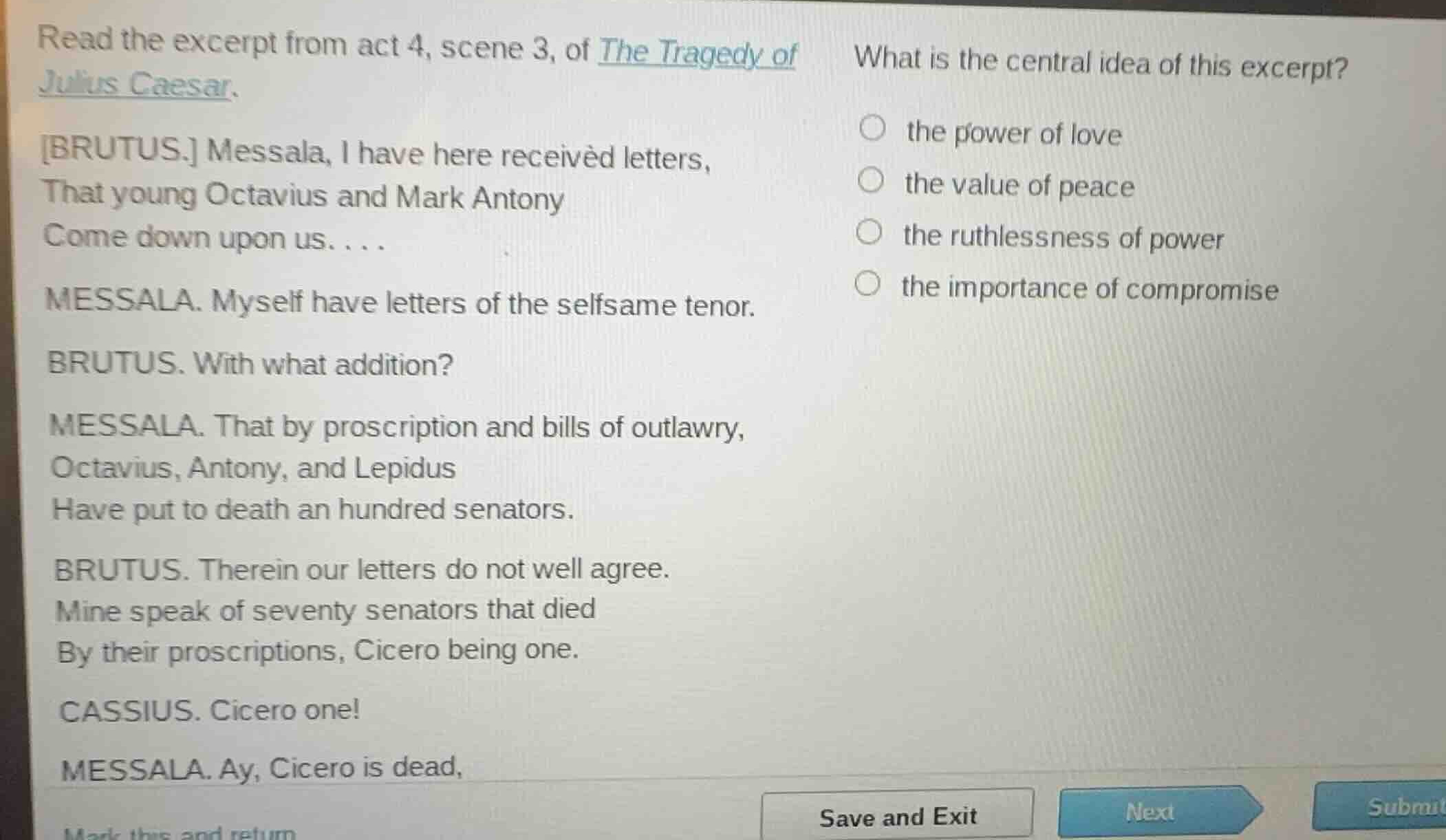
read the excerpt from act 4, scene 3, of the tragedy of julius caesar.
brutus. messala, i have here received letters,
that young octavius and mark antony
come down upon us....
messala. myself have letters of the selfsame tenor.
brutus. with what addition?
messala. that by proscription and bills of outlawry,
octavius, antony, and lepidus
have put to death an hundred senators.
brutus. therein our letters do not well agree.
mine speak of seventy senators that died
by their proscriptions, cicero being one.
cassius. cicero one!
messala. ay, cicero is dead,
what is the central idea of this excerpt?
the power of love
the value of peace
the ruthlessness of power
the importance of compromise
Analyze the textual evidence
The excerpt details a conversation between Brutus, Messala, and Cassius regarding letters they have received. Messala reports that Octavius, Antony, and Lepidus have "put to death an hundred senators" through "proscription and bills of outlawry." Brutus confirms his letters state seventy senators have died, including Cicero.
Evaluate the central theme
The execution of dozens of senators (including Cicero) by the ruling triumvirate (Octavius, Antony, and Lepidus) to eliminate political opposition demonstrates how those in power use extreme, merciless measures to secure their control. This directly illustrates the ruthless nature of political power.
Match with the options
- "the power of love" and "the value of peace" are completely unsupported by the violent political executions described.
- "the importance of compromise" is contradicted by the unilateral executions of political rivals.
- "the ruthlessness of power" directly matches the systematic execution of seventy to one hundred senators to consolidate control.

Snap & solve any problem in the app
Get step-by-step solutions on Sovi AI
Photo-based solutions with guided steps
Explore more problems and detailed explanations
- the power of love
- the value of peace
- the ruthlessness of power (Correct answer)
- the importance of compromise