Sovi.AI - AI Math Tutor

Scan to solve math questions

QUESTION IMAGE

question 2 which of the following is not an example of something that c…

Question

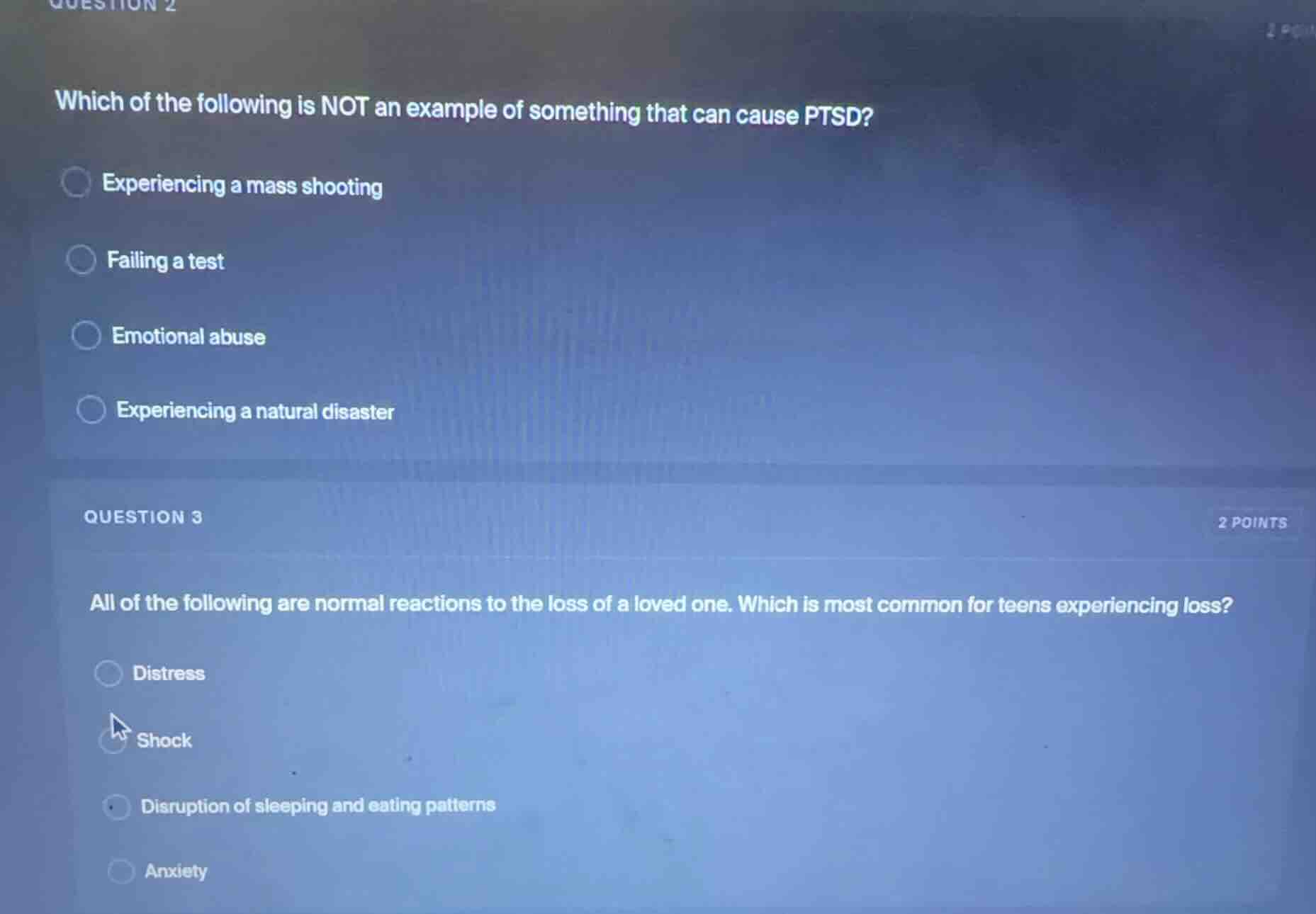
question 2

which of the following is not an example of something that can cause ptsd?

experiencing a mass shooting
failing a test
emotional abuse
experiencing a natural disaster

question 3

all of the following are normal reactions to the loss of a loved one. which is most common for teens experiencing loss?

distress
shock
disruption of sleeping and eating patterns
anxiety

Explanation:

Response

<pre_analysis>
{
"quality": "clear",
"question_count": 2,
"skills_matched": [
"direct_cot",
"multiple_choice_formatter",
"explain_then_answer",
"quick"
],
"needs_drawing": false,
"concepts_used": [
"Trauma Definition",
"Coping with Loss"
],
"new_concepts": [
"PTSD Causes",
"Teenage Grief Reactions"
],
"current_concepts": [
"Trauma Definition",
"Coping with Loss",
"PTSD Causes",
"Teenage Grief Reactions"
]
}
</pre_analysis>

<reasoning>

Analyze Question 2

Post-Traumatic Stress Disorder (PTSD) is triggered by experiencing or witnessing terrifying, deeply traumatic events such as mass shootings, severe emotional abuse, or natural disasters. Failing a test is a common life stressor but does not meet the clinical threshold of a traumatic event required to cause PTSD.

Analyze Question 3

While distress, shock, and anxiety are emotional reactions to grief, physical and behavioral disruptions—specifically the disruption of sleeping and eating patterns—are incredibly common, immediate, and measurable physiological reactions for teenagers coping with the loss of a loved one.
</reasoning>

<answer>

Question 2

<mcq-option>Experiencing a mass shooting</mcq-option>
<mcq-correct>Failing a test</mcq-correct>
<mcq-option>Emotional abuse</mcq-option>
<mcq-option>Experiencing a natural disaster</mcq-option>

Question 3

<mcq-option>Distress</mcq-option>
<mcq-option>Shock</mcq-option>
<mcq-correct>Disruption of sleeping and eating patterns</mcq-correct>
<mcq-option>Anxiety</mcq-option>
</answer>

<post_analysis>
{
"subject": "Natural Science",
"question_type": "Multiple Choice",
"knowledge_point": [
"Natural Science",
"Others",
"Mental Health and Psychology"
]
}
</post_analysis>

Answer:

<pre_analysis>
{
"quality": "clear",
"question_count": 2,
"skills_matched": [
"direct_cot",
"multiple_choice_formatter",
"explain_then_answer",
"quick"
],
"needs_drawing": false,
"concepts_used": [
"Trauma Definition",
"Coping with Loss"
],
"new_concepts": [
"PTSD Causes",
"Teenage Grief Reactions"
],
"current_concepts": [
"Trauma Definition",
"Coping with Loss",
"PTSD Causes",
"Teenage Grief Reactions"
]
}
</pre_analysis>

<reasoning>

Analyze Question 2

Post-Traumatic Stress Disorder (PTSD) is triggered by experiencing or witnessing terrifying, deeply traumatic events such as mass shootings, severe emotional abuse, or natural disasters. Failing a test is a common life stressor but does not meet the clinical threshold of a traumatic event required to cause PTSD.

Analyze Question 3

While distress, shock, and anxiety are emotional reactions to grief, physical and behavioral disruptions—specifically the disruption of sleeping and eating patterns—are incredibly common, immediate, and measurable physiological reactions for teenagers coping with the loss of a loved one.
</reasoning>

<answer>

Question 2

<mcq-option>Experiencing a mass shooting</mcq-option>
<mcq-correct>Failing a test</mcq-correct>
<mcq-option>Emotional abuse</mcq-option>
<mcq-option>Experiencing a natural disaster</mcq-option>

Question 3

<mcq-option>Distress</mcq-option>
<mcq-option>Shock</mcq-option>
<mcq-correct>Disruption of sleeping and eating patterns</mcq-correct>
<mcq-option>Anxiety</mcq-option>
</answer>

<post_analysis>
{
"subject": "Natural Science",
"question_type": "Multiple Choice",
"knowledge_point": [
"Natural Science",
"Others",
"Mental Health and Psychology"
]
}
</post_analysis>